
UAE photography laws: one photo can cost AED 150,000+
UAE photography laws for visitors and residents: consent, posting risks, sensitive sites, drones, and Art. 44 penalties from AED 150,000.
Key takeaways
- Photographing or posting an identifiable person without consent can mean at least six months in prison and/or a fine of AED 150,000–500,000 under Cybercrimes Law Article 44.
- A public place is not a free pass, and a smile isn't consent to post: get an explicit yes, in writing for commercial work.
- Photographing sites the authorities have prohibited can mean six months to five years and/or a fine of at least AED 100,000 under Article 176.
- If someone objects, delete or blur; if police or security tell you to stop filming, stop.
General information for visitors, residents and photographers, not legal advice. Laws and enforcement guidance evolve; for specific complaints, commercial shoots or permit requirements, consult the competent UAE authorities or a UAE-qualified lawyer.
In the United Arab Emirates, a single smartphone frame of a stranger—followed by a casual upload to Instagram or TikTok—can carry a minimum sentence of six months in prison, a fine ranging from AED 150,000 to AED 500,000, or both under Article 44 of the federal Cybercrimes Law. Whether you are a resident documenting weekend life, a traveller exploring the most photogenic spots in the UAE, or a commercial crew on assignment, understanding UAE photography laws before you raise a viewfinder or tap "share" is essential. This guide breaks down how consent, social media publishing, restricted infrastructure, aerial rules, and statutory penalties work in practice across Dubai, Abu Dhabi and the wider Emirates.
What one photo can cost
- Minimum fine under Cybercrimes Law Art. 44 (up to AED 500,000)
- AED 150,000
- Minimum prison term under Art. 44, with or instead of a fine
- 6 months
- Federal decree-laws behind the rules
- 3
Photographing people: a public place is not a free pass
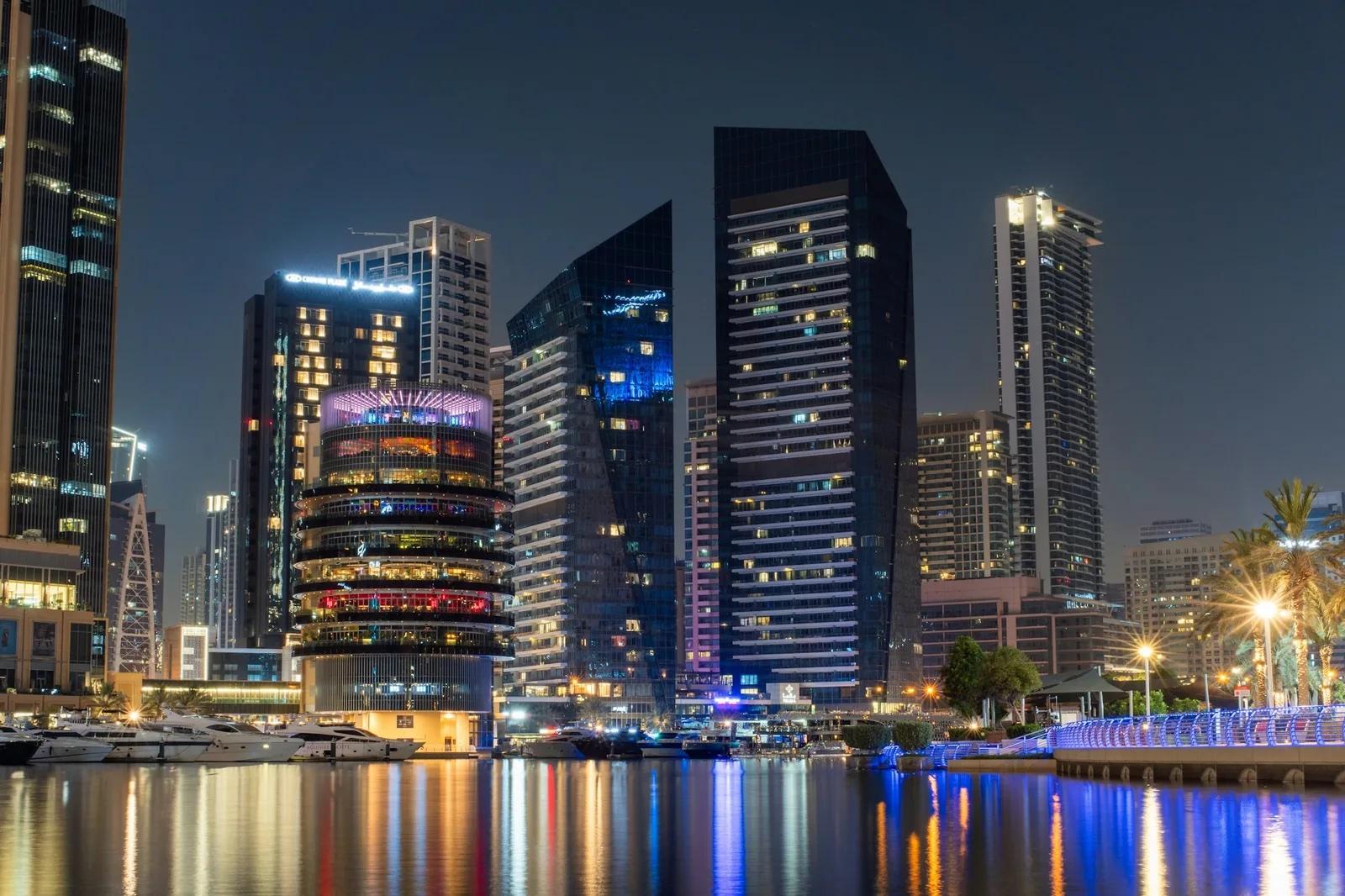
Walk through the bustling souqs of Deira, along the Corniche in Abu Dhabi, or across a crowded promenade at Dubai Marina, and you will see thousands of cameras out. Yet in the UAE, standing on a public pavement does not strip passers-by of their legal right to privacy. Unlike jurisdictions where anyone in public view is generally fair game for street photography, UAE law treats an identifiable person's image as protected personal territory. Unless individuals are purely incidental, unrecognisable figures in a wide architectural or landscape frame, you should always secure explicit permission before photographing them.
Three pillars of federal legislation govern how images of people may be captured and used:
- Federal Decree-Law No. 34 of 2021 on Combatting Rumours and Cybercrimes (the Cybercrimes Law).
- Federal Decree-Law No. 31 of 2021 promulgating the Crimes and Penalties Law (the Penal Code).
- Federal Decree-Law No. 38 of 2021 on Copyrights and Neighbouring Rights.
Cybercrimes Law, Article 44
Article 44 of Federal Decree-Law No. 34 of 2021 is the provision most frequently invoked when smartphone photos, street portraits, or social media clips cross the line. In an official public awareness briefing issued by the UAE Public Prosecution (and reported verbatim by Gulf Today), prosecutors emphasised that using an information network, electronic system, or any information technology tool—which includes a digital camera or mobile phone—to infringe upon someone's privacy or the sanctity of their private or family life without consent, outside legally permitted cases, is punishable by at least six months in prison and/or a fine between AED 150,000 and AED 500,000.
Specifically, Article 44 prohibits:
- Taking photographs of others in any setting without their consent, or copying, transferring, disclosing, or storing those images electronically.
- Publishing news, photographs, scenes, comments, data, or information—even if factually true and accurate—if doing so is intended to harm the subject.
- Photographing the injured, the deceased, or victims of traffic accidents and disasters, or broadcasting and publishing such images without authorisation from the relevant parties.
- Tracking, intercepting, or disclosing another individual's geographical location data.
Where a photograph or video recording is digitally altered, edited, or manipulated with the intent to defame, offend, or attack a person's reputation, Article 44 escalates the minimum penalty to at least one year of imprisonment and/or a fine of AED 250,000 to AED 500,000, as confirmed in the same Public Prosecution guidance.
In applying Article 44, UAE courts look for both the prohibited act and the requisite criminal intent (BSA Law; Hadef & Partners). In narrow, reported instances, courts have distinguished between maliciously exposing someone online and discreetly documenting a suspected offence solely to hand evidence to the police—a narrow evidentiary exception that should never be mistaken for a licence to film strangers during public disputes.
Crimes and Penalties Law, Article 431
Alongside the Cybercrimes Law, Article 431 of Federal Decree-Law No. 31 of 2021 protects the sanctity of private and family life under the general criminal code (Polaris Legal Library English text). Acting without consent and outside legally authorised circumstances can result in imprisonment and a court-determined fine for anyone who uses any device to:
- Eavesdrop on, record, or transmit conversations conducted in a private place, or spoken over the telephone.
- Capture or transmit a photograph of a person located in a private place.
If those acts take place during an assembly or meeting right in front of the participants, their consent is legally presumed unless objected to. Article 431 also penalises publishing news, photographs, or commentary that divulge secrets of private or family life, even if the statements are true. While Article 431 leaves the exact fine amount to the judge's discretion, any use of a smartphone or digital network typically brings the fixed AED 150,000–500,000 statutory tariff of Cybercrimes Article 44 into play (Gulf News).
Copyright Law, Article 45
Photographers sometimes point to Article 45 of Federal Decree-Law No. 38 of 2021 on Copyrights and Neighbouring Rights (Legal Advice ME English text), which mentions public events. Read carefully, however, Article 45 is not a blanket exemption for street photography. It governs situations where someone has been commissioned or agreed to take a portrait or make an audio or visual recording of another person: even then, the photographer may not keep, exhibit, publish, or distribute the original or copies without the subject's permission, unless agreed otherwise.
Article 45 carves out narrow exceptions where publication of a portrait does not require fresh consent: when the shot was taken on the occasion of public incidents or events (unless publication is prohibited by the authorities), when it covers official or government events held publicly in a public venue, or when the competent authorities authorise publication in the public interest—provided always that publication does not harm the person's honour, standing, or reputation. For uncommissioned street portraits of strangers, Cybercrimes Article 44 remains the primary legal hurdle. And if you are shooting for a brand, agency, or publication, you will need signed model releases alongside the relevant filming permits in Dubai and Abu Dhabi.
Posting the photo can be as risky as taking it
Illustration created with AI.
Under UAE law, pressing the shutter and publishing the resulting file are distinct legal triggers. Because Article 44 explicitly penalises preparing, transferring, disclosing, copying, or keeping electronic images—as well as publishing material that compromises privacy—uploading a stranger's recognisable face to a public feed, a WhatsApp group, or a vlog carries the exact same AED 150,000+ exposure as taking the picture in the first place. A polite nod or a passing smile toward the lens does not equal legal consent to broadcast someone's image to the world (The National).
To stay on the right side of both the law and local custom, experienced UAE photographers follow five baseline rules:
- Ask before framing anyone identifiable, paying special heed to cultural norms around photographing women, families, and children.
- Separate social acquaintance from publication rights: knowing someone at a gathering or event does not automatically grant permission to post them on your public channels.
- Delete on request without debate: if someone notices your lens and objects, delete the frame on the spot or re-shoot without them; never argue that you were standing on public property.
- Never film traffic accidents, medical emergencies, or crime scenes for social media: if you have dashcam or phone footage that could assist an investigation, hand it directly and exclusively to the police.
- Keep private property anonymous: avoid posting images that identify someone else's villa, residential compound, or vehicle—including readable licence plates, house numbers, or Dubai Makani building numbers (Gulf News).
In December 2023, the Abu Dhabi Judicial Department (ADJD) reinforced these exact points in a public legal-awareness campaign, reminding residents to obtain explicit permission before filming others, to respect the privacy of weddings and family majlis gatherings, and never to treat another person's home or car as casual social media content. As LexisNexis reported, ADJD anchored its warning directly in Article 44 of the 2021 Cybercrimes Law. (Note that older online guides sometimes still cite repealed articles from the 1987 Penal Code or the 2002 Copyright Law; the 2021 decree-laws are the statutes in force today.)
Sensitive sites: when a tourist snap risks Article 176
Iconic landmarks built for the public gaze—from Burj Khalifa and the Sheikh Zayed Grand Mosque courtyards to the architectural waterfronts featured in our Guggenheim Abu Dhabi photography guide—welcome millions of visitor photos every year, provided you observe venue rules on tripods and indoor galleries. Legal jeopardy begins when a lens turns toward defence, security, or critical national infrastructure.
Under Article 176 of Federal Decree-Law No. 31 of 2021 (Polaris Legal Library), it is a serious criminal offence to photograph any site—or to produce sketches, drawings, maps, or geographic coordinates of it—where the competent authorities have prohibited doing so. The same article penalises unauthorised entry into military installations, defence camps, oil and energy facilities, warships, aircraft, or restricted security zones, as well as flying over prohibited areas, including with unmanned aircraft. The baseline penalty under Article 176 is imprisonment for six months to five years and/or a fine of not less than AED 100,000, with significantly harsher sentences if the offence occurs during wartime or involves stealth, deception, or disguise.
On the ground across the Emirates, keep four boundaries firm:
- Never photograph military bases, armed forces personnel on duty, police stations, security checkpoints, or patrol vehicles.
- Treat government complexes, courts, diplomatic missions, and palaces with caution. Many display clear "No Photography" signage around their perimeters; while Article 176 applies specifically to sites where photography has been prohibited by the competent authorities rather than every municipal office, ignoring perimeter signage will invite immediate security intervention.
- Keep cameras away from airports, seaports, power plants, desalination plants, oil refineries, and telecommunications hubs. In a March 2026 advisory reported by Gulf Today, Dubai Police warned residents and visitors that filming or circulating images of security-sensitive or critical infrastructure locations carries strict legal consequences. Gulf News reported that in early March 2026 the UAE State Security Department also announced a prohibition on photographing or sharing sensitive security sites and unverified content, and that the Public Prosecution warned against sharing images of incident sites. We could not confirm whether that prohibition has been lifted as of 6 November 2026, so treat it as in force, and do not film or post the scene of any incident.
- Comply immediately if police or venue security ask you to lower your camera.
Drones (briefly)
Aerial photography is subject to all of the privacy and sensitive-site laws above, plus a strict layer of federal and emirate-level aviation law. Under Federal Decree-Law No. 26 of 2022 on the Regulation of Civil Use of Unmanned Aircraft and Related Activities, every drone and operator must be registered before takeoff via the General Civil Aviation Authority (GCAA) and the unified UAE Drones platform.
Under normal recreational rules outlined on the u.ae aviation safety portal, hobbyists may only operate drones weighing 5 kg or less within approved green zones on the live UAE Drones map, during daylight hours, within visual line of sight (VLOS), no higher than 400 feet above ground level, and at least 5 km away from airport outer fences and heliports. Furthermore, current federal recreational regulations (CAR-UAR Issue 04) prohibit fitting cameras on recreational flights, while commercial aerial filming requires an Unmanned Aircraft Operator Authorisation (UOA), GCAA Security Clearance Approval (mandatory whenever a camera or sensor is used, whether in a green or red zone), and local aviation permits.
Crucially, always verify live airspace status before packing or launching a drone. In 2026, the GCAA issued Safety Decision 2026-03 (Issue 03, dated 27 April 2026), suspending unmanned aircraft, drone, light sport aircraft, and balloon operations across UAE airspace unless the operator holds a written GCAA exemption. Although some commercial operators reported mission restarts around late June 2026 and the u.ae aviation safety page (updated 2 September 2026) continues to display standard recreational guidelines, we found no later issue and no notice cancelling Safety Decision 2026-03 as of 6 November 2026, though we could not open the GCAA's safety-decisions listing page itself, so check the portal directly. Read our full guide to flying a drone in the UAE for the complete regulatory breakdown, registration steps, and penalty schedule.
Penalties at a glance
Fines commonly cited, in AED
| Situation | Primary Statute | Statutory Penalty Commonly Cited |
|---|---|---|
| Invading privacy via IT/phone/camera (taking, keeping, or sharing photos of people, accidents, or private life without consent) | Cybercrimes Law (Federal Decree-Law No. 34 of 2021), Art. 44 | Imprisonment ≥ 6 months and/or fine of AED 150,000–500,000 |
| Editing, altering, or manipulating an image or video to defame or offend someone | Cybercrimes Law (Federal Decree-Law No. 34 of 2021), Art. 44 | Imprisonment ≥ 1 year and/or fine of AED 250,000–500,000 |
| Taking/transmitting a photo in a private place, recording private conversations, or publishing private-life secrets | Crimes and Penalties Law (Federal Decree-Law No. 31 of 2021), Art. 431 | Imprisonment and a court-determined fine |
| Photographing or mapping prohibited sites, unauthorised entry into defence/oil sites, or flying over prohibited zones | Crimes and Penalties Law (Federal Decree-Law No. 31 of 2021), Art. 176 | Imprisonment 6 months–5 years and/or fine ≥ AED 100,000 |
In addition to custodial sentences and fines, UAE courts can order the confiscation of the phones, cameras, or storage media used in the offence and the deletion of the recordings (Article 431 makes both mandatory). Foreign nationals convicted under these provisions may also be deported after serving their sentence.
Can I take and post this photo?
Is an identifiable person in the frame?
Practical do's and don'ts
Do
- Ask for clear, unambiguous permission before photographing any identifiable person, and obtain signed model releases for commercial or portfolio work.
- Compose wide architectural and landscape shots at public attractions so that passers-by remain incidental and unrecognisable, and keep your gear safe when shooting outdoors with our guide to protecting cameras from heat, sand and humidity in the UAE.
- Respect all "No Photography" signs at museums, mosques, malls, and government buildings, and stop shooting immediately if police or security staff ask.
- Check live GCAA and UAE Drones rules before bringing or flying any drone, and never launch without active registration and flight approval.
- Secure official media and location permits before setting up tripods, lighting, or commercial production crews in public spaces.
Don't
- Don't photograph or film strangers without consent, especially close-up street portraits, women, families, or children.
- Don't film or share footage of road accidents, hospital patients, emergencies, or crime scenes on social media or messaging apps.
- Don't point cameras at military bases, police facilities, airports, ports, oil installations, or other security-sensitive infrastructure.
- Don't assume a shot is legal simply because influencers or tourists have posted similar clips online.
- Don't fly a camera drone over residential villas, beaches, crowds, or restricted zones.
- Don't digitally alter, meme, or caption someone's photo to mock, shame, or defame them online.
Correction, 6 November 2026: an earlier version said CAR-UAR Issue 04 bars recreational cameras only "without specific authorisation"; it prohibits fitting them outright. It also called deportation of convicted foreign nationals mandatory and confiscation routine, and we found no source for either wording.
Sources
- UAE Public Prosecution summary of Article 44 penalties (WAM)
- Gulf Today report of the same Public Prosecution summary (25 Jul 2022)
- Federal Decree-Law No. 34 of 2021 listing page (uaelegislation.gov.ae)
- Federal Decree-Law No. 31 of 2021 listing page (uaelegislation.gov.ae)
- Crimes and Penalties Law text, including Arts. 176 and 431 (Polaris Legal Library English text)
- BSA Law overview of Article 44 photography risks
- Hadef & Partners: photographing people in public in the UAE
- Gulf News: privacy and property photos (Arts. 44 and 431)
- Federal Decree-Law No. 38 of 2021 Art. 45 English text (Legal Advice ME)
- The National: what to mind when taking photos in the UAE
- Dubai Police warning on filming security-sensitive locations (Gulf Today)
- Gulf News: UAE authorities ban filming of security locations (March 2026)
- LexisNexis: ADJD privacy campaign citing Cybercrimes Art. 44 (21 Dec 2023)
- u.ae aviation safety / drone rules (updated 2 Sep 2026)
- GCAA UAS registration requirements
- GCAA Safety Decision 2026-03, Issue 03 (27 Apr 2026)
- Federal Decree-Law No. 38 of 2021 listing page (copyright)
Frequently asked questions
Is street photography legal in Dubai or Abu Dhabi?
Photographing public architecture, cityscapes, and open scenery is completely normal and welcomed. The legal risk arises when you capture identifiable people without their consent, even on a busy public street. When in doubt, ask permission first or frame your shot wide enough—or with a slow shutter or shallow depth of field—so that individual faces cannot be recognised.
Can I post a photo of someone on Instagram if they smiled at the camera?
No. A passing smile or friendly wave toward the lens is not explicit legal consent to publish someone's image on a social network. Always ask for a clear "yes" covering both taking the photo and posting it online—and get that consent in writing for any commercial, brand, or editorial project.
Are tourist landmarks safe to photograph?
Major open attractions marketed to visitors—such as Burj Khalifa, Dubai Marina, the Louvre Abu Dhabi exterior, and Sheikh Zayed Grand Mosque's designated visitor walkways—are generally fine for personal photography. Watch closely for rules at museums, places of worship, private malls, government buildings, and security perimeters, where indoor photography, flash, or tripods may be restricted.
Do UAE photography laws apply to visitors on a short trip?
Yes. UAE federal criminal and cybercrime laws apply to everyone within the country's jurisdiction, including short-term tourists and transit passengers. Claiming unfamiliarity with local privacy laws is not a legal defence.
What should I do if someone complains about a photo I already took?
Stay polite, delete the image immediately from your camera or phone (including your "Recently Deleted" folder) and remove any social media post if it has already gone live, apologise, and do not reshare the file. If police are called or contact you, cooperate calmly and seek advice from a UAE-qualified lawyer.

About the editor
André has shot weddings for almost ten years, where every moment happens once and the story has to be caught as it unfolds. He brings that eye for real moments to everything he reviews.
Related stories
Street photography consent: take vs publish in the UAE
Street photography consent in the UAE: a five-question check, how to ask in English and Arabic, take vs publish, anonymising and deletion requests.
White Friday camera deals in the UAE: five checks before you pay in 2026
White Friday and Yellow Friday 2026 in the UAE: five checks for camera deals, covering price history, who the seller is, warranty, bundles and returns.
Guggenheim Abu Dhabi photography: angles, light and rules
Angles, light, gear and visitor rules for photographing Frank Gehry’s Guggenheim Abu Dhabi on Saadiyat Island. Opens 11 December 2026.