
Guggenheim Abu Dhabi photography: angles, light and rules
Angles, light, gear and visitor rules for photographing Frank Gehry’s Guggenheim Abu Dhabi on Saadiyat Island. Opens 11 December 2026.
Key takeaways
- Guggenheim Abu Dhabi opens on 11 December 2026 on Saadiyat Island, with ten cones up to 88 m: nine in stainless steel mesh and one in onyx and glass.
- As of 6 November 2026 we found no published visitor photography policy, and the museum's Terms & Conditions don't mention photography, so confirm flash, tripod and artwork rules on site.
- Shoot exteriors at golden hour or blue hour; midday sun flattens the cones and the plazas offer little shade.
- General admission is reported at AED 70; verify on the official tickets page before you book.
When the late Frank Gehry’s long-awaited Guggenheim Abu Dhabi opens its doors on 11 December 2026 on the northwestern tip of Saadiyat Island, its cluster of ten monumental cones rising above the Arabian Gulf will immediately become one of the most photographed architectural silhouettes in the Middle East. Yet ahead of opening day, we found no dedicated visitor photography code covering flash, tripods, gallery artwork, or commercial shoots, and the museum's Terms & Conditions, which we read on 6 November 2026, don't mention photography. Approaching Guggenheim Abu Dhabi photography right now means mapping out exterior sightlines, coastal light, and focal lengths in advance—while confirming interior gallery rules on the day you arrive.
This guide breaks down the architecture, the strongest exterior vantage points, seasonal light across the water, ticket tiers, UAE privacy and drone regulations, and neighbouring landmarks across the Saadiyat Cultural District. Always check guggenheimabudhabi.ae before travelling, as admission details and visitor policies will continue to evolve around opening week.
Guggenheim Abu Dhabi in numbers
- Total building area (DCT, October 2026)
- 84,000 m²
- Galleries (DCT, October 2026)
- 28
- Outdoor exhibition space
- 23,000 m²
- Interior galleries
- 11,600 m²
- Height of the tallest cones
- 88 m
- Reported general admission
- AED 70
Ten cones, one onyx: what you’re shooting
Designed by the late Pritzker Architecture Prize laureate Frank Gehry—whose titanium-clad Guggenheim Bilbao redefined museum architecture in the late 1990s—the Abu Dhabi outpost is described by Visit Abu Dhabi as the largest Guggenheim in the world and one of the architect's most ambitious late-career masterworks.
Drawing from official announcements by the Department of Culture and Tourism – Abu Dhabi (DCT – Abu Dhabi), here are the defining physical features you will be framing through the viewfinder:
- Scale and exhibition footprint: While DCT – Abu Dhabi's July 2026 announcement cited a built-up area of roughly 80,000 m², its subsequent October 2026 architectural briefing puts the total building area at 84,000 m², encompassing approximately 11,600 m² of indoor gallery space alongside 23,000 m² of outdoor exhibition courts and terraces.
- Gallery layout: The exhibition spaces are connected around a dramatic central atrium. (DCT's July 2026 release referenced 30 galleries, while its October 2026 architectural overview specifies 28 galleries; visitors can confirm the final floor plan on site.)
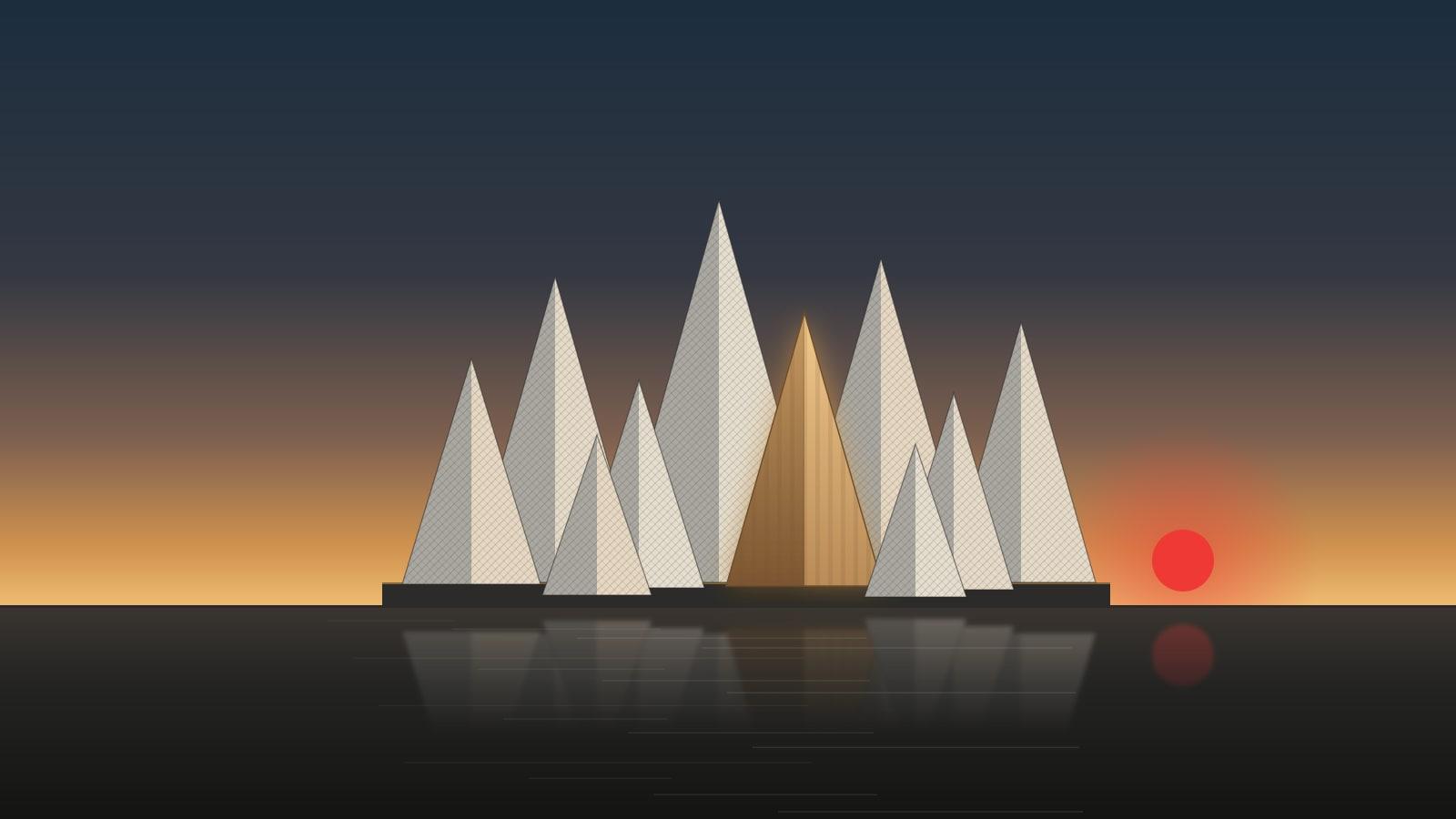
- The ten cones: Soaring up to 88 metres above Saadiyat Island, ten sculptural cones anchor the exterior—nine wrapped in porous stainless-steel mesh and one clad in translucent onyx and glass. Inspired by the UAE's traditional barjeel (wind towers), the cones are engineered to provide deep shade and natural ventilation across the plazas.
- Marine peninsula setting: The museum sits on a promontory surrounded by the Arabian Gulf on three sides, creating constantly shifting reflections between sky, steel, stone, and water.
Assembled since 2009, the permanent collection focuses on global modern and contemporary art from the 1960s to the present—spanning painting, sculpture, large-scale installation, photography, moving image, and new media—with a distinctive curatorial emphasis on West Asia, North Africa, and South Asia within the wider Guggenheim constellation (alongside New York, Venice, and Bilbao).
For anyone planning Guggenheim Abu Dhabi architecture photos, the building offers three distinct visual studies: wide waterside compositions where the cones meet the Gulf horizon, tight material studies contrasting woven steel mesh against warm onyx, and—where gallery policies permit—the interplay of light inside the central atrium and outdoor sculpture courts.
Ten cones, one onyx
- 9 stainless steel mesh cones
- 1 onyx-and-glass cone
Best angles and vantage points
Until the museum releases its complete visitor map of open plazas and restricted operational perimeters, treat these vantage points as directional field notes rather than guaranteed access. Remain on public walkways, respect security barriers and museum marshals, and never assume adjacent resort beaches or service seawalls are open to foot traffic.
Waterside establishing shots
With the Arabian Gulf wrapping around three façades, the most compelling wide-angle frames come from public promenades and waterfront plazas that anchor the cones against the ground plane and open water. Walk the perimeter slowly: shifting your camera position by even five metres alters how the overlapping cones stack against the horizon and whether you catch clean surface reflections on calm mornings.
Cone clusters and the onyx cone
Pack a mid-telephoto zoom to compress the overlapping geometry into a dense, sculptural skyline, or step in close with a rectilinear wide-angle lens to accentuate the 88-metre vertical sweep. Look for angles that isolate the single onyx-and-glass cone against the nine stainless-steel-mesh forms—that dialogue between warm translucent stone and industrial weave is central to Gehry's composition.
Mesh and material details
Porous stainless-steel mesh catches specular highlights and coastal haze differently with every hour of the sun's arc. When the main entrance plazas grow busy with visitors, pivot to tight architectural abstracts: backlit steel weave against a deep Gulf sky, the seam where stone meets structural glass, or the latticework of shadows cast beneath the cones.
District context
Step back along the island's pedestrian corridors to frame Guggenheim Abu Dhabi alongside Jean Nouvel's dome at Louvre Abu Dhabi or neighbouring cultural landmarks. Because Visit Abu Dhabi designed the Saadiyat Cultural District as a walkable precinct, pairing multiple architectural icons in a single morning or late-afternoon shoot is entirely practical if you pace your route. (For more inspiration across the Emirates, explore our guide to the 15 most photogenic spots in the UAE.)
Best times and light
Golden hour tames metallic glare on the stainless-steel mesh and brings out a rich amber glow in the onyx cone, while blue hour separates the illuminated museum silhouette cleanly from the darkening Gulf waters. With the museum opening on 11 December 2026, inaugural visitors will enjoy Abu Dhabi's crisp winter light and mild coastal temperatures.
By contrast, overhead midday sun flattens the curvature of the cones and introduces harsh, unforgiving contrast across metal and glass. Indeed, the museum's official Terms & Conditions note that some areas of the museum might be exposed to direct sunlight and heat and ask visitors to take care with hydration and sun protection. If you are shooting during the warmer spring or summer months, schedule exterior architecture work strictly around early morning or late afternoon, carry water, and prepare your kit using our guide on how to protect your camera from heat, sand, and humidity in the UAE.
Pay close attention to solar angles as you move around the three waterside elevations: backlight and sea glare shift rapidly over the water, making a circular polariser one of the most useful filters in your bag.
When to shoot the exteriors
Photography rules: no published visitor policy found yet
Guggenheim Abu Dhabi visitor photography policy
As of 6 November 2026, we found no dedicated Guggenheim Abu Dhabi visitor photography policy detailing rules on flash, tripods, close-up artwork photography, or commercial shoots. The museum's Terms & Conditions, which we read that day, cover entry times, last admission, re-entry and sun exposure, but they say nothing about photography. That is what we could find, not proof that no rules exist, and the museum may publish a code closer to opening.
Although neighbouring Louvre Abu Dhabi prohibits flash inside galleries and bars tripods throughout the museum, Guggenheim Abu Dhabi's curatorial and loan agreements may set their own parameters. Never make assumptions: check the official website and printed visitor guide before entering, observe posted gallery icons (especially around loaned works), and ask museum staff before deploying a tripod, lighting modifier, or larger camera rig. If you are planning a commissioned editorial or brand shoot, review our guide to filming and photography permits in Dubai and Abu Dhabi.
Nearby benchmark only — Louvre Abu Dhabi
By way of local context, Louvre Abu Dhabi—located minutes away in the same cultural precinct—allows only handheld cameras, bans flash in galleries, and does not permit large equipment, tripods or selfie sticks in the museum (selfie sticks are allowed outside the galleries and under the dome). It also prohibits filming and photoshoots for commercial products and for special occasions such as weddings, anniversaries and graduations, even with a handheld camera; media requests go to press@louvreabudhabi.ae, at least two weeks ahead for editorial and at least a month ahead for commercial (Louvre Abu Dhabi Photography Guidelines, read 6 November 2026). Treat those rules purely as a neighbourhood benchmark rather than official Guggenheim policy.
Photographing people in the UAE
When framing sweeping plaza shots, remember that UAE federal privacy law applies across every public promenade. As the UAE Public Prosecution notes in its summary of Article 44 of Federal Decree-Law No. 34 of 2021 (via WAM), using information technology tools to infringe upon personal privacy—including photographing people without their consent, or copying, transmitting, disclosing, or storing those images—carries penalties of at least six months' imprisonment and/or fines ranging from AED 150,000 to AED 500,000. Public guidance from the Abu Dhabi Judicial Department further emphasises obtaining prior consent before photographing individuals or children, noting that personal acquaintance does not equal legal consent. On crowded museum forecourts, compose wide architectural frames, wait for clear sightlines, or use slower shutter speeds only where permitted, and read our full UAE photography laws guide before publishing street frames.
Drones
Never assume you can launch a drone over Guggenheim Abu Dhabi or the surrounding Saadiyat shoreline. Under federal aviation regulations (u.ae Aviation Safety; GCAA UAS Registration), recreational pilots must register with the General Civil Aviation Authority (GCAA), fly aircraft weighing 5 kg or less exclusively within designated green zones shown on the UAE Drones platform (logged in via UAE Pass), remain within visual line of sight below 400 ft in clear daylight weather, and respect privacy rules whenever a camera is mounted. Commercial aerial work requires operator certification and flight-specific approvals.
More importantly, the latest published federal aviation notice—GCAA Safety Decision 2026-03, Issue 03 (27 April 2026)—suspends drone operations across UAE airspace unless the GCAA grants a specific written exemption. Because major cultural districts and coastal corridors are heavily restricted even during normal operations, check our UAE drone rules guide and verify live airspace status on drones.gov.ae before packing an aircraft.
Gear tips
If you are building a lean, travel-friendly kit for Saadiyat Cultural District photography (see our roundups of the best compact full-frame cameras for UAE travel and Sony E-mount lenses in the UAE), prioritise versatile optics that handle wide architecture and bright coastal glare:
- Wide / ultra-wide zoom or prime (16–24mm full-frame equivalent): Essential for capturing the full height of the 88-metre cones from the waterfront plazas—and for framing the central atrium if interior photography is permitted.
- Standard zoom (24–70mm): The ideal walkaround focal range as you move between promenade perspectives, courtyard thresholds, and architectural mid-shots.
- Telephoto zoom (70–200mm): Unbeatable for compressing overlapping steel cones against the Gulf and isolating the texture where stainless mesh meets onyx and glass.
- Circular polariser (CPL): Tames harsh reflections off the Arabian Gulf, structural glass, and woven metal surfaces.
- Travel tripod: Pack one in your car boot only—do not bring it to the entrance unless Guggenheim Abu Dhabi's published rules or on-site staff explicitly permit tripods (neighbouring Louvre Abu Dhabi doesn't permit tripods in the museum).
- Microfibre cloths, spare batteries, and sun protection: Coastal sea mist, fine desert dust, and Gulf heat demand regular front-element cleaning and sensible hydration.
Nearby Saadiyat Cultural District spots
A shoot at Guggenheim Abu Dhabi pairs naturally with the wider architectural ensemble on Saadiyat Island. Within a short walk or drive across the district, you can build a multi-stop itinerary:
- Louvre Abu Dhabi: Jean Nouvel's perforated geometric dome floating over saltwater basins, complete with clearly published visitor photography guidelines.
- Zayed National Museum and Natural History Museum Abu Dhabi: Major district anchors with striking contemporary silhouettes; verify each institution's individual camera and bag policies before entry.
- teamLab Phenomena Abu Dhabi: Sculptural exterior by MZ Architects housing immersive digital installations; expect strict restrictions on flash and bulky camera rigs inside.
- Manarat Al Saadiyat: The district's long-standing hub for photography exhibitions, art fairs, and cultural programming.
- Saadiyat beaches (such as Kai Beach): Ideal for warm sunset light over the Gulf after your museum slot, provided you respect beach club entry rules and swimmer privacy.
Visit Abu Dhabi recommends budgeting 1 to 2 hours per attraction if you are planning a single-day architectural circuit, or spreading the district across two full days to catch optimal morning and late-afternoon light at each waterfront façade.
Getting there
Location: Saadiyat Cultural District, Saadiyat Island, Abu Dhabi. While Guggenheim-specific car park maps are finalised around opening, the district-wide road network and Louvre Abu Dhabi's Find Us guide provide clear approach routing.
By car: Driving from downtown Abu Dhabi or from Dubai via the E11 and Yas Island, take the Saadiyat Island / Yas exit onto Sheikh Khalifa Bin Zayed Al Nahyan Highway (E12) and follow the brown directional signs for the Saadiyat Cultural District. Check live navigation before departing, as weekend morning traffic builds steadily around the museum exits.
Parking and taxis: Dedicated visitor parking lots and taxi drop-off bays serve the Cultural District institutions; check the official Guggenheim Abu Dhabi website for its specific car park zone before arrival, and aim to arrive early on weekends.
Public bus, shuttle, and water taxi: Abu Dhabi public bus 94 stops directly at Louvre Abu Dhabi within the Cultural District. Louvre Abu Dhabi also lists a complimentary Cultural Express shuttle coach from Dubai alongside a scenic water taxi service departing from Marsa Mina—note, however, that both are Louvre-operated services, so verify current schedules and eligibility if you plan to use them for a Guggenheim visit. Budget travellers coming from Dubai can also take the E101 intercity bus from Ibn Battuta to Abu Dhabi Central Bus Station and connect onward via local bus or taxi to Saadiyat Island.
Tickets: AED 70 reported; verify before you book
Ahead of the 11 December 2026 opening, The National (18 September 2026, updated 22 September) reported the initial admission structure as ticket sales went live via the museum's official portal, and Gulf News, Khaleej Times and TradeArabia give the same headline price:
- General admission (adults): AED 70
- Complimentary admission (Free): Available for visitors under 18, students at UAE universities (with ID, collected at the ticket desk on the day, per The National), visitors aged 60 and above (The National and Gulf News say UAE citizens and residents; other outlets do not mention a residency limit), and People of Determination plus one accompanying companion.
- Reported concession tiers: AED 35 for UAE-employed educators, UAE military personnel, and Homat Al Watan cardholders; AED 50 for Fazaa and Esaad privilege cardholders (valid identification required at entry).
Always verify live pricing and booking slots directly at guggenheimabudhabi.ae/en/tickets. According to the museum's Terms & Conditions (read 6 November 2026), tickets are tied to an entry time, final admission is one hour before the museum closes, and there is no re-entry once you exit. Note also that complimentary admission for under-18s is distinct from the supervision policy: children under 13 must be accompanied by an adult at all times.
Correction, 6 November 2026: an earlier version said free entry covered students at UAE schools and universities, and seniors only if UAE citizens or residents; The National and Gulf News say university students, and outlets differ on whether seniors need UAE residency. It also said Louvre Abu Dhabi has visitors check tripods at a cloakroom and allows commercial and special-occasion shoots with clearance; its guidelines say tripods are not permitted in the museum and prohibit those shoots.
Sources
- DCT Abu Dhabi Media Office — Department of Culture and Tourism – Abu Dhabi Announces Opening of Guggenheim Abu Dhabi on 11 December 2026
- Visit Abu Dhabi — Guggenheim Abu Dhabi
- Visit Abu Dhabi — Saadiyat Cultural District
- Guggenheim Abu Dhabi — Terms & Conditions
- Guggenheim Abu Dhabi — Official Tickets Portal
- Saadiyat Island — Guggenheim Abu Dhabi Experience Guide
- Emirates News Agency (WAM) — Guggenheim Abu Dhabi Launches Ticket Sales Ahead of December Opening
- The National — Guggenheim Abu Dhabi Tickets Go on Sale with Prices Revealed (18 Sep 2026)
- The National — Guggenheim Abu Dhabi in Pictures (28 Jul 2026)
- Louvre Abu Dhabi — Plan Your Visit / Find Us
- Louvre Abu Dhabi — Visitor Photography Guidelines
- UAE Government Portal (u.ae) — Aviation Safety and Drone Regulations
- General Civil Aviation Authority (GCAA) — UAS Registration
- Emirates News Agency (WAM) — Public Prosecution Explains Penalties for Privacy Infringement
- Gulf News — Abu Dhabi Judicial Department Publishes Rules for Photographing in Public
- DCT Abu Dhabi Media Office — Guggenheim Abu Dhabi's Architectural Vision Revealed Ahead of 11 December Opening (5 Oct 2026)
- GCAA — Safety Decision 2026-03, Issue 03 (27 Apr 2026): Temporary Suspension of UAS/Drones
- Gulf News — Guggenheim Abu Dhabi Opening Date, Ticket Prices, Artists and All You Need to Know
- UAE Legislation Portal — Federal Decree-Law No. 34 of 2021 on Combatting Rumours and Cybercrimes
- Khaleej Times — Guggenheim Abu Dhabi tickets on sale ahead of December 11 opening
- TradeArabia — Guggenheim Abu Dhabi launches ticket sales ahead of December 11 opening
Frequently asked questions
When does Guggenheim Abu Dhabi open?
Guggenheim Abu Dhabi opens to the public on 11 December 2026, as confirmed by the Department of Culture and Tourism – Abu Dhabi, Visit Abu Dhabi, and the museum's official channels.
How much are tickets?
The National (18 September 2026) reported adult general admission at AED 70, and Gulf News, Khaleej Times and TradeArabia give the same figure. Reported free entry covers visitors under 18, students at UAE universities (with ID), visitors aged 60 and above (reports differ on whether this is limited to UAE citizens and residents) and People of Determination with one companion, with AED 35 and AED 50 concession tiers. Always confirm live rates on the official tickets page before booking.
Can I take photos inside?
As of 6 November 2026 we found no dedicated visitor photography code, and the museum's Terms & Conditions don't mention photography. Check the official site and gallery signage on arrival, and never assume flash, tripods, or close-up photography of loaned artworks are permitted without asking staff.
Can I use a drone?
Only if federal GCAA regulations and the live UAE Drones platform explicitly clear your flight. Note that the latest published federal directive—GCAA Safety Decision 2026-03, Issue 03 (27 April 2026)—suspends drone operations across the UAE unless the GCAA grants a written exemption, and coastal cultural districts are typically restricted zones. When in doubt, leave the drone at home.
Who designed the building?
The museum was designed by the late Pritzker Architecture Prize–winning architect Frank Gehry.
What else can I photograph nearby?
Within the Saadiyat Cultural District, you can pair your shoot with Louvre Abu Dhabi, Zayed National Museum, Natural History Museum Abu Dhabi, teamLab Phenomena Abu Dhabi, Manarat Al Saadiyat, and Saadiyat's public beaches—remembering to check each venue's individual photography policy.
Is sunrise or sunset better?
Both golden hour and blue hour bring out the best in the stainless-steel mesh cones, the warm onyx cone, and the surrounding waters of the Arabian Gulf. Midday sun creates harsh glare on metal surfaces; during warmer months, always prioritise early morning or late afternoon sessions.

About the editor
André has shot weddings for almost ten years, where every moment happens once and the story has to be caught as it unfolds. He brings that eye for real moments to everything he reviews.
Related stories
Abu Dhabi Film Commission rebate: 35% is the floor, 50% is earned
How the Abu Dhabi Film Commission rebate works: 35% cashback, a points uplift to 50%, a USD 10m maximum payment for features and the official Dune numbers.
White Friday camera deals in the UAE: five checks before you pay in 2026
White Friday and Yellow Friday 2026 in the UAE: five checks for camera deals, covering price history, who the seller is, warranty, bundles and returns.
Public Art Abu Dhabi Biennial 2026: photographing free art in a working port and a living oasis
Public Art Abu Dhabi Biennial 2026: free works in Abu Dhabi and Al Ain until 15 Feb 2027. Locations, hours, tours, and how to photograph them with respect.