
Louvre Abu Dhabi time-lapse: how 10 cameras filmed 8 years in under 3 minutes
EarthCam says it captured over one million images of Louvre Abu Dhabi over eight years. Here is how its 10 time-lapse cameras recorded the build.
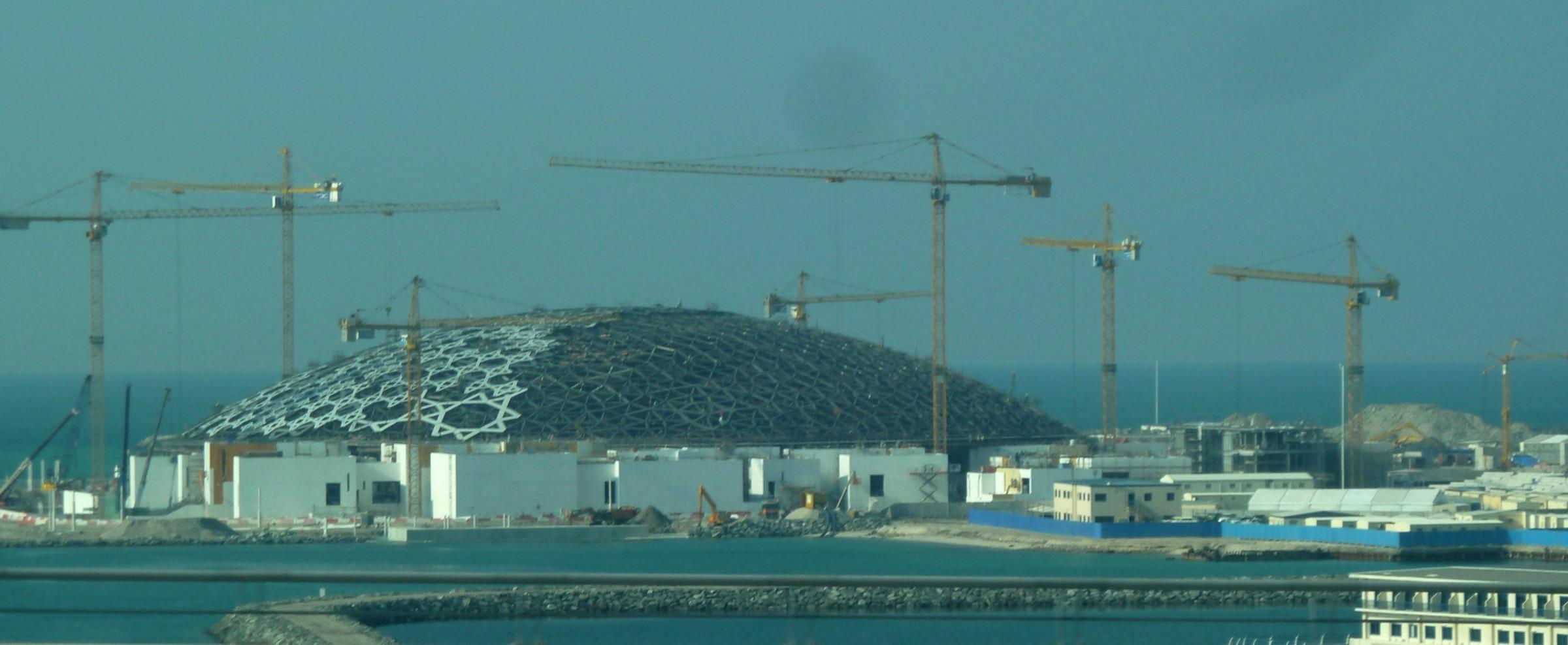
Key takeaways
- EarthCam says its Louvre Abu Dhabi time-lapse covers the construction from 2009 to 2017 and plays back in less than three minutes.
- EarthCam said it installed 10 MegaPixelCam time-lapse cameras around the site, archiving progress from more than 50 different perspectives.
- EarthCam reported capturing more than one million high-resolution images and said its editors reviewed more than 70,000 hours of archived footage for the 4K film.
- It wasn't a single camera recording non-stop for eight years; positions had to anticipate what would change on the site.
Eight years of Louvre Abu Dhabi construction play back in less than three minutes, according to EarthCam. It says the source material spans the project from 2009 to 2017.
The numbers are hard to picture. EarthCam reported capturing more than one million high-resolution images, including billion-pixel (gigapixel) panoramas, while documenting the work on Saadiyat Island. It said its editors reviewed more than 70,000 hours of archived footage to make the final 4K film. You can watch the official Louvre Abu Dhabi time-lapse on EarthCam's YouTube channel, uploaded on 10 November 2017.
Ten cameras, not one
This wasn't a single camera recording video non-stop for eight years. EarthCam said its regional support team installed 10 MegaPixelCam time-lapse cameras at strategic points around the site, archiving progress from more than 50 different perspectives over the life of the project. Dezeen, reporting on the film, wrote that EarthCam's regional team maintained the cameras and installed them in their locations, and that its editorial team later put the footage together.
More viewpoints than cameras matter on a construction site. An angle that shows an empty foundation at the start may later be blocked by scaffolding or a finished wall. As the building changes, the best position for showing its progress changes too.
The Louvre Abu Dhabi time-lapse in numbers, according to EarthCam
- years of construction, 2009 to 2017
- 8
- MegaPixelCam time-lapse cameras
- 10
- perspectives over the life of the project
- 50+
- high-resolution images, including gigapixel panoramas
- 1M+
- hours of archived footage reviewed
- 70,000+
- running time of the finished 4K film
- <3 min
How a camera compresses years into minutes
Time-lapse works by taking individual photographs at set intervals and playing them back as moving images. Instead of recording every moment of a working day, the camera records selected moments. Played back quickly, changes that normally take months become visible in seconds.
An illustration (not EarthCam's settings): a camera taking one photograph every ten minutes across a ten-hour day produces 60 images. At 30 frames per second, that day lasts two seconds on screen. EarthCam hasn't published the capture settings it used at Louvre Abu Dhabi, so this is only an example of the arithmetic.
A Sony help guide for the ILCE-1 describes an Interval Shoot function: the camera shoots stills at an interval and number of shots set in advance, and a time-lapse movie can then be created from those stills using Imaging Edge Desktop (Viewer).
The challenge was keeping the story visible
Working for years on a site in Abu Dhabi adds practical problems. Cameras need secure mounts, dependable power, protective housings and regular maintenance. On a coastal site, heat, dust, humidity and salt all come into play. Our guide to protecting a camera from heat, sand and humidity in the UAE covers those risks. EarthCam said the camera systems it used were designed to withstand the environmental challenges unique to the Middle East. That is EarthCam's description of its own equipment.
Reliable cameras are only half the job. Dezeen described the footage as showing cranes laying the groundworks and foundations, the galleries and pools going up, and the latticework dome being built over the top, before the pools are flooded. Someone still had to choose which images, time periods and camera angles would make that change understandable to a viewer.
What filmmakers can take from it
The lesson isn't that every filmmaker needs ten cameras or an eight-year project. It's that a time-lapse succeeds or fails long before the edit. Camera positions have to anticipate what will change, the equipment has to keep working, and the important milestones have to stay in view.
EarthCam's Louvre Abu Dhabi film shows how a very large archive can become a simple story: a structure that wasn't there, gradually coming into view. Eight years of work are reduced to a few minutes without losing the sense of what it took to build.
Sources
All accessed 23 Nov 2026.
- EarthCam - Official Louvre Abu Dhabi Time-Lapse 2009 - 2017, YouTube, uploaded 10 Nov 2017 (video description)
- EarthCam - Top 10 Time-Lapses of the Decade, Louvre Abu Dhabi (2017) entry
- Dezeen - Timelapse reveals eight-year construction of Louvre Abu Dhabi in just three minutes, India Block, 22 Nov 2017 (copy archived by EarthCam)
- The National - Watch: Building of Louvre Abu Dhabi captured in stunning eight-year time-lapse video, Ian Oxborrow, 12 Nov 2017
- Gulf News - Watch: 8-year time-lapse of Louvre Abu Dhabi, Mariam M. Al Serkal (page last updated 1 Nov 2018)
- Sony - Help Guide for ILCE-1, Interval Shoot Func.
Hero photo: giggel, via Wikimedia Commons, CC BY 3.0.
Frequently asked questions
Over how many years does EarthCam say it filmed Louvre Abu Dhabi?
EarthCam says its time-lapse covers the construction from 2009 to 2017, an eight-year period.
How many cameras, and how many perspectives, did EarthCam use at Louvre Abu Dhabi?
EarthCam said it installed 10 MegaPixelCam time-lapse cameras around the site, recording progress from more than 50 different perspectives.
How many images were captured for the Louvre Abu Dhabi time-lapse, and how much footage was reviewed?
EarthCam reported that more than one million high-resolution images were captured, including billion-pixel panoramas, and that its editors reviewed more than 70,000 hours of archived footage.
How long is the finished Louvre Abu Dhabi time-lapse, and when was it uploaded?
EarthCam describes it as a 4K film of less than three minutes. It was uploaded to EarthCam's YouTube channel on 10 November 2017.

About the editor
Nicole spent five years working in the Middle East, so the region is familiar ground. Producing is what she loves most: bringing the plan, the people and the shoot together.
Related stories
Hoba film opens in US cinemas as The Vile, a year after its UAE release
Majid Al Ansari's Hoba, from Image Nation, was reported to open in US cinemas as The Vile on 20 November 2026, after its Fantastic Fest horror award.
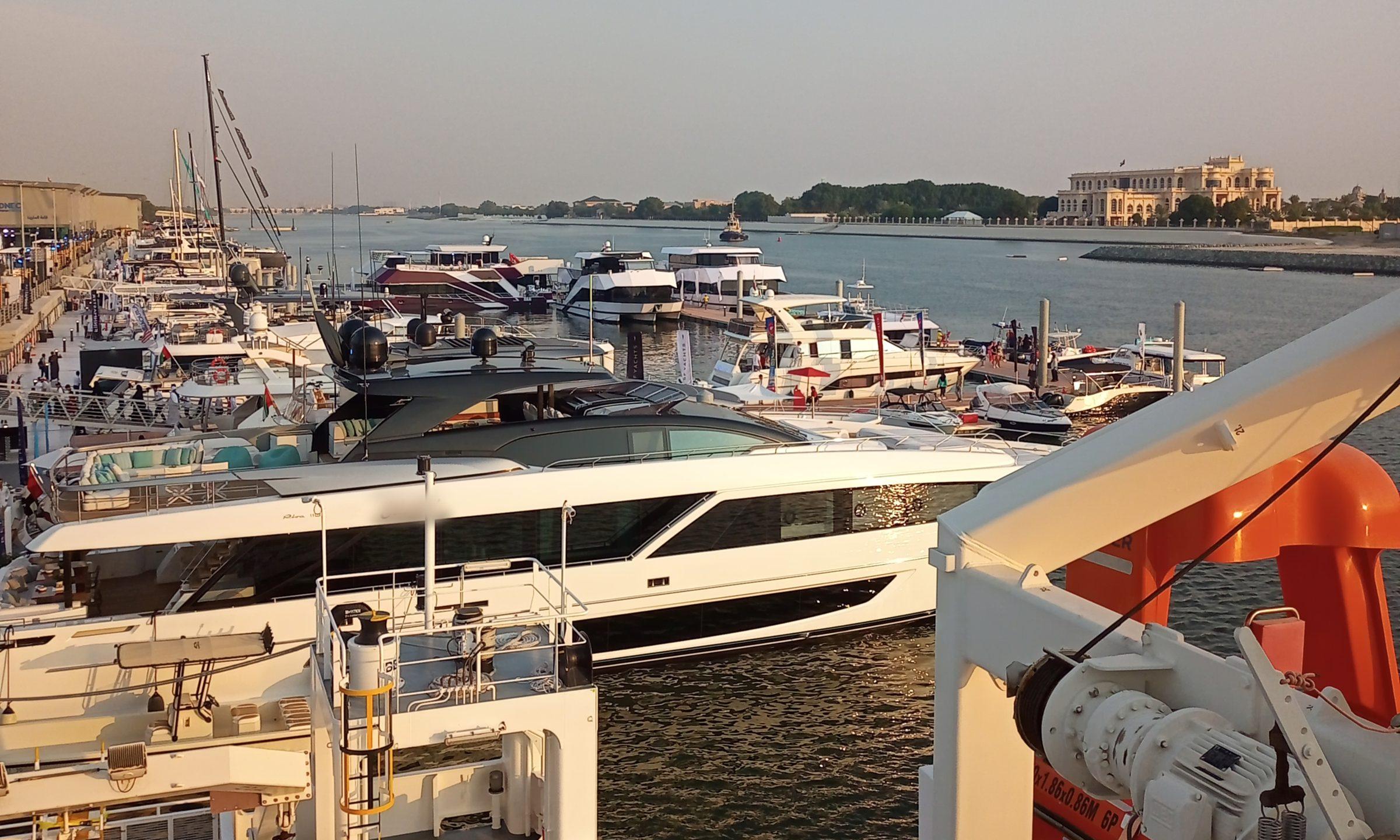
How to photograph boats at the Abu Dhabi International Boat Show: tame the glare, then go tight
How to photograph boats at the Abu Dhabi International Boat Show, 19 to 22 November 2026: a polarising filter for glare, detail shots, marina light and consent.

Pattinson is Bond, and Villeneuve is directing: what the Dune director's Abu Dhabi shoots tell UAE crews
Amazon MGM named Robert Pattinson as James Bond on 16 November 2026, Denis Villeneuve directing. What his past Abu Dhabi Dune shoots mean for UAE crews.