
Rain photography Dubai: how to photograph rain from cover, not a flooded road
Shoot rain photography Dubai safely from cover: wet-road reflections, shutter starting points, and official wadi and flood advice. Stay off flooded roads.
Key takeaways
- Check the latest National Centre of Meteorology (NCM) bulletin and any police or Ministry of Interior advisory before you go out with a camera.
- The Ministry of Interior's 11 November 2026 alert asked people to reduce speed and stay away from valley channels, areas where water collects, wadis, flood-prone areas and beaches.
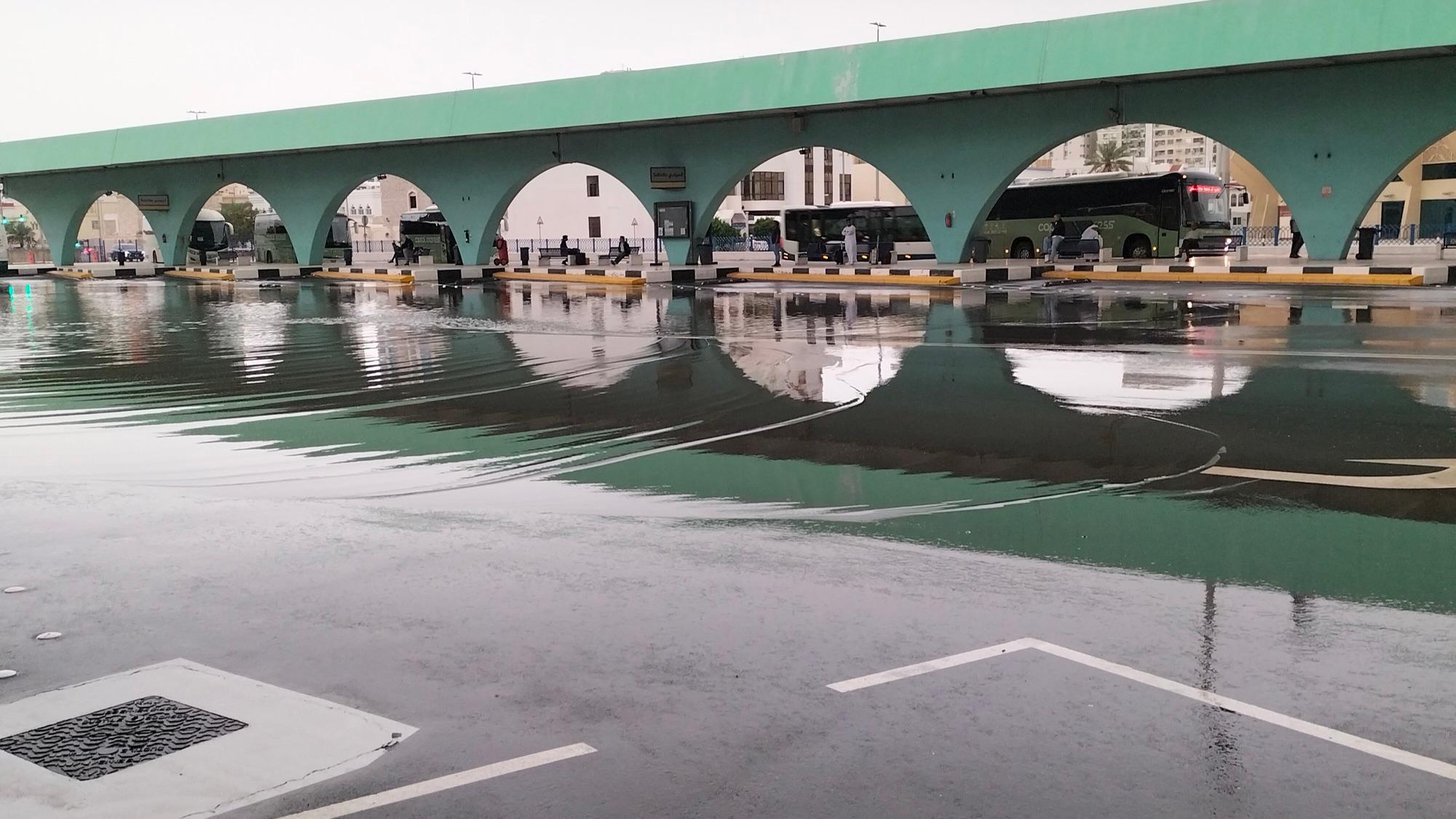
- The most reliable city rain frame is often made just after a shower, when the road or promenade is still wet.
- As starting points, try 1/500 to 1/1000 second to freeze drops and 1/30 to 1/8 second, braced, to draw streaks.
- Weather sealing is a caution, not permission to stand in a downpour: shoot from cover and blot drops off the glass.
Rain days are rare in the UAE, which is why wet weather gets cameras out of bags. Before you go out with a camera, check the latest National Centre of Meteorology bulletin and any police or Ministry of Interior advisory. Scattered showers can leave one street dry and put the next one under a heavy burst.
That's a short window for rain photography Dubai, not a reason to chase a cell of rain down a flooded road. Here's how to photograph rain from cover: wet-road reflections, storm light over the skyline, and shutter choices. Safety comes first, in official words where we have them. This guide was written on 12 November 2026, when NCM forecast scattered rain that may be heavy at times; the same advice holds for the next rain day.
Safety first: stay out of wadis, floods and live lanes
Follow the latest NCM bulletin and any police or Ministry of Interior advisory before you go out with a camera. Scattered showers can leave one street dry and put the next one under a heavy burst.
On Wednesday 11 November, Gulf News reported a nationwide Ministry of Interior weather alert. The ministry's quoted advice was to "exercise caution, follow safety guidelines, reduce speed while driving, and stay away from valley channels and areas where water collects." The same report said the ministry warned people not to approach wadis, where rainwater can accumulate or flow rapidly, to avoid flood-prone areas, and not to go out to sea or visit beaches during the unstable weather. It also flagged rain and winds that could come with thunder, lightning and possible hail.
That wadi and flood advice is standing police guidance too. On 11 April 2026, WAM reported that Abu Dhabi Police asked motorists to stay away from valleys and areas where water accumulates, and warned against entering valleys in the rain. Drivers were told to reduce speed, keep a safe distance, avoid sudden braking, and pull over if visibility becomes severely poor, and to keep clear of electrical installations and of open areas and locations near trees during rainfall.
The official advice behind this guide
- 11 Apr 2026Abu Dhabi Police, reported by WAMStay away from valleys and areas where water accumulates, reduce speed, keep a safe distance, and pull over if visibility becomes severely poor.
- 10 to 16 Nov 2026NCM marine advisoryFor sea-goers and fishermen, reported by Emirates 24|7 on 11 November.
- 11 Nov 2026Ministry of Interior nationwide weather alertReported by Gulf News: reduce speed, stay away from valley channels, wadis, flood-prone areas and beaches, with thunder, lightning and possible hail flagged.
- 12 Nov 2026NCM daily bulletinRainfall over scattered areas at intervals, which may be heavy at times; winds up to 55 km/h on the coast.
A few practical limits follow from that, and from ordinary road sense, without treating them as invented official rules. Do not walk or drive into a wadi, a valley channel, or a road, underpass or car park where water has collected, even for one frame. Do not stop in a live lane, and do not pull onto the hard shoulder just to take a photograph. If visibility is so poor that you need to stop, Abu Dhabi Police's advice is to pull over to the side of the road. Get fully off the carriageway before anyone reaches for a camera. Do not drive around looking for the next downpour. If you are already on the road, slow down as the ministry asked, and turn back if the road starts to flood. If there is lightning, get indoors or into a hard-top vehicle and leave the metal tripod packed.
Can I take this rain shot from here?
Is there thunder or lightning?
The pictures will still be there on wet pavement after the cell has passed.
Reflections on wet roads and promenades
The most reliable rain frame in a city is often the one you make just after a shower, when the road or promenade is still glazed and the air has cleared a little. Wet tarmac, marble and paving turn street lights, shop fronts and the skyline into a second composition under your feet. Get low, keep a lamp or a lit facade in the frame, and leave space in the foreground so the reflection can do some of the work.
A polarising filter can deepen a dark sky, but it can also weaken the reflection you came for. If you use one, rotate it and watch the ground, not only the clouds. For Dubai rain photos at dusk, expose for the highlights in the puddle so the lights do not blow out.
Work from the pavement, a covered walkway or a building entrance, not from the edge of a live carriageway. If you want wider location ideas for a clearer day, use our guide to photogenic spots in the UAE and go back once the roads are safe.
Storm clouds over the skyline
Convective clouds are worth watching on a rain day. NCM's 12 November bulletin described them arriving with the scattered rain, and they can sit over the skyline for a few minutes with a hard edge of light around them. A slightly wider lens helps you keep the buildings as an anchor and the cloud as the subject. Start by exposing for the bright part of the sky so the cloud keeps its texture; you can lift the darker towers later.
Shoot from a doorway, a mall or metro exit, a car park you are already safely parked in, or through a window. A wind of 55 km/h, which NCM gave as the upper coastal figure for 12 November, is enough to rattle a light tripod and throw dust at the front of a lens. Keep the camera close, shield the glass between frames, and do not stand on an exposed roof to "get the sky." The Ministry of Interior's 11 November alert already asked people to stay away from beaches while the weather is unstable.
Freeze the drops, or let them streak
Rain can read as a texture or as weather, and the shutter is what decides. These are starting points, not results from a test shoot, so check the first frames and adjust.
To freeze individual drops, start around 1/500 to 1/1000 second, or faster if the rain is heavy and close to the lens. A doorway or covered walk, with rain falling in front of a darker street or a lit shopfront, makes the drops easier to see. A little backlight, from a street lamp or the sky after it breaks, helps more than raising ISO for its own sake.
To turn the rain into streaks, start around 1/30 to 1/8 second, and slower only if you can brace the camera. A railing, a wall or a table is enough; a tripod is useful once you are fully under cover and out of the wind. Too slow, and the city behind the rain turns to mush. If you're handholding, raise ISO only as far as you need to keep the shutter you chose.
Shutter starting points for rain
Shoot through a window, and from a car only when it is parked
Some of the safest rain frames are made from indoors. Press the lens or phone close to a clean patch of glass to cut reflections, or cup a hand around the lens. Wipe the outside of the pane if you can do so safely. A few drops on the glass can work as foreground; a smear will not. Focus on the street or the skyline, not on the glass.
A car is only a hide if it is already parked, out of live traffic, with the engine off. Do not shoot through the windscreen while moving, and do not pause on a hard shoulder, an exit ramp or the mouth of an underpass. Open a side window a little if the glass is misted, keep the camera inside the cabin, and leave if the road around you starts to flood.
Phone vs camera: starting settings
You do not need a large body for UAE rain. A phone, used with care, will already do honest work on reflections and cloud. A few rain photography tips for phones: lock focus and exposure on a mid-tone, then nudge exposure down a touch if the wet road or the sky is clipping. Burst mode helps you catch a frozen drop or a streak of rain in the street lights. If your camera app has a pro or manual mode, set a fast shutter to freeze rain, or a slower one with the phone braced, and let ISO move. Shoot the highest-quality file you have; a grey, wet street often needs a small contrast lift later. Keep the lens wipeable. A single drop on a tiny phone lens reads as a big blur.
On a camera, start in shutter priority or full manual so the rain, not the meter, sets the look. Use a short to standard zoom you can shield under a jacket, autofocus on a high-contrast edge, and shoot raw. A lens hood helps more in rain than a spare piece of glass on the front. If drops land on the front element, blot them with a clean cloth. Wiping a grit-specked element is how you scratch a filter.
Keep the camera dry
The aftercare is short. Keep the camera under a jacket, a rain cover or a simple plastic sleeve between frames, and change lenses under shelter. When you come inside, let the bag stay closed until the kit has started to warm up, so moist air is less likely to condense on cold glass.
If you use a weather-sealed body, treat that rating as a caution, not as permission to stand in a downpour. Sony's own Help Guide for the Alpha 7 V puts it plainly: "Although this camera is designed and built to be dustproof and drip-proof, it cannot completely prevent the ingress of dust or water droplets." Keep the battery, card and port covers closed, and dry the body as soon as you are under cover. Humidity after the rain is the longer problem in the UAE; our guide to protecting a camera from heat, sand and humidity covers that side of gear care.
Sources
All accessed on the morning of 12 November 2026.
- NCM - Weather bulletin for Thursday 12 November 2026 (PDF, valid 8:00 am to 8:00 am the next day)
- NCM - Download weather bulletin
- NCM - Marine bulletin, last update 12 November 2026 (PDF, sea state through 16 November)
- Khaleej Times - UAE weather: Heavy rains expected in some areas (updated 12 November 2026, 7:19 am)
- Gulf News - Unstable weather in UAE: Heavy rain and 55km/h winds expected on Thursday (updated 12 November 2026, 7:08 am)
- Gulf News - UAE issues nationwide weather alert as thunderstorms loom (11 November 2026), quoting the Ministry of Interior
- Emirates 24|7 - NCM marine advisory for sea-goers and fishermen from 10 to 16 November (published 11 November 2026)
- WAM - Abu Dhabi Police urges motorists to adhere to safe driving during adverse weather conditions (11 April 2026)
- Sony Alpha 7 V (ILCE-7M5) Help Guide, Precautions
Frequently asked questions
Is rain forecast in the UAE, and what does the latest NCM bulletin say?
On the morning of 12 November 2026, yes. NCM's bulletin for that day, valid from 8:00 am to 8:00 am on 13 November, forecast rainfall over scattered areas at intervals, which may be heavy at times. Khaleej Times and Gulf News, both updated that morning, reported the same outlook, and Gulf News said conditions were expected to ease after Thursday. Check the latest NCM bulletin before you go out on any rain day.
Is it safe to go out and photograph the rain in Dubai?
Only if you stay on safe, dry ground and follow official advice. The Ministry of Interior, in an 11 November 2026 alert reported by Gulf News, told the public to reduce speed, stay away from valley channels and areas where water collects, and avoid wadis, flood-prone ground and beaches. Abu Dhabi Police, in a WAM report on 11 April 2026, gave the same wadi and standing-water advice, and said to pull over if visibility becomes severely poor. Do not drive into floodwater or stop in a live lane for a photo.
What shutter speed should I start with to freeze rain, or to show streaks?
Use these as starting points and adjust after the first frames. To freeze drops, begin around 1/500 to 1/1000 second. To draw streaks, begin around 1/30 to 1/8 second, with the camera braced. Nothing here is a field test; the right number depends on how heavy the rain is and how close it is to the lens.
Can I photograph rain through a window, or from a parked car?
Yes. A clean window, with the lens held close to the glass, is one of the safest ways to work. A car is only useful once it is parked fully off the live carriageway, with the engine off. Do not shoot while driving, and do not stop on a hard shoulder or in an underpass to make a frame.
How do I keep my camera or phone dry in the rain?
Shoot from cover, keep the camera under a jacket or a cover between frames, and change lenses indoors. Blot drops on the glass; do not rub grit across it. Weather sealing is not waterproof. For humidity after you get home, see our camera care guide for UAE heat, sand and humidity.
When do wet streets look best for Dubai rain photos, during the shower or just after?
Often just after a shower, when the pavement is still wet and the light has started to return. That's also usually the safer moment, because you are no longer standing in a downpour. Stay on the pavement, watch for spray from passing cars, and leave if an official advisory asks you to.

About the editor
Nicole spent five years working in the Middle East, so the region is familiar ground. Producing is what she loves most: bringing the plan, the people and the shoot together.
Related stories
Street photography consent: take vs publish in the UAE
Street photography consent in the UAE: a five-question check, how to ask in English and Arabic, take vs publish, anonymising and deletion requests.
Preet Uday photographer: the colour-first eye behind Everything Is Photographable
Preet Uday photographer: his colour-led Dubai style and the free Everything Is Photographable talk and Al Quoz photowalk, Sat 28 Nov, 4 to 6 pm (UAE).
Farida Bustani Teaches Photographers to See, Not Just Shoot
Cairo photographer Farida Bustani on seeing before shooting, her long lenses, Soak Academy photowalks, and a simple exercise to try in Dubai.