
How to photograph the supermoon: the UAE's Beaver Moon rises before sunset on 24 November
How to photograph the supermoon in the UAE on 24 November: Dubai moonrise 5:06 pm, disc exposure, foregrounds, and DAG's night at SEE Institute.
Key takeaways
- Timeanddate lists Dubai moonrise at 5:06 pm on Tuesday 24 November 2026, before sunset at 5:28 pm; Abu Dhabi moonrise is 5:11 pm.
- The full-moon moment is 6:53 pm UAE time (14:53 UTC); NASA lists 14:54 UTC, one minute later.
- Timeanddate says a Super Full Moon is around 6% bigger and 16% brighter than an average full moon, a difference that isn't really noticeable in the sky.
- Start at ISO 100, spot-meter the disc and bracket; NASA sets out the Looney 11 rule (f/11, shutter the reciprocal of the ISO) as a starting point.
- Dubai Astronomy Group's Beaver Moon night at SEE Institute, The Sustainable City, runs from 7:00 pm to 9:00 pm, with arrival at 6:30 pm.
The most useful moment to photograph Tuesday's supermoon over the UAE comes before the moon is officially full. Timeanddate lists Dubai moonrise at 5:06 pm, before sunset at 5:28 pm, while the full-moon moment is not until 6:53 pm local time. Abu Dhabi moonrise is 5:11 pm, with the same instant. So if you want a clear plan for how to photograph the supermoon on Tuesday 24 November, when the Beaver Moon rises as a supermoon, start with the clock and the exposure, not the hype. The disc will look slightly larger and brighter than a typical full moon, not a giant in the sky.
When the Beaver Supermoon rises in the UAE
The full-moon moment is a single instant. Timeanddate's moon-phase calendars for Dubai and Abu Dhabi both put it at 6:53 pm local time on Tuesday 24 November, labelled Beaver Moon. That's 14:53 UTC, the time in Timeanddate's November 2026 moon guide. NASA's supermoon list puts the same event at 14:54 UTC, one minute later. Use 6:53 pm UAE time as the local figure.
Moonrise is earlier, and that's the useful time for a photograph. Timeanddate's November 2026 tables, read on the morning of 16 November, give:
| Place | Moonrise, 24 Nov | Full moon, 24 Nov | Notes |
|---|---|---|---|
| Dubai | 5:06 pm, at 62 degrees (east-northeast) | 6:53 pm | Sunset is 5:28 pm, so the moon comes up in daylight |
| Abu Dhabi | 5:11 pm, at 62 degrees (east-northeast) | 6:53 pm | Same full-moon instant as Dubai |
All times are local and, Timeanddate says, take refraction into account. Arrive before moonrise, look east-northeast, and set a tripod while the sky is still light. NASA's November skywatching guide makes the same general point: look east around sunset to watch a supermoon rise. The moon also appears full in the days around the peak, Timeanddate notes. In Dubai, the 23 November moonrise is 4:14 pm, so a cloudy Tuesday still leaves Monday evening.
Tuesday 24 November 2026: the supermoon evening, UAE time
- 5:06 pmMoonrise in DubaiAt 62 degrees (east-northeast), in daylight.
- 5:11 pmMoonrise in Abu DhabiAlso at 62 degrees (east-northeast).
- 5:28 pmSunset in DubaiTwilight brings the sky and the moon closer in brightness.
- 6:30 pmDubai Astronomy Group check-inSEE Institute, The Sustainable City. Programme 7:00 pm to 9:00 pm.
- 6:53 pmFull-moon moment14:53 UTC in Timeanddate; NASA lists 14:54 UTC.
- 8:30 pmDAG telescope observation
What a supermoon actually looks like
A supermoon is a full moon that happens near perigee, the closest point of the moon's orbit around Earth. Dubai Astronomy Group puts it plainly on its Beaver Moon event page: in 2026 the Beaver Moon is also a supermoon, "occurring when the Full Moon takes place while the Moon is near perigee", which "makes the Moon appear slightly larger and brighter than a typical Full Moon." Don't expect a huge disc.
NASA's November 2026 skywatching guide agrees: a closer full moon "appears larger and brighter than average, though the difference can be subtle." Timeanddate's supermoon explainer says Super Full Moons "are around 6% bigger and 16% brighter than an average Full Moon, although this difference isn't really noticeable in the sky." If the rising moon looks enormous, that's mostly the moon illusion, which both sources describe when any full moon sits near the horizon.
The distances come from Timeanddate. At the 24 November full moon the Earth-Moon distance is 360,766 km. Perigee, at 359,347 km, is listed on Timeanddate's Dubai moon-distance calculator at 1:00 am local time on Thursday 26 November, the same instant as the evening of 25 November in UTC. Timeanddate still counts 24 November as a Super Full Moon under the definition it now uses, and NASA lists it as the first of three consecutive supermoons in November, December and January.
How "super" is the 24 November full moon?
- bigger than an average full moon
- About 6%
- brighter than an average full moon
- About 16%
- Earth-Moon distance at the 24 November full moon
- 360,766 km
- perigee, 1:00 am on 26 November (Dubai time)
- 359,347 km
Telephoto vs wide, with a foreground
A long lens isolates the disc and can show maria and crater rims once the moon is well up. A wide or moderate lens does the opposite: the disc stays small, and the picture is the place underneath it, a skyline, a dune line or a mosque, as the moon clears the horizon. For a framed rise, that foreground shot is usually the stronger picture. Our guide to the most photogenic spots in the UAE can help you pick a legal, public viewpoint.
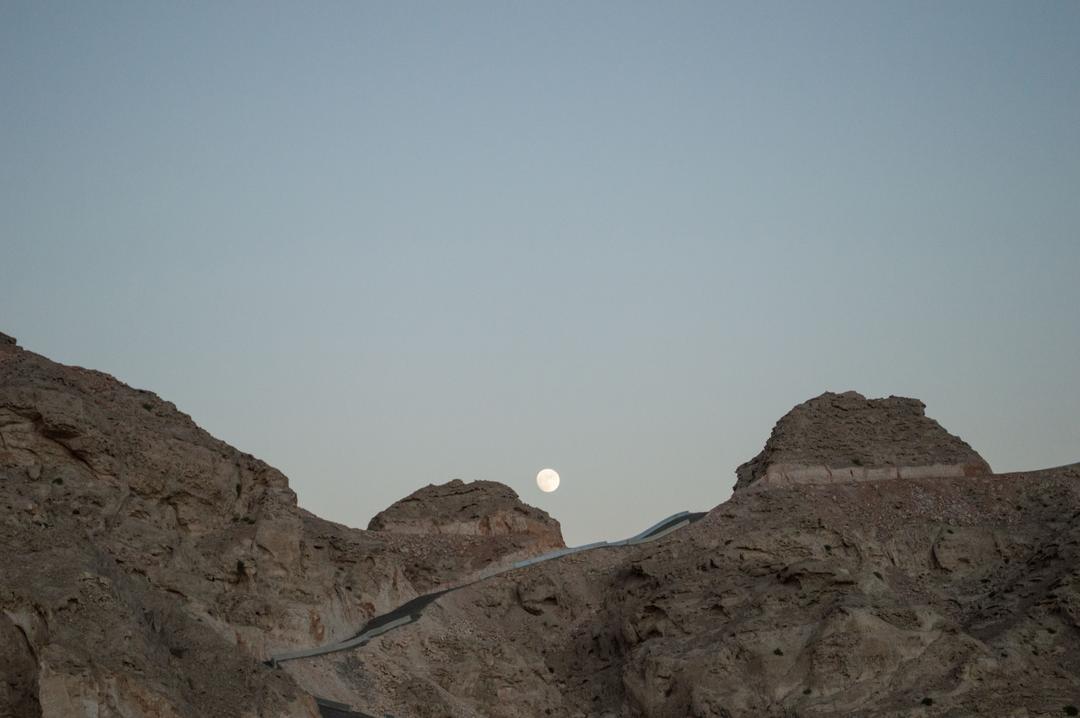
Illustrative only. A full moon rising over rocks in Al Ain, photographed on 8 October 2022. This is not a photograph of the 24 November 2026 supermoon. Photo: Gabriele Niek / Pexels.
If you go into the desert for dunes, stay on a route you already know, take water, tell someone where you are going, and do not drive onto soft sand unless you are equipped for it. That is ordinary caution, not a cited official rule.
One legal limit matters if a building is in the frame. The UAE does not have a general freedom of panorama for commercial use. Federal Decree-Law No. 38 of 2021 on Copyright and Neighboring Rights protects "Architectural Works, and engineering drawings and plans" (Article 2.7). The closest public-place exception, Article 22.7, only stops an author preventing third parties from "Exhibiting Works of fine, applied, plastic or architectural arts in broadcasts, if such Works permanently exist in public places." That exception is limited to broadcasts. It is not a blanket right to sell, license or advertise a photograph of a skyline, a mosque or a landmark tower. If the frame is for commercial use, get advice and a licence from the rights holder. A personal, non-commercial photograph from a public place is a different question, and this is not legal advice.
Exposure for the bright disc: base ISO, spot metering, bracketing
The full moon is a sunlit rock. Against a darkening sky it fools a camera that is trying to expose the whole scene: the land looks fine and the disc becomes a white hole with no texture. Start at a low, base ISO. NASA's Lunar Photography Guide suggests beginning at ISO 100, because the moon is so bright, then checking the shot.
Spot-meter the disc, not the sky. Sony's Help Guide for the Alpha 7 V says Spot mode "measures only inside the metering circle." Put the circle on the moon and review the preview so the surface keeps some grey. Then bracket. The same Sony Help Guide describes Single Bracket as a mode that "shoots multiple images while automatically shifting the exposure from base to darker and then to lighter." These are starting points, not results from a test shoot.
Lunar photographers also use a rule of thumb that NASA's guide sets out as a starting point, the Looney 11 rule. At its most basic, NASA says, set the aperture at f/11 "and make the ISO and exposure time the same." At ISO 100, that means 1/100 second; at ISO 200, 1/200 second. Take the frame, check it, and change one setting at a time. A low or hazy moon often needs a different exposure; our dust and haze photography lesson covers that light.
Looney 11: a starting point, not a recipe
- aperture
- f/11
- base ISO, where NASA suggests you begin
- ISO 100
- shutter at ISO 100 (1/200 s at ISO 200)
- 1/100 s
Use a tripod and fire the shutter without touching the camera: a remote, a self-timer or a phone-app release all do the job. On a Sony Alpha 7 V, for example, the Help Guide recommends the 2-second self-timer "to reduce camera-shake caused by pressing the shutter button," and its Bracket Settings menu has a Selftimer during Bracket option, so the timer also works with a bracketed set. In manual focus, Sony's Focus Magnifier lets you "adjust the focus while an image is magnified," which is the simplest way to get a crisp crater edge. Manual focus on the disc, or use magnified live view, and shoot a raw file if your camera offers one, as NASA suggests.
Phone tips
A phone can make a strong rising-moon picture if you treat the disc as a bright subject, not as a night-sky scene. NASA's lunar photography guide is a plain checklist: stabilise the phone, turn the flash off, tap the moon to focus, and lower the brightness so the disc looks grey rather than a blown white blob. Use a timer if the app has one. Twilight helps, because the sky and the moon are closer in brightness, which is the situation in Dubai at 5:06 pm, before the 5:28 pm sunset. NASA notes that some phones have a genuine optical zoom, while others have digital zoom and just perform a crop, which you could do yourself after you take the picture. Experiment with your zoom to determine whether it will help.
If the sky is hazy
This article does not forecast the weather for 24 November. If dust or haze is in the air, the disc can go pale or milky and contrast drops. That can still be a good photograph, especially with a foreground silhouette. Expose so the moon keeps tone, and go easy on dehaze. For a fuller method, use the dust and haze photography guide, and check the latest National Centre of Meteorology bulletin before you set out.
Watch it with Dubai Astronomy Group
Dubai Astronomy Group is holding a public Beaver Moon (Supermoon) event on Tuesday 24 November 2026 at SEE Institute, The Sustainable City. The official page lists the programme from 7:00 pm to 9:00 pm, with arrival and check-in at 6:30 pm: a lecture, a question-and-answer session, a planetarium show titled "Back to the Moon," and telescope observation from 8:30 pm. DAG says a location pin is emailed after registration, and you should bring the ticket QR on your phone.
We read the prices below from DAG's official event page on 16 November 2026. Prices can change, so check the DAG page before you book.
| Item | Price | Seller | When read |
|---|---|---|---|
| Ticket range | AED 80 to 100 | Dubai Astronomy Group, official event page | 16 November 2026, 10:05 UAE time |
| General Ticket | AED 100 | Dubai Astronomy Group, official event page | 16 November 2026, 10:05 UAE time |
| Kids (Under 13) Ticket | AED 80 | Dubai Astronomy Group, official event page | 16 November 2026, 11:53 UAE time |
This is a framed evening with telescopes provided, not a dark-sky meteor shoot. For that technique, and for the Leonids window earlier in the month, see how to photograph the Leonid meteor shower in the UAE.
Sources
All accessed on 16 November 2026.
- Timeanddate - Moonrise, moonset and moon phase in Dubai, November 2026
- Timeanddate - Moon phases 2026, lunar calendar for Dubai (full moon 24 November, 6:53 pm, Beaver Moon)
- Timeanddate - Moonrise, moonset and moon phase in Abu Dhabi, November 2026
- Timeanddate - Moon phases 2026, lunar calendar for Abu Dhabi (full moon 24 November, 6:53 pm, Beaver Moon)
- Timeanddate - The Moon in November 2026 (full moon 14:53 UTC on 24 November)
- Timeanddate - What is a supermoon, and when is the next one? (24 November distances and the 6% / 16% comparison)
- Timeanddate - Moon distance calculator for Dubai, 2026 (perigee 26 November, 1:00 am local, 359,347 km)
- Timeanddate - Sunrise and sunset times in Dubai, November 2026 (sunset 24 November, 5:28 pm)
- NASA Science - What's Up: November 2026 skywatching tips (full supermoon on 24 November; subtle size difference; moon illusion)
- NASA Science - Supermoons (upcoming list: 24 November 2026 at 14:54 UTC; definition near perigee)
- NASA Science - Lunar photography guide (ISO 100 starting point, Looney 11, phone checklist, tripod and raw files)
- Dubai Astronomy Group - Beaver Moon (Supermoon) event, 24 November 2026, SEE Institute
- Sony Alpha 7 V (ILCE-7M5) Help Guide, Metering Mode
- Sony Alpha 7 V (ILCE-7M5) Help Guide, Single Bracket
- Sony Alpha 7 V (ILCE-7M5) Help Guide, Self-timer (Single)
- Sony Alpha 7 V (ILCE-7M5) Help Guide, Focus Magnifier
- UAE Legislation - Federal Decree-Law on Copyright and Neighboring Rights (official platform)
- English text of Federal Decree-Law No. 38 of 2021, Articles 2.7 and 22.7, as published by AIPPI UAE
- Wikimedia Commons - Copyright rules by territory, United Arab Emirates (no general freedom of panorama; Article 22.7 limited to broadcasts)
Frequently asked questions
What time does the Beaver Supermoon rise in Dubai and Abu Dhabi, and when is it full?
Timeanddate lists Dubai moonrise at 5:06 pm and Abu Dhabi moonrise at 5:11 pm on Tuesday 24 November 2026, both at 62 degrees (east-northeast). The full-moon moment is 6:53 pm local time (14:53 UTC); NASA lists 14:54 UTC. Dubai sunset is 5:28 pm, so the moon rises in daylight.
Will the supermoon really look bigger than a normal full moon?
No. DAG says it will appear "slightly larger and brighter than a typical Full Moon," and NASA calls the difference subtle. Timeanddate's figure is around 6% bigger and 16% brighter than an average full moon, "although this difference isn't really noticeable in the sky."
What camera settings should I start with to photograph the supermoon?
Treat these as starting points, not a field test. Use a tripod, a low base ISO (NASA suggests ISO 100), and spot-meter the disc. NASA also sets out the Looney 11 rule as a starting point: f/11, with the shutter speed the reciprocal of the ISO. Bracket darker and lighter frames.
Can I sell supermoon photos that show the Dubai skyline or a mosque?
Do not assume so. The UAE has no general freedom of panorama for commercial use of buildings. Federal Decree-Law No. 38 of 2021 protects architectural works, and the public-place exception in Article 22.7 is limited to broadcasts. This is not legal advice.
What happens at the Dubai Astronomy Group Beaver Moon event, and how much is it?
It runs from 7:00 pm to 9:00 pm on Tuesday 24 November 2026 at SEE Institute, The Sustainable City, with arrival at 6:30 pm, and includes a lecture, a question-and-answer session, a planetarium show and telescope observation. We read the official price on 16 November 2026 as AED 80 to 100: the General Ticket is AED 100 and the Kids (Under 13) Ticket AED 80. Check the DAG page before you book.
How do I photograph the supermoon if the sky is hazy?
This article is not a forecast for 24 November. If haze or dust is present, expose for the moon, go easy on dehaze, check the latest NCM bulletin, and see our dust and haze photography guide.

About the editor
Wessel has worked in technology for more than 25 years and manages social media for some of the world's biggest brands. He knows which gear earns its place in a working creator's bag.
Related stories
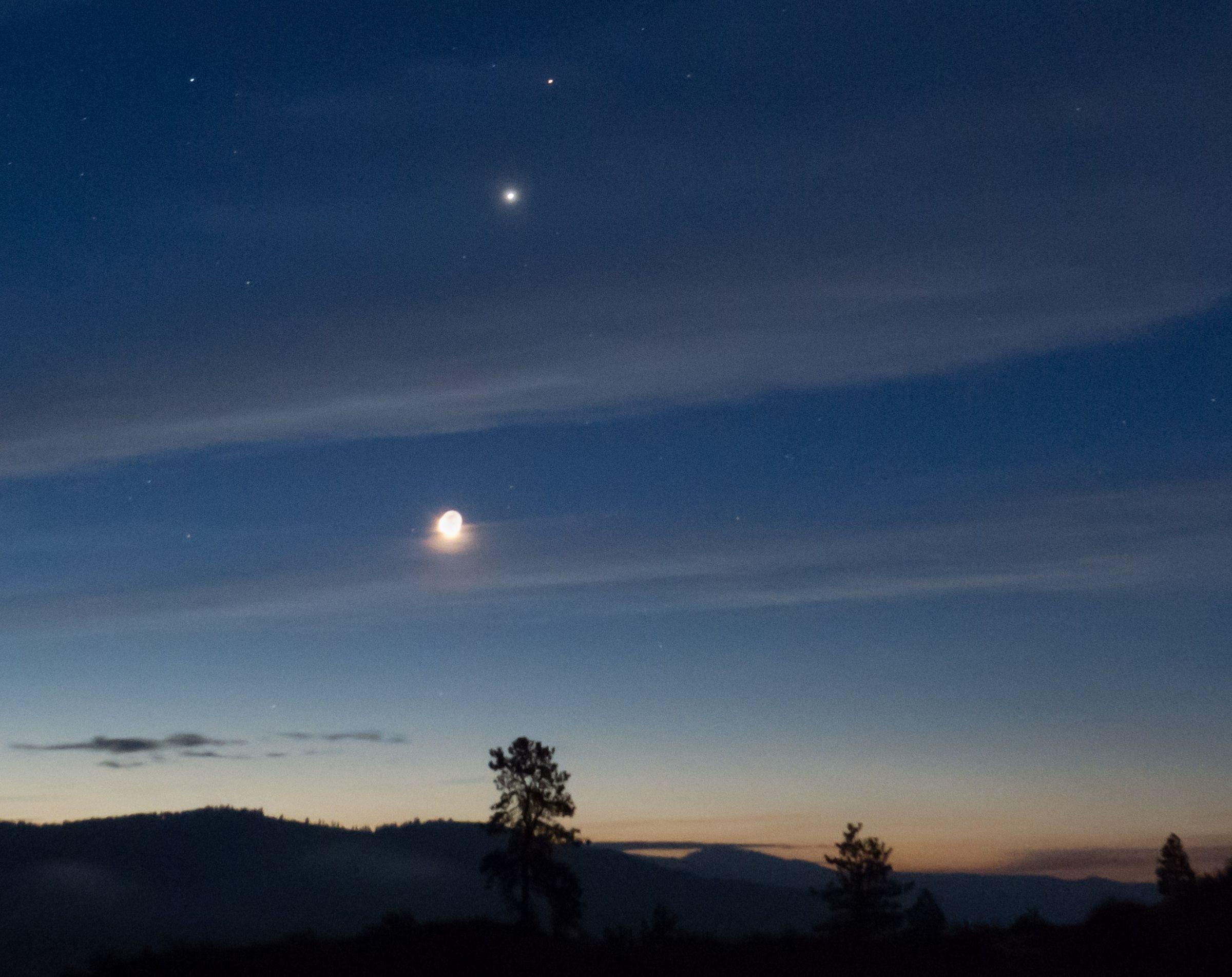
Moon Jupiter conjunction November 2026: how to photograph it from the UAE with a Moon frame and a planet frame
Moon Jupiter conjunction November 2026: how to photograph the Moon, Jupiter, Mars and Regulus before dawn on 30 Nov from the UAE, with a bracket plan.
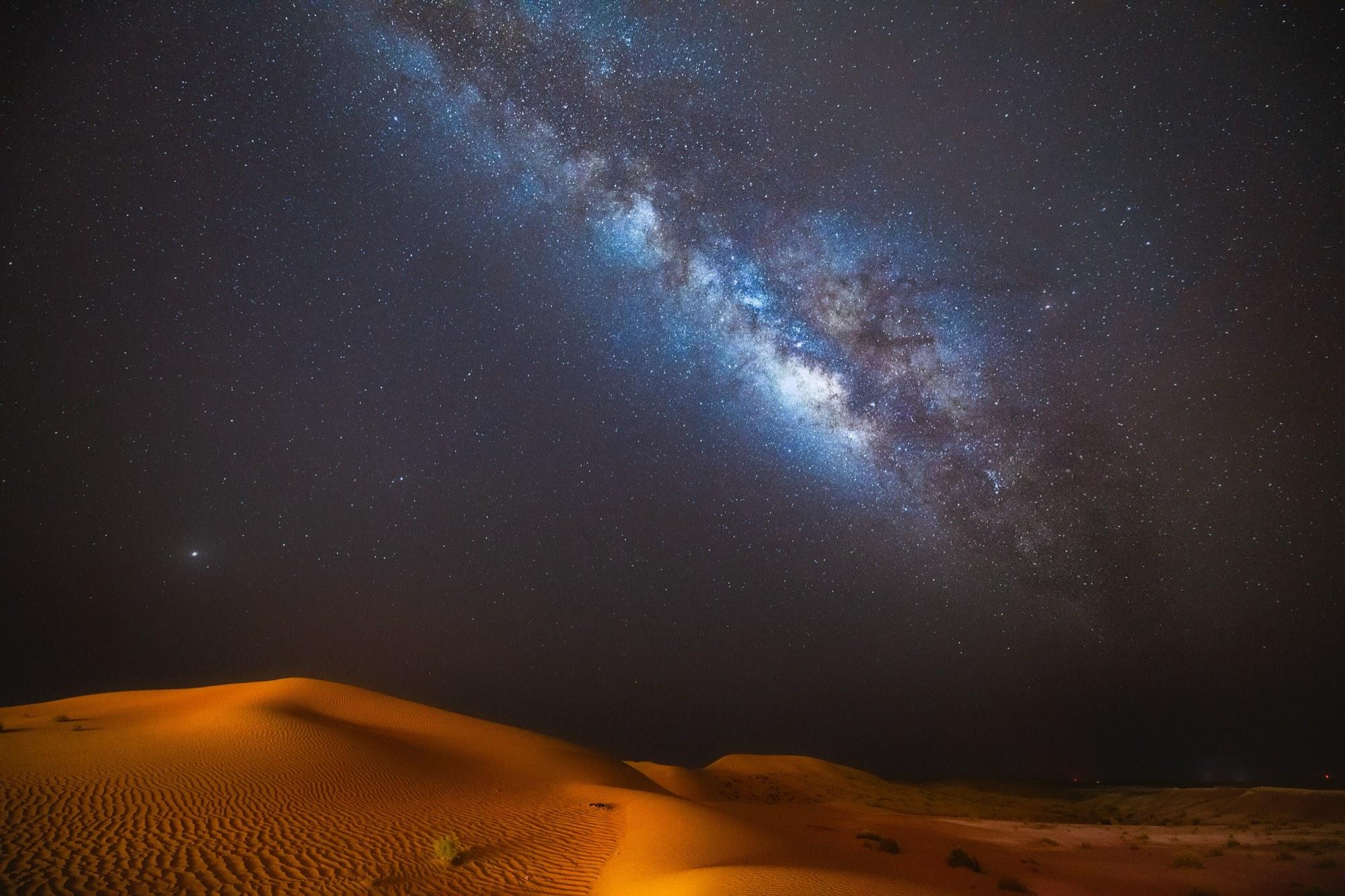
How to photograph the Leonid meteor shower UAE in a modest year
How to photograph the Leonid meteor shower UAE in 2026: which nights sources name, Dubai moonset times, camera settings, dark-sky spots and desert safety.
How far from the Burj Khalifa do you need to stand for each lens?
The exact distance to fit all 828 m of the Burj Khalifa in one photo with 16mm to 200mm lenses, two rules of thumb, and seven Dubai viewpoints.