
Dust photography tips: the haze makes the picture, so shoot it from land, not the beach
Dust photography tips for a windy UAE day: soft haze, sun discs, silhouettes and clean gear, shot from land. Forecast dated 13 to 15 November 2026.
Key takeaways
- NCM's bulletin for Friday 13 November 2026 forecast blowing dust, especially westward, with coastal and island winds of 15 to 30 km/h, reaching 45 km/h.
- A wind and sea warning was reported as in force until 8am on Sunday 15 November 2026; Gulf News said residents are advised to stay away from the sea and beaches while it is in force.
- On any dusty day, shoot from land: a city park, a pavement set back from live traffic, or a car park you are already in.
- Never look at a sun disc through an optical viewfinder, a removed lens or a long lens held to your eye; use the rear screen.
- Do not change lenses outdoors in blowing dust, and use a blower before you wipe anything.
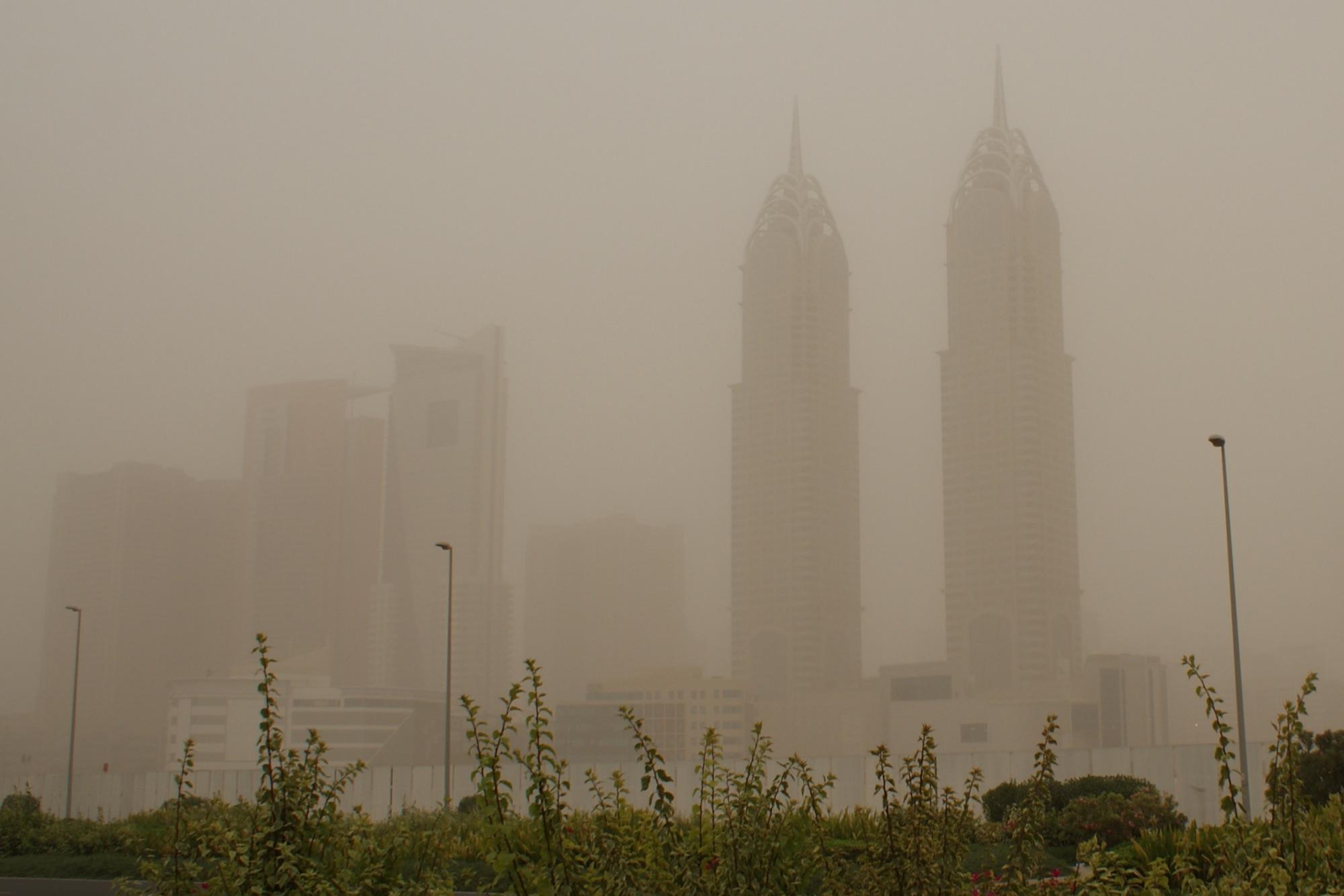
Blowing dust turns the sun into a pale disc and stacks the skyline into soft layers, which is why a dusty, windy UAE weekend makes you want to head for the beach with a camera. Don't. Before you go out, check the latest National Centre of Meteorology bulletin and any warning still in force. NCM's forecast for Friday 13 November 2026, valid from 8:00 am that day to 8:00 am on Saturday, still called for blowing dust, especially westward, with northwesterly winds of 15 to 30 km/h, reaching 45 km/h along the coast and islands.
That's a good window for dust photography tips, not a reason to stand on a beach or a breakwater, or to stop on a hard shoulder for one frame. Here's how to photograph soft haze, pale sun discs and layered silhouettes from land, and how to keep dust out of the camera while you do it. Safety comes first, in official words where we have them. The forecast figures here are dated 13 November 2026; the photography and safety steps work on the next dusty day too, starting with that day's NCM bulletin.
Safety first: stay off the beach while the warning is in force
Follow the latest NCM bulletin, and check the NCM website or app, before you go out. Dust can cut visibility on one stretch of road and leave the next one clear.
The forecast for 13 to 15 November 2026
NCM's Friday bulletin calls for partly cloudy conditions, low clouds over some areas, and light to moderate winds that turn fresh to strong at times over the sea, causing blowing dust especially westward. Coastal and island winds are 15 to 30 km/h, reaching 45 km/h; inland and in the mountains, 15 to 25 km/h, reaching 40 km/h. The Arabian Gulf is rough to very rough at times, the Oman Sea moderate to rough. Khaleej Times, updated at 7:18 am on Friday and citing NCM, reports the same outlook, with highs of 29°C in Dubai and Abu Dhabi. Gulf News, updated at 6:28 am, notes blowing dust particularly in the west.
NCM wind forecast, bulletin of Friday 13 November 2026 (km/h)
A wind and sea warning is still being reported as in force until 8am on Sunday 15 November. Gulf News, on 12 November, said the NCM warning covers fresh to strong northwesterly winds of up to 45 km/h and rough seas, with waves reaching as high as 8 ft, in effect since 12.30 on Tuesday 10 November. NCM's marine forecast, last updated on 13 November, shows Arabian Gulf offshore waves of 6 to 8 ft, reaching 9 ft, on Friday. Reporting that warning, Gulf News said residents are advised to stay away from the sea and beaches while it is in force, and that motorists should take extra care on the roads, where blowing dust may reduce visibility. DXB Edit attributes the beach advice to the NCM.
Saturday is often described in Friday news reports as the calmer of the three days, but NCM's bulletin still has Saturday winds reaching 45 km/h at times over the sea, and the Arabian Gulf remaining rough. Sunday's forecast has cloud at times over some coastal and eastern areas, and winds of 10 to 25 km/h, reaching 40 km/h. The latest NCM bulletin does not mention blowing dust on Sunday. Check the latest bulletin rather than assuming the air will be still.
The dusty weekend of 13 to 15 November 2026
- 12.30, Tue 10 NovWind and sea warning in effectFresh to strong northwesterly winds of up to 45 km/h and rough seas, with waves as high as 8 ft, as reported by Gulf News.
- 8:00 am, Fri 13 NovNCM bulletin: blowing dust, especially westwardMarine forecast: Arabian Gulf offshore waves of 6 to 8 ft, reaching 9 ft.
- Sat 14 NovOften described as the calmer dayNCM still has winds reaching 45 km/h at times over the sea, and the Arabian Gulf rough.
- 8:00 am, Sun 15 NovWarning reported to endEnd time as reported by Gulf News, DXB Edit and The Filipino Times. No blowing dust in NCM's Sunday forecast.
- Mon 16 to Tue 17 NovLight rain possibleOver some coastal and eastern areas.
Where to stand
Stay off beaches while the warning is in force. A corniche or a breakwater is still the sea's edge, so treat those the same way, as ordinary caution, not as a quoted official rule. If dust cuts the view, slow down and give yourself space. Do not stop in a live lane, and do not pull onto a hard shoulder just for a photograph: that is ordinary road sense, not a cited police rule for this weekend. Get fully off the carriageway before anyone reaches for a camera, and do not shoot while the car is moving. The pictures will still be there from a park, a pavement or a car park you are already safely in.
Next dusty day: can I shoot from here?
Where do you want to stand?
Dust photography tips: soft haze and sun discs
Dust in the air acts like a giant diffuser. Contrast drops, edges soften, and the sky can go pale gold or milky white. That's the look to photograph, not a problem to fight in the camera. Buildings, palms and dune lines recede into layers, and the sun can become a visible disc instead of a hard glare.
A sun disc is still the sun. Never look at it through an optical viewfinder, a removed lens or a long lens held to your eye. Sony's Safety precautions for the Alpha 7 V are blunt: "Do not look at sunlight or a strong light source through the camera viewfinder or removed lens." Doing so, the same page says, "may result in vision impairment or blindness." Use the rear screen, and put the lens cap on when you stop.
For the disc itself, start by exposing so the circle of the sun keeps a little colour and the sky around it doesn't turn to a blank hole. If the first frame is a white flare, drop the exposure a little and look again. These are starting points, not results from a test shoot.
Exposure, white balance and a light dehaze
Haze fools a meter in two directions. A bright, milky sky can push the camera to underexpose, so the land goes muddy. A small sun disc can do the opposite. Check the first frames.
For a soft scene, start by exposing so the sky keeps some tone. If the frame looks too pale, drop a third to two thirds of a stop and review. For silhouettes, expose for the bright sky so palms, a skyline or a dune line go almost black. Keep ISO low; there's usually enough light.
Auto white balance can drift cool or a bit green in dust. Try a daylight setting, or a slightly warm one, or shoot raw and decide later. In the edit, a light dehaze or a small contrast lift is enough. A heavy dehaze slider is how you get crunchy halos around towers and palm fronds. These are starting points, not a recipe from a field test.
Silhouettes and layers, from a road or a park
The simplest dusty-day frames often have a clear shape against the pale sky: a skyline, a line of palms, or dunes seen from a park or from a road you can stop on safely. A longer focal length compresses those layers, so a modest telephoto, or your phone's portrait or tele camera, can do more than a wide lens here.
Work from land. A city park, a pavement set back from live traffic, or a car park you are already in, is enough. Dunes are fine when you can see them from a place it's legal and safe to stand, not as an excuse to walk into a live carriageway or park on the hard shoulder. Leave the beach, the corniche and the breakwater alone until the warning has ended and you have checked NCM again.
Keep the camera clean, then change lenses indoors
For longer gear care, see our guide to protecting a camera from heat, sand and humidity. On a dusty day, the shooting rule is simple. Do not change lenses outdoors in blowing dust. Do it in the car, with the doors shut, or indoors, and keep a cap on the body and on the lens you just removed.
Between frames, use a rain cover, a simple bag, or a jacket over the camera. When you get home, use a blower on the front of the lens and around the caps before you wipe anything. Never drag a cloth over grit. Sony's own Help Guide for the Alpha 7 V puts it plainly: "Although this camera is designed and built to be dustproof and drip-proof, it cannot completely prevent the ingress of dust or water droplets."
Light rain is possible on Monday 16 and Tuesday 17 November over some coastal and eastern areas, according to NCM's bulletin and Friday's Gulf News update. For that forecast, use our rain photography lesson.
Phone tips for haze and dust
A phone already handles soft light and a pale sun well, as long as the tiny lens stays clean. Lock focus and exposure on a mid-tone, then nudge exposure down a touch if the sky or the sun disc is clipping. Burst mode helps when the disc is sitting in moving haze or behind a palm. If your camera app has a pro or manual mode, keep ISO low and let the shutter follow the light.
Blow or tap dust off the lens before you wipe. A single speck on a phone lens becomes a big smear. Shoot the highest-quality file you have; hazy frames often need only a small contrast lift later, not a heavy filter.
Sources
All accessed on the morning of 13 November 2026.
- NCM - Weather bulletin for Friday 13 November 2026 (PDF, valid 8:00 am to 8:00 am the next day)
- NCM - Download weather bulletin
- NCM - Marine forecast, last update 13 November 2026 (PDF, sea state through 17 November)
- NCM - Official website
- Khaleej Times - UAE weather: Cloudy conditions, maximum temperature 29ºC in Dubai, Abu Dhabi (updated 13 November 2026, 7:18 am)
- Gulf News - UAE weather forecast: Dusty winds, rough seas expected this weekend (updated 13 November 2026, 6:28 am)
- Gulf News - UAE weekend weather: Cloudy skies, dusty winds and rough seas expected (updated 12 November 2026, 14:27)
- DXB Edit - Dusty winds and waves up to 8ft in the UAE this weekend, says the NCM
- The Filipino Times - UAE braces for winds up to 45 km/h, rough seas over weekend (13 November 2026)
- Sony Alpha 7 V (ILCE-7M5) Help Guide, Precautions
- Sony Alpha 7 V (ILCE-7M5) Help Guide, Safety precautions
Frequently asked questions
Was the UAE dusty and windy on the weekend of 13 to 15 November 2026, and what did NCM say?
Yes, on the morning of 13 November 2026. NCM's Friday bulletin forecast blowing dust especially westward, with coastal and island winds of 15 to 30 km/h, reaching 45 km/h, and that morning's Khaleej Times and Gulf News reports agreed. On the next dusty day, check that day's bulletin before you go out.
Is it safe to photograph from a beach, a corniche or a breakwater during a wind and sea warning?
No. The warning of 13 to 15 November 2026 was reported as in force until 8am on Sunday 15 November, according to Gulf News and DXB Edit, and Gulf News, reporting the NCM warning, said residents are advised to stay away from the sea and beaches while it is in force. Treat a corniche or a breakwater the same way, as ordinary caution, and shoot from land instead.
What settings should I start with for dust and haze photography?
Keep ISO low, and treat these as starting points, not a field test. For a soft scene, expose so the sky keeps some tone; for a silhouette, expose for the bright sky; for a sun disc, hold a little colour in the disc. Try daylight or a slightly warm white balance, or set it later from raw, and add only a light dehaze in the edit.
Can I look at the sun through the viewfinder or a long lens?
No. Never look at the sun through an optical viewfinder, a removed lens or a long lens held to your eye. Use the rear screen, and cap the lens when you stop.

About the editor
André has shot weddings for almost ten years, where every moment happens once and the story has to be caught as it unfolds. He brings that eye for real moments to everything he reviews.
Related stories
Fujifilm X-T5 firmware update: should UAE owners install today, or wait?
A Fujifilm X-T5 firmware update landed on 10 Nov 2026, with X-H2 and X-H2S builds too. What each official page fixes, and how UAE owners can update safely.
Shooting in 45°C: How to Protect Your Camera from Heat in the UAE
Keep stills and video cameras working in UAE heat: operating temps, condensation tips, sand protection, batteries and a practical kit list.
Moon Jupiter conjunction November 2026: how to photograph it from the UAE with a Moon frame and a planet frame
Moon Jupiter conjunction November 2026: how to photograph the Moon, Jupiter, Mars and Regulus before dawn on 30 Nov from the UAE, with a bracket plan.