
Sony vs Canon video in the UAE: heat splits hybrids from cinema bodies
Sony vs Canon video in the UAE: FX3/FX30 and C70/C50 fans vs R5 II/R6 III hybrids, fair Canon counters, and July heat with sources.
Key takeaways
- In UAE heat the bigger split is cooling: Sony's FX3 and FX30 and Canon's C70 and C50 have body fans; the R5 Mark II and R6 Mark III don't.
- Most of these bodies are rated for 0–40°C, while NCM July mean maxima run 39.7–43.8°C and inland stations have passed 49°C.
- Sony's FX3 Help Guide lists about 90 minutes of continuous 4K at both 25°C and 40°C; the 13-hour figure is a USB-powered lab session limit.
- If you're RF-locked and want a fan, compare Canon's C70 or C50 with the FX3 and FX30, not only the hybrids.
Most international Sony vs Canon video debates begin and end with skin tones and autofocus. In the United Arab Emirates, however, the sharpest dividing line is thermal engineering: fan-cooled cinema bodies—Sony’s FX3 and FX30 alongside Canon’s EOS C70 and C50—versus weather-sealed hybrid mirrorless cameras without an internal fan, such as the Canon EOS R5 Mark II and R6 Mark III. Colour science, Dual Pixel autofocus, and your existing RF or E-mount glass still weigh heavily on any production budget, yet midday Gulf ambient temperatures and relentless solar radiation test the limits of every 0–40°C camera chassis on the market.
Ask a commercial director of photography in Dubai which compact camera they trust for uninterrupted summer takes, and the Sony FX3 (or its Super 35 sibling, the FX30) almost inevitably anchors the conversation. Even veteran Canon shooters routinely treat Sony’s compact Cinema Line duo as the industry benchmark to beat. Yet Canon brings formidable answers of its own to the set: prized out-of-camera skin tones, Dual Pixel autofocus, native RF lenses many crews already own, and dedicated Cinema EOS bodies with active cooling fans built for sustained rolling.
Below, we weigh verified manufacturer specifications and independent thermal test data against the practical realities of filming across the Emirates.
Why FX3 and FX30 keep showing up as the video yardstick
Sony’s ILME-FX3 has earned its ubiquity on Gulf commercial sets through a combination of compact rigging and active thermal management. Built around a full-frame back-illuminated Exmor R CMOS sensor (10.3 MP effective for movies, 12.1 MP for stills), it records internal XAVC S-I up to 4K 59.94p at 600 Mbps in 10-bit 4:2:2, offers 4K 120p with a slight 1.1× crop, and includes both S-Cinetone and S-Log3 (rated by Sony at 15+ stops of dynamic range) within a published operating window of 0–40°C.
Crucially, an internal active cooling fan and isolated heat-dissipation pathway allow the FX3 to roll through extended interviews without thermal shutdowns. On its product specification pages, Sony cites uninterrupted 4K 60p recording up to a session limit of roughly 13 hours under controlled laboratory conditions (powered via USB, recording XAVC S-I at approximately 25°C ambient with Fan Control set to Auto and Auto Power Off Temp set to High). At the same time, Sony’s official Help Guide documents approximately 90 minutes of continuous 4K recording at both 25°C and 40°C under its standard XAVC S battery test without external USB power. Working UAE producers keep both figures in mind: a 13-hour laboratory benchmark in a cooled room is not a licence to leave an unshaded camera baking on an asphalt parking lot in July.
Sony FX3 continuous 4K: two published figures
For creators who want identical thermal reliability and Cinema Line ergonomics without the cost of full-frame glass, the ILME-FX30 houses an APS-C / Super 35 Exmor R sensor (20.1 MP effective for movies, 26.0 MP for stills) inside the same 0–40°C actively cooled chassis, complete with selectable fan modes (Auto, Minimum, or Off in Rec).
That real-world reputation explains why the FX3 constantly surfaces as the reference point in shooter discussions. In August 2026, a long-time Canon user took to X to ask whether Canon’s R6V / R6 Mark III was "really as good as an FX3" for someone hoping to keep their RF lenses (@spacegluder, 18 Aug 2026). Another hybrid shooter summarized a common industry split even more succinctly, noting that while they preferred Canon overall, "Sony is far better for video quality" (@RageApplee, 12 Aug 2026). While individual social posts reflect personal workflow preferences rather than laboratory measurements, they capture why Sony’s compact cinema bodies dominate rental-house requests.
How Dubai commercial crews deploy the FX3 on set
Walk onto a boutique commercial shoot in Alserkal Avenue or Dubai Production City and you will regularly spot the FX3 rigged onto gimbals or compact cages. In October 2026, Dubai-based commercial filmmaker @Aminlalanifilms shared a look at a local product campaign shot on a "Sony FX3 + Colbor, script to final cut" workflow. Similarly, a September 2026 creator equipment ranking placed the "Sony FX3 / FX6" pair directly ahead of the "Canon EOS C70 / C50" (@IsaacDiazWorld_, 1 Sep 2026). Rather than treating a single creator’s reel or social ranking as a market census, view them as snapshots of day-to-day Dubai production habits—and remember that Canon’s compact EOS C50 (announced in September 2025) was engineered specifically to challenge the FX3 on its home turf.
For a broader look at how local directors package bodies, audio, and lighting for client shoots, see our guide to the camera setups Dubai creators actually use.
Canon's fair counters: colour, AF and a fan when you need it
Keep RF glass? Colour and Dual Pixel are the real switching costs
Canon’s enduring hold on corporate, documentary, and event videographers comes down to three tangible strengths: effortless skin tones, predictable autofocus, and optical investment. As one filmmaker remarked on X in September 2026, they remained "impressed by the color science canon in video… the best out of camera look you can get" despite all the other downsides (@LelandDutcher, 23 Sep 2026). When a client expects polished corporate interviews delivered two hours after wrap, Canon’s straight-out-of-camera colour matrices save genuine grading time.
Equally decisive is Canon’s autofocus architecture—ranging from Dual Pixel Intelligent AF on the EOS R5 Mark II to Dual Pixel CMOS AF II on the R6 Mark III and C50, and Dual Pixel CMOS AF on the C70 (see our technical comparison of Sony vs Canon autofocus for how both brands handle focus pulls). Add the financial weight of a paid-off Pelican case filled with Canon RF L-series lenses—and the fact that native full-frame third-party autofocus lenses remain far more abundant on Sony E-mount than on RF—and staying within the Canon ecosystem often makes compelling business sense.
R5 II and R6 III: hybrid power without a body fan
| Camera Body | Headline Official Video Specs | Thermal Architecture | Published Operating Environment |
|---|---|---|---|
| Canon EOS R5 Mark II | Up to 8K RAW 60p; 4K up to 120p | Sealed hybrid body (no internal fan); optional CF-R20EP cooling fan grip extends recording in select modes | 0–40°C, ≤85% humidity |
| Canon EOS R6 Mark III | 7K RAW Light (17:9 up to 60p); open gate 3:2 up to 30p; oversampled 4K up to 60p; 4K 120p (non-oversampled); high-frame-rate 2K–FHD | Sealed hybrid body (no internal fan); recording halts automatically if internal temperature spikes | 0–40°C, ≤85% humidity |
The EOS R5 Mark II pairs a 45 MP stacked full-frame sensor with Dual Pixel Intelligent AF and powerhouse 8K RAW internal recording. However, because Canon’s published recording-duration tables are measured at approximately 23°C, ambient UAE heat shortens those runtimes considerably; if long-form video is your primary deliverable on the R5 Mark II, budgeting for the optional CF-R20EP cooling fan grip is essential.
Canon’s EOS R6 Mark III (introduced in late 2025) brings 7K capture and full-sensor open-gate recording to a lighter hybrid chassis as separate recording modes—offering 17:9 Cinema RAW Light up to 60p, or 3:2 open gate up to 30p, alongside oversampled 4K up to 60p and non-oversampled 4K at 120p. It is a remarkably capable hybrid for RF lens owners who split their week between stills and short-clip video, but it is not a fan-cooled cinema camera.
C70 and C50: compare these to FX3, not only the hybrids
When evaluating Sony’s FX3 or FX30 for long-take commercial or documentary work, the fair Canon counterparts are its fan-cooled Cinema EOS bodies rather than its sealed stills hybrids:
- Canon EOS C70: An RF-mount Super 35 camera featuring Canon’s Dual Gain Output (DGO) sensor, built-in active cooling, internal Cinema RAW Light, XF-AVC, and MP4 recording, Dual Pixel CMOS AF, built-in motorized ND filters, and mini-XLR audio inputs. Canon rates its performance window at 0–40°C (85% RH) with an extended operating band of −5–45°C (60% RH), and markets unlimited-duration 4K recording with active cooling under stated test conditions.
- Canon EOS C50: Announced on 10 September 2025 for a late November 2025 release, the C50 packs a ~32.5 MP full-frame 7K sensor into a compact Cinema EOS body built to go head-to-head with the FX3. It delivers open-gate capture, Cinema RAW Light up to 7K 60p (mode-dependent: 17:9 RAW up to 60p; 3:2 open-gate RAW up to 30p), Dual Pixel CMOS AF II, and an onboard active cooling fan within the same 0–40°C (85% RH) performance and −5–45°C (60% RH) operating bands. Weighing approximately 670 g body-only (and roughly 765 g with an LP-E6P battery and media cards), it undercuts the C70’s bulk while retaining cinema cooling. Note one important specification detail from Canon’s documentation: continuous uninterrupted recording is not available when shooting in Cinema RAW Light or XF-AVC on the C50, meaning its fan supports extended takes without mirroring the C70’s "unlimited 4K" behaviour across every codec.
Side by side: FX3 / FX30 vs the Canon shortlist
| Specification | Sony FX3 | Sony FX30 | Canon EOS C70 | Canon EOS C50 | Canon EOS R5 Mark II | Canon EOS R6 Mark III |
|---|---|---|---|---|---|---|
| Sensor | Full-Frame (~10.3 MP video) | APS-C / Super 35 (~20.1 MP video) | Super 35 DGO | Full-Frame (~32.5 MP / 7K) | Full-Frame (~45 MP stacked) | Full-Frame (~32.5 MP) |
| Lens Mount | Sony E | Sony E | Canon RF | Canon RF | Canon RF | Canon RF |
| Headline Video | XAVC S-I 4K 60p (600 Mbps 10-bit 4:2:2); 4K 120p (1.1× crop) | Cinema Line 4K up to 120p; 10-bit 4:2:2 | 4K up to 120p; Cinema RAW Light / XF-AVC | Up to 7K 60p RAW (17:9); 3:2 open gate to 30p | Up to 8K RAW 60p; 4K 120p | 7K RAW Light (17:9 to 60p); open gate 3:2 to 30p; 4K 120p (non-oversampled) |
| Internal Body Fan | Yes | Yes | Yes | Yes | No (optional CF-R20EP fan grip) | No |
| Operating Temp | 0–40°C | 0–40°C | 0–40°C (85% RH); operation −5–45°C (60% RH) | 0–40°C (85% RH); operation −5–45°C (60% RH) | 0–40°C (≤85% RH) | 0–40°C (≤85% RH) |
| Primary Role | Run-and-gun full-frame cinema | Compact Super 35 cinema | Documentary & corporate RF cinema | Compact full-frame RF cinema | Flagship 8K stills/video hybrid | High-value 7K stills/video hybrid |
UAE summer: 0–40°C ratings, July means, and inland extremes
Fan or no fan: the six bodies in this guide
- 4 Body fan: Sony FX3, FX30, Canon C70, C50
- 2 No body fan: Canon R5 Mark II, R6 Mark III
Look across the specification table above and a universal threshold jumps out: nearly every camera is rated for standard performance between 0°C and 40°C. Because the Sony FX3, FX30, Canon C70, and C50 incorporate internal cooling fans while the R5 Mark II and R6 Mark III rely on passive chassis dissipation, Gulf heat divides unfanned hybrids from fan-cooled cinema cameras far more sharply than it separates Sony from Canon. Active fans exhaust internal processor and sensor heat continuously, though they do not magically rewrite the physics of ambient air temperature. And while Canon’s C70 and C50 publish a wider operating band of −5–45°C at 60% relative humidity, coastal UAE summer evenings routinely exceed that 60% humidity ceiling—National Center of Meteorology (NCM) climatology places July mean maximum relative humidity between 64% and 81%—so treat the 45°C figure as a conditional buffer rather than an invitation to bake your rig.
Official climate records illustrate what UAE crews actually face outdoors. According to the NCM July climatology summary reported by Al Etihad (2 July 2024), average daily maximum temperatures across UAE weather stations range between 39.7°C and 43.8°C—meaning a typical July afternoon already hovers right at or above a camera’s 40°C specification before accounting for direct solar load on a black magnesium-alloy body. Inland desert shoots push even harder: on 15 July 2025, the NCM recorded a peak temperature of 49.8°C at Saih Al Salem in Dubai at 1:45 pm, with several other inland stations topping 49°C that afternoon. While 49.8°C represents a single-day inland desert extreme rather than everyday coastal air on Dubai Marina, any 40°C-rated camera rolling at midday between May and September is operating at the edge of its thermal envelope.
Rated for 40°C, filming in a UAE July
- 45°C Top of the C70/C50 operation band (at 60% RH)
- 49.8°C Saih Al Salem, 15 July 2025: a one-day inland extreme
How active fans and sealed hybrids behave in the field
- Sony FX3 / FX30: Internal fans keep 4K shoots rolling reliably in shaded outdoor setups; keep intake and exhaust vents completely clear of desert dust, and weigh the ~13-hour 25°C USB lab figure against the Help Guide’s ~90-minute 4K battery benchmark at 40°C.
- Canon EOS C70 / C50: Dedicated active cooling built for multi-hour documentary and corporate days (with the C70 supporting unlimited-duration 4K under stated conditions, and the C50 fan supporting long takes outside of its non-continuous RAW and XF-AVC modes).
- Canon EOS R5 Mark II: High-bitrate 8K and 4K60/120 modes build heat rapidly in summer ambient air; attach the CF-R20EP cooling fan grip for sustained video work.
- Canon EOS R6 Mark III: Passive cooling only; ideal for short b-roll bursts, gimbal clips, and indoor air-conditioned sets, but requires cool-down pauses if pushed hard outdoors.
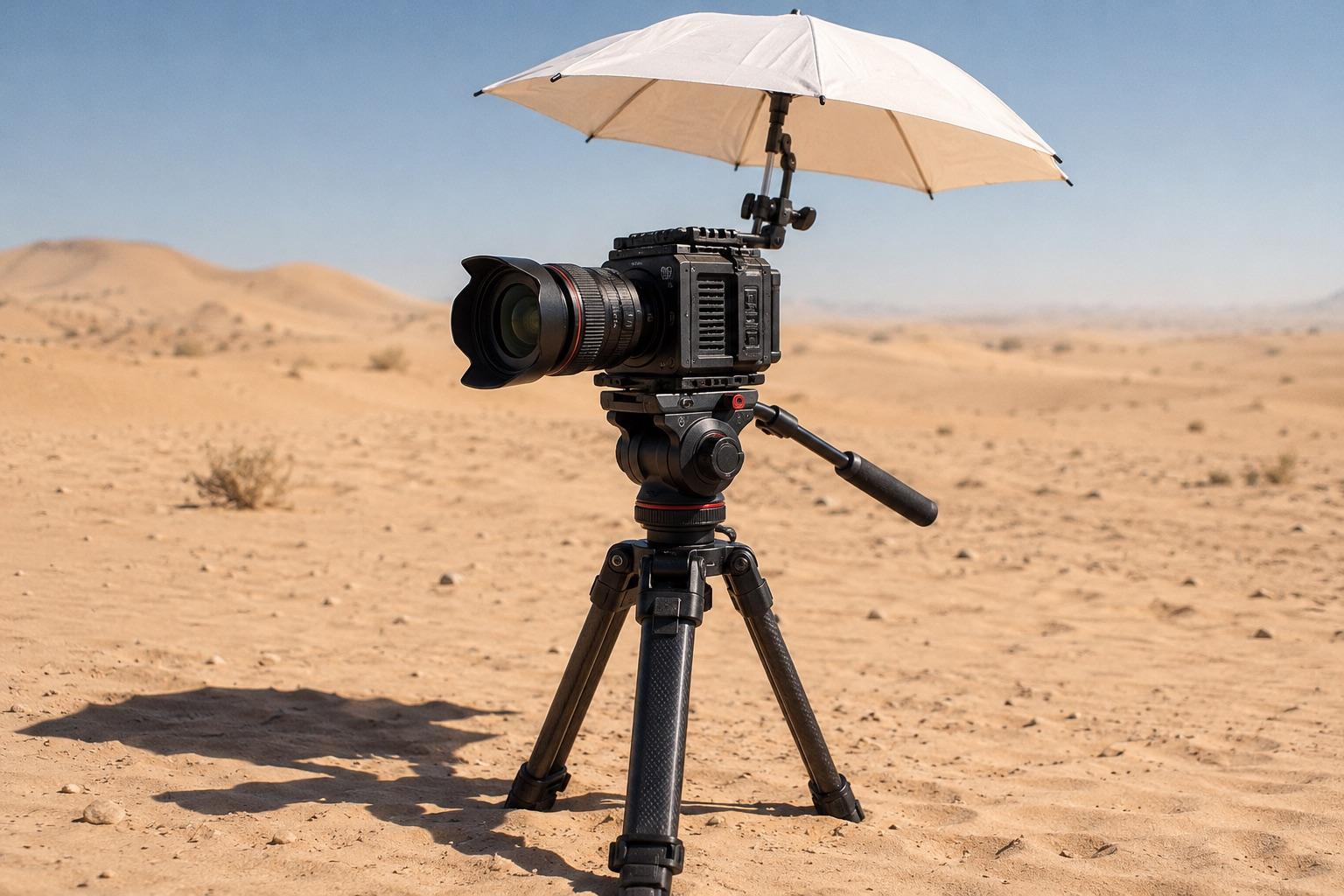
On-set survival habits remain mandatory regardless of brand: schedule exterior shoots for first light or golden hour, rig a white courtesy flag or umbrella over the A-camera between takes, never leave bodies inside a parked SUV, and step down resolution or frame rates when the brief allows. For a complete desert and coastal maintenance protocol, read our guide on how to protect your camera from heat, sand, and humidity in the UAE.
Which body fits your UAE job (not the internet's)
- Commercial social reels & agile Dubai production crews: The Sony FX3 remains the default currency among local producers and gimbal operators, with the FX30 offering an affordable B-camera or entry point. If your shelves are already lined with Canon RF glass and you want full-frame 7K open gate with an internal fan, test the Canon EOS C50.
- Weddings, luxury events & portrait-led hybrid campaigns: The Canon EOS R6 Mark III or R5 Mark II shine when you need to alternate instantaneously between high-resolution stills and expressive short-form video clips with Canon skin tones and Dual Pixel AF (adding the fan grip to the R5 Mark II for longer ceremony speeches). Always secure explicit permission before filming guests; review UAE photography and privacy laws.
- Long-form RF documentary & corporate interviews: The Canon EOS C70 (with internal ND filters and Super 35 DGO latitude) and EOS C50 go toe-to-toe with the FX3 without forcing an E-mount glass conversion.
- Creators already invested in Sigma or Tamron E-mount lenses: Scaling from an FX30 to an FX3 preserves every dirham of your lens budget.
- Location permits & aerial B-roll: Commercial filming in public venues across Dubai and Abu Dhabi requires advance approvals; start with our breakdown of filming permits in Dubai and Abu Dhabi. If your treatment includes drone shots, note that the General Civil Aviation Authority’s Safety Decision 2026-03 (Issue 03, 27 April 2026) suspends drone operations unless you hold a written GCAA exemption. No public notice cancelling that suspension had been issued as of early November 2026, even though general pages on u.ae (updated 2 September 2026) still describe ordinary recreational rules and reference the legacy My Drone Hub app. Always check live status on the official UAE Drones platform and read our guide to flying a drone in the UAE before bringing an aircraft to set.
Choose your system around your lens mount, thermal workload, and post-production turnaround—because a spec sheet alone will never finish a July shoot in Dubai.
Sources
- Sony USA – ILME-FX3 specifications (sensor, codecs, 0–40°C rating)
- Sony Electronics – ILME-FX3A product page (active cooling, uninterrupted 4K 60p / ~13-hour session footnotes)
- Sony Help Guide – FX3 continuous recording & Auto Power OFF Temp (~90 min 4K at 25°C and 40°C)
- Sony USA – ILME-FX30 specifications
- Sony Help Guide – FX30 Specifications, FX30 Fan Control modes, and FX3 Fan Control
- Canon Europe – EOS R5 Mark II specifications (Dual Pixel Intelligent AF, 8K/4K, 0–40°C)
- Canon Manual – EOS R5 Mark II movie recording temperature precautions
- DPReview – Canon EOS R5 Mark II review (recording duration & cooling fan grip context)
- Canon Europe – EOS R6 Mark III specifications (7K RAW Light 17:9, open gate 3:2, oversampled vs non-oversampled 4K)
- Canon Manual – EOS R6 Mark III General Movie Recording and Auto Power Off Temperature
- Canon UK – EOS C70 product overview, UK specifications, and Canon DE specifications (0–40°C / −5–45°C active cooling)
- Canon Cinema EOS – EOS C70 official data sheet (PDF)
- Canon Europe – EOS C50 specifications (7K, open gate, fan, continuous-recording footnote, temperature bands) and Canon UK EOS C50 specifications
- Canon Global Newsroom – EOS C50 official announcement (10 September 2025)
- Canon USA – EOS C50 support & weight specifications (~670 g body only; ~765 g with LP-E6P and cards)
- Al Etihad / NCM – Highest temperature recorded across UAE: 49.8°C at Saih Al Salem, Dubai (15 July 2025)
- Al Etihad / NCM – July climate summary (2 July 2024; mean maxima 39.7–43.8°C & relative humidity 64–81%)
- GCAA – Safety Decision 2026-03 Issue 03 (27 April 2026; UAS suspension & exemption requirements)
- UAE Government Portal (u.ae) – Aviation safety guidelines (updated 2 September 2026)
- UAE Drones – Official GCAA UAS registration platform
- Shooter commentary (X) – @spacegluder on Canon R6V / R6 III vs Sony FX3 (18 August 2026)
- Creator commentary (X) – @RageApplee on Canon vs Sony video quality (12 August 2026)
- Creator workflow note (X) – @Aminlalanifilms Dubai FX3 commercial reel (1 October 2026)
- Creator commentary (X) – @LelandDutcher on Canon video colour science (23 September 2026)
- Creator commentary (X) – @IsaacDiazWorld_ cinema camera ranking (1 September 2026)
Frequently asked questions
Is Sony or Canon better for video in 2026?
For sustained 4K run-and-gun filming in the Gulf, many commercial crews treat Sony’s FX3 and FX30 as the practical benchmark thanks to their compact active cooling fans and S-Cinetone / S-Log3 workflows. Canon wins projects on straight-out-of-camera skin tones, Dual Pixel AF, and RF L-series optics—especially when shooting on the fan-cooled EOS C70 or C50, or an EOS R5 Mark II equipped with a cooling grip. Ultimately, UAE heat separates fan-cooled cinema bodies from sealed stills hybrids far more than it separates Sony from Canon by badge alone.
Is the Canon R6 Mark III real, and is it an FX3 rival?
Yes. Canon officially launched the EOS R6 Mark III in late 2025, featuring internal 7K Cinema RAW Light (17:9 up to 60p) and 3:2 open-gate recording (up to 30p) as distinct modes. However, because it is a sealed hybrid body without a built-in cooling fan, it is designed for stills-and-video versatility rather than continuous midday cinema takes. For long-form video, compare the FX3 directly against Canon’s fan-cooled C50 and C70.
Will the FX3 overheat in Dubai summer?
Sony rates the FX3 for operation between 0°C and 40°C. While Sony’s laboratory tests show uninterrupted 4K 60p recording up to roughly 13 hours on external USB power at ~25°C, the official Help Guide also lists approximately 90 minutes of continuous 4K recording at 40°C on internal battery power. Because July afternoon shade temperatures in the UAE average 39.7–43.8°C (and inland desert peaks can approach 50°C), an internal fan is not a license to ignore solar load. Keep the camera shaded between takes and follow strict summer heat management habits.
Does the Canon C50 beat the FX3?
On paper, the Canon EOS C50 brings full-frame 7K resolution, 3:2 open-gate capture, Dual Pixel CMOS AF II, and an active cooling fan into a 670 g body—making it Canon’s most direct challenger to the FX3. Keep in mind that continuous recording is not available in Cinema RAW Light or XF-AVC modes on the C50. Your existing lens mount, colour grading pipeline, and side-by-side rental testing should drive the decision rather than social media rankings.
Should I buy based on social media opinions?
Treat social media threads as anecdotal workflow notes rather than engineering proof. Whether a post praises the FX3 on a Dubai commercial set or champions Canon’s out-of-camera colour science, always validate your purchase against official thermal specifications and a local weekend rental test.
Do I need a filming permit for creator content?
Casual personal clips filmed unobtrusively in permitted public areas are treated differently from commercial productions. As soon as you are shooting for a brand, deploying tripods, lights, or crew, or filming on private developments, you will typically need location approvals and permits; start with our guide to filming permits in Dubai and Abu Dhabi.
What about filming people in public?
Under UAE privacy law, you must obtain explicit consent before photographing or filming identifiable individuals—never assume implied consent on public streets, beaches, or commercial gym floors.

About the editor
Wessel has worked in technology for more than 25 years and manages social media for some of the world's biggest brands. He knows which gear earns its place in a working creator's bag.
Related stories
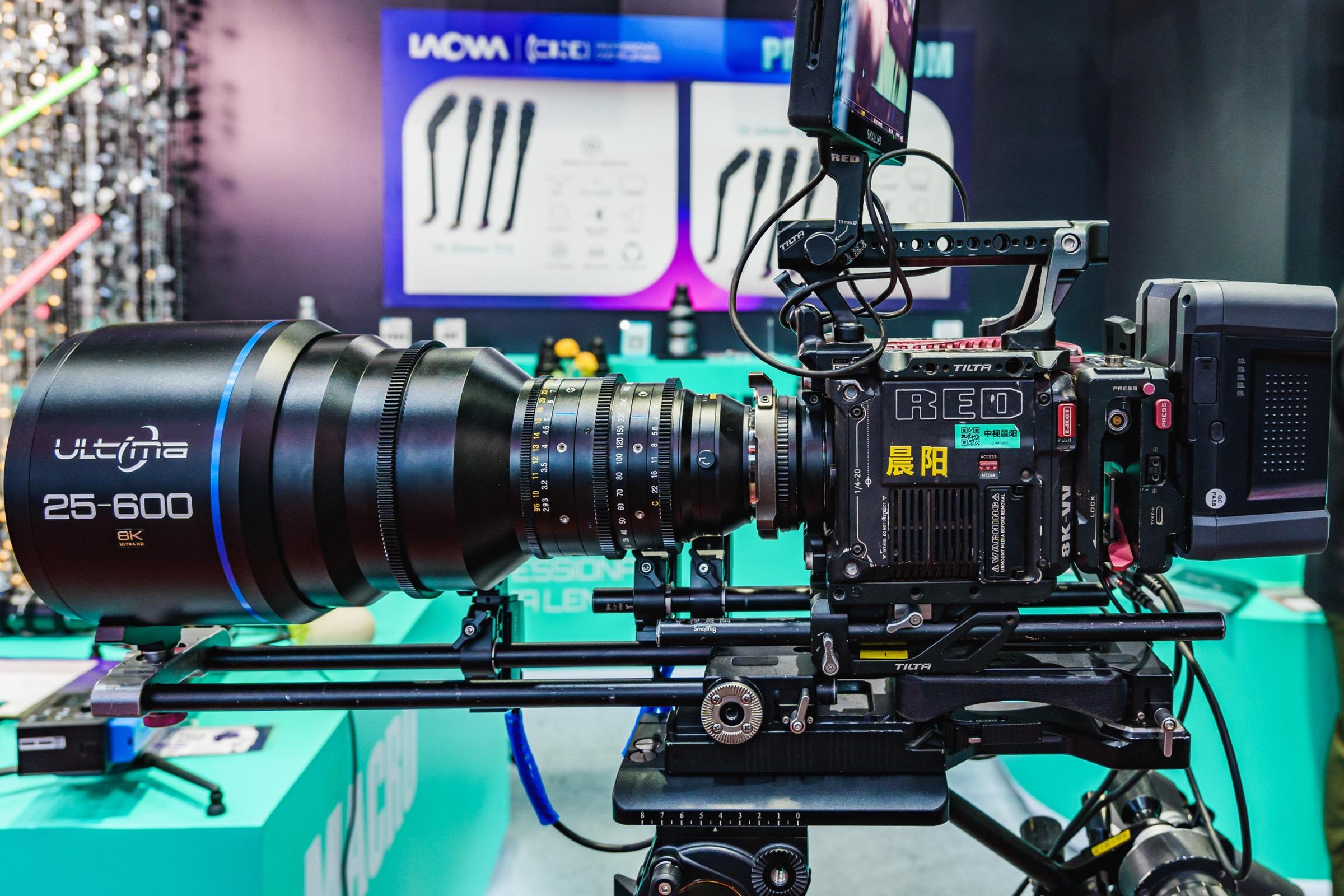
RED Komodo-X price: US$4,995 at B&H, US$6,995 at RED. Is a RED now realistic for UAE filmmakers?
RED Komodo-X price: US$4,995 at B&H, US$6,995 on RED's store. Official specs, the UAE dealer price on 13 Nov 2026, warranty and buy vs rent.
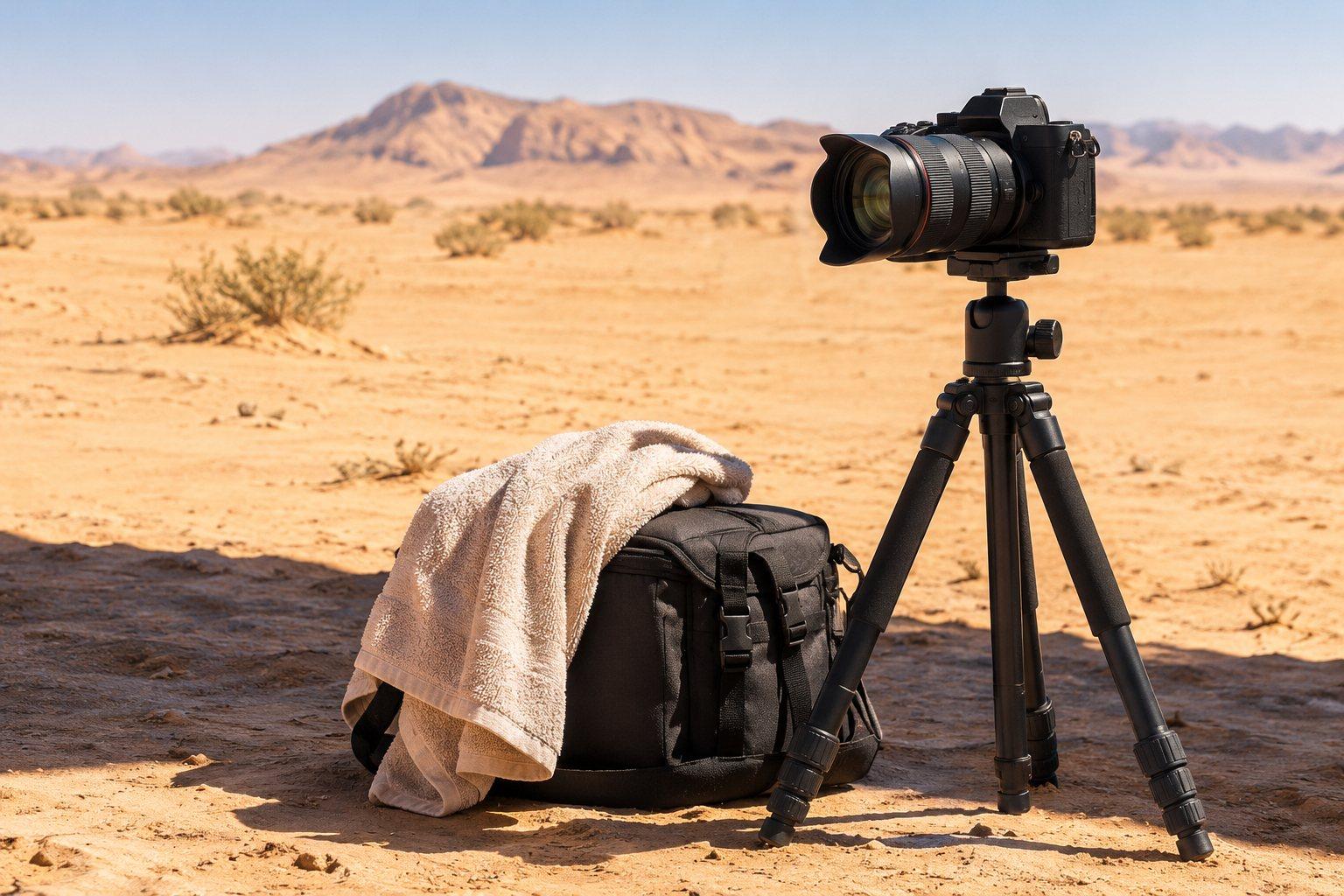
Shooting in 45°C: How to Protect Your Camera from Heat in the UAE
Keep stills and video cameras working in UAE heat: operating temps, condensation tips, sand protection, batteries and a practical kit list.
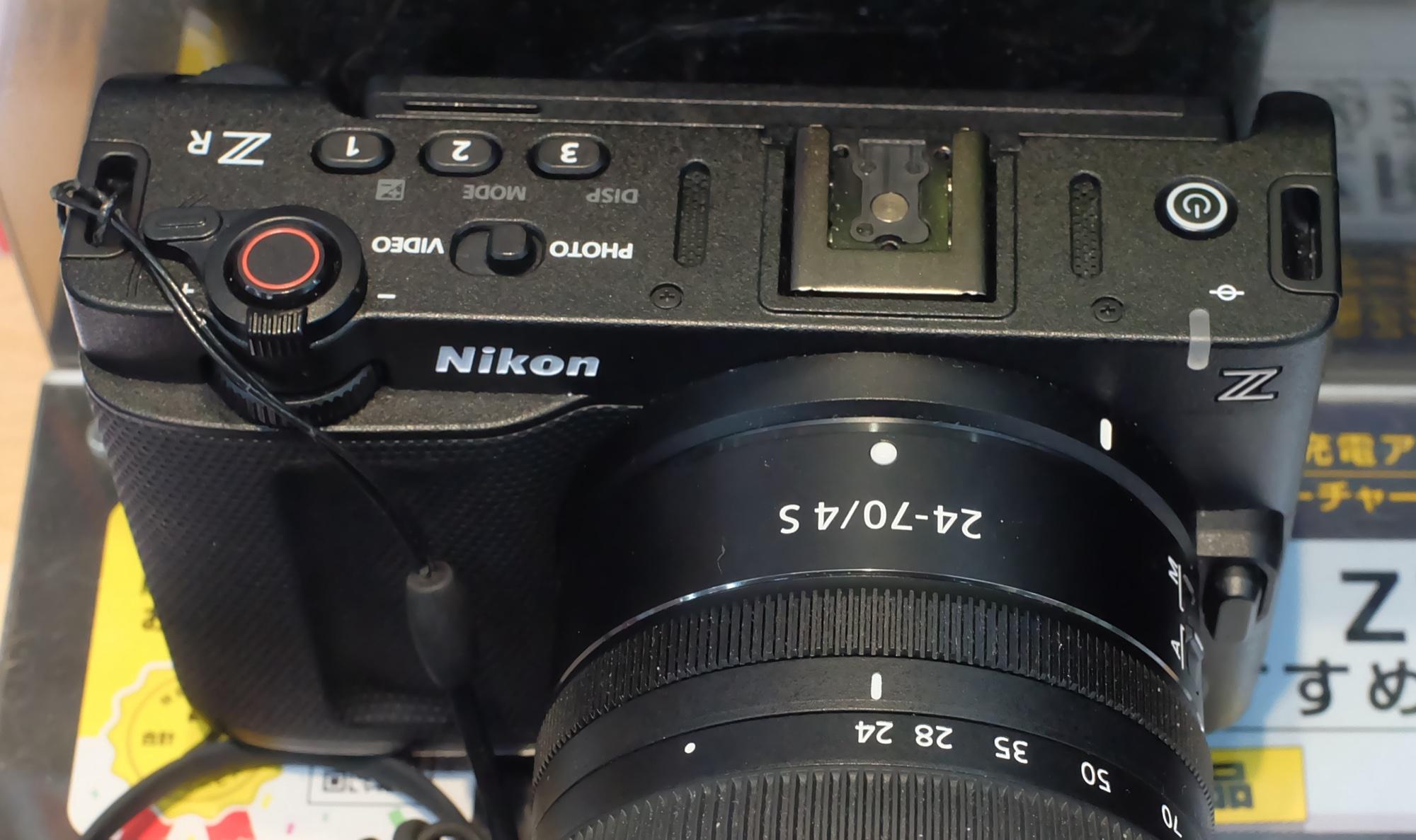
Nikon ZR firmware 2.0 is out: RED colour, R3D NE and UAE filmmakers
Nikon ZR firmware 2.0 is out (24 Nov 2026): Log3G10 H.265, four-level High ISO NR, HDMI 3D LUT, R3D NE peaking, and how UAE filmmakers can install it.