
Sony vs Canon autofocus: pick the subject, not the brand war
Sony vs Canon autofocus for UAE shoots: how both systems detect subjects, then beach, falconry, Yas and event settings. X takes stay opinion.
Key takeaways
- Both systems now detect people, animals and vehicles; choosing the right subject class matters more than the logo.
- Sony's α7R V adds Real-time Recognition AF with a dedicated AI processing unit and pose estimation; hybrids such as the α7 IV use Real-time Tracking and Real-time Eye AF.
- Canon's Dual Pixel CMOS AF uses two photodiodes in every imaging pixel, and Eye Control AF on the R3, R1 and R5 Mark II moves the AF point to where you look.
- Neither brand has a falcon mode: use Bird or Animals, continuous AF and a zone while the bird is small.
Children sprinting across glaring Jumeirah sand, a falcon launching off a leather gauntlet in the desert, GT cars diving into the hairpin at Yas Marina Circuit: in the field, modern mirrorless cameras from both Sony and Canon recognise humans, animals and vehicles and lock onto them at blistering speeds. Online, however, social media commentary still treats autofocus as a winner-take-all rivalry—such as a widely shared October 2026 post on X wishing for a Canon body with "the best auto focus canon has ever put in a camera" while holding up Sony's α7R V as the benchmark to beat. Social posts like that capture photographer sentiment rather than controlled laboratory testing.
For photographers working across the UAE, the practical question behind Sony vs Canon autofocus is far more grounded: which camera within your budget reliably recognises the subjects you are shooting this weekend, and how quickly can you master its autofocus menus before stepping onto a paid job? Whether you are building one of the camera setups Dubai creators actually use or prepping for a track day in Abu Dhabi, here is how both autofocus architectures work under the hood—followed by field-tested starting settings for beach portraits, falconry, Yas Marina motorsport and crowded events.
On Sony's side, hybrid workhorses like the α7 IV rely on Real-time Tracking and Real-time Eye AF, while newer bodies equipped with a dedicated AI processing unit—led by the α7R V—step up to Real-time Recognition AF. Canon builds phase-detection directly into virtually every imaging pixel with Dual Pixel CMOS AF II, layers deep-learning subject recognition on top, and adds viewfinder-guided Eye Control AF and Dual Pixel Intelligent AF on its flagship bodies.
What subject detection buys you (and what it doesn't)
A generation ago, autofocus meant nudging a single focus point over a subject and hoping your thumb kept pace. Modern subject detection autofocus analyses the scene for a specific category of subject first—person, bird, car—and then anchors focus on the most critical detail within that silhouette, typically the nearest eye, head, helmet or cockpit.
Even with AI-assisted recognition, the photographer still controls three core variables:
- Focus mode: Single-shot (
AF-Son Sony /One-Shoton Canon) for static portraits and architecture, or continuous (AF-Con Sony /Servoon Canon) for anything in motion. - Focus area: A pinpoint spot, a flexible zone, or whole-frame tracking.
- Subject recognition class: People, Animals, Birds, Vehicles, Insects, or Auto/Off.
Three choices you still make
When recognition is pushed past its limits—by severe backlight, tiny distant targets, foreground clutter, or simply leaving the menu set to the wrong subject class—both systems fall back to conventional distance- and contrast-based focusing. Both manufacturers explicitly note in their manuals that subject recognition is not guaranteed in every lighting or framing condition. Rehearsing the right mode and area pairing before a shoot matters far more than the logo on the prism.
Sony's path: tell it who, then hold the eye
Real-time Tracking and Real-time Eye AF
On mainstream full-frame hybrids such as the Sony α7 IV, Sony pairs Real-time Tracking—which evaluates colour, brightness pattern and subject distance—with Real-time Eye AF for humans, animals and birds across both stills and video (Sony UK α7 IV AF features). Tapping a subject on the rear LCD initiates Touch Tracking, and the moment an eye becomes visible, Real-time Eye AF seamlessly takes over. According to Sony Europe's α7 IV specification release, the camera deploys 759 phase-detection points covering approximately 94% of the sensor area and shoots continuous bursts with full AF/AE tracking at up to 10 fps.
In practice, Sony's workflow is intuitive: tell the camera which subject class to look for, initiate tracking, and let it hold the eye.
Real-time Recognition AF (α7R V class)
When Sony introduced the α7R V, it paired the BIONZ XR engine with the Alpha line's first dedicated AI processing unit built specifically for subject recognition (Sony Electronics launch release; Alpha Universe announcement). Branded Real-time Recognition AF, the system uses deep learning and human pose estimation to map skeletal and torso positions, keeping focus locked onto a person even when they turn their back to the lens, wear a helmet or step into deep shadow (Alpha Universe deep dive).
As detailed on Sony Asia Pacific's α7R V feature page, selectable recognition targets expand to Human, Animal/Bird, Animal, Bird, Insect, Car/Train and Airplane. Stills phase-detection spans up to 693 points across roughly 79% of the image frame, focuses down to EV −4.0 (at ISO 100 equivalent with an f/2.0 lens) in AF-S, and tracks continuous bursts at up to 10 fps (PetaPixel's long-term α7R V review notes its enduring benchmark status for high-resolution stills alongside faster stacked-sensor peers for pure sports speed). Subsequent AI-unit Alpha models inherit this recognition architecture, though exact menu options vary by body.
Canon's path: Dual Pixel plus where you look
Dual Pixel CMOS AF II
As explained in Canon Europe's Professional Infobank, Dual Pixel CMOS AF equips every effective pixel on the imaging sensor with two independent photodiodes. By comparing phase differences between those twin signals directly on the image plane, the camera calculates both focus direction and distance across the entire sensor without relying on separate autofocus sub-mirrors—delivering seamless, gap-free tracking for stills and smooth, cinematic focus pulls in video.
Dual Pixel CMOS AF II debuted on the EOS R5 and EOS R6 in 2020, combining that dual-photodiode sensor architecture with EOS iTR AFX deep-learning subject detection. Both the EOS R6 Mark II and the newer EOS R6 Mark III carry this system forward. On the EOS R6 Mark II specification sheet, Dual Pixel CMOS AF II covers 100% × 100% of the frame in Face + Tracking and auto-selection modes, focuses down to an impressive EV −6.5 to 21 under stated test conditions, and recognises Humans, Animals (dogs, cats, birds and horses) and Vehicles (formula cars, GT race cars, motorbikes, aircraft and trains), with selectable left- or right-eye priority (Canon USA support guide).
Eye Control AF and Dual Pixel Intelligent AF
Canon also offers a distinct viewfinder technology that is often confused with standard eye detection: Eye Control AF. Rather than detecting a subject's eye in the scene, optical sensors inside the electronic viewfinder of the EOS R3, EOS R1 and EOS R5 Mark II track the photographer's own pupil, moving the initial autofocus point to wherever you look in the finder before handing off to continuous Servo tracking (DPReview EOS R5 II autofocus analysis; PetaPixel EOS R5 II comparison). Mid-range bodies like the EOS R6 Mark II feature full subject eye detection, but do not include viewfinder Eye Control AF.
In 2024, Canon introduced Dual Pixel Intelligent AF on the EOS R1 and EOS R5 Mark II, powered by its Accelerated Capture system (combining a DIGIC Accelerator chip with the DIGIC X processor) (DPReview EOS R5 Mark II review). It strengthens upper-body tracking when athletes cross behind obstacles, adds registered-person priority, and introduces Action Priority mode for specific ball sports—though for UAE falconry and Yas Marina motorsport, standard Animal and Vehicle detection modes remain your primary tools.
Stated autofocus coverage of the frame
Fair credit: what each system is actually good at
- Where Sony stands out: Pose-based human recognition and a granular seven-category subject menu (including dedicated Bird and Insect classes) on AI-unit bodies like the α7R V, alongside rock-solid Real-time Tracking and Eye AF on workhorse hybrids like the α7 IV.
- Where Canon stands out: Whole-sensor Dual Pixel phase detection that transitions effortlessly between stills and Movie Servo AF; exceptional low-light AF sensitivity ratings (down to EV −6.5 on the R6 Mark II); comprehensive Vehicle and Animal recognition (including horses, dogs, cats and birds); and viewfinder Eye Control AF on the R5 Mark II, R3 and R1 for selecting a specific player or guest in a crowded frame. Many portrait photographers also praise Canon's skin-tone rendering alongside its eye tracking—a point echoed in a September 2026 X post comparing flagship systems—though colour preference always comes down to personal taste and grading workflow.
When shots come back soft from a UAE location shoot, the culprit is almost never Canon or Sony hardware—it is leaving the camera on the wrong subject preset or AF area for the scene in front of you.
UAE settings that matter more than the logo
Use these manufacturer-backed starting configurations when preparing for four classic UAE shooting environments—whether you are visiting the 15 most photogenic spots in the UAE or shooting a commissioned event. Because extreme summer glare and blowing grit challenge both lenses and camera bodies, pair these menu tweaks with proper field care from our guide on protecting your camera from heat, sand and humidity in the UAE.
Starting AF settings for UAE shoots
What are you shooting?
Beach kids: sand fools exposure first
- Core setup (both brands): Continuous focus (
AF-C/Servo), Wide or Whole-Area tracking, Subject Detection set to People / Human, and Eye Detection enabled. - Sony menu:
AF-CwithTracking: WideorTracking: Zone, Subject Recognition set to Human, and Touch Tracking ready on the LCD. - Canon menu:
Servo AFwithWhole Area AForFlexible Zone, Subject to detect set to People, and Eye Detection set to Auto. - Field tip: Blinding white Gulf beach sand tricks camera metering into underexposing faces long before it confuses autofocus. Watch your histogram or zebra stripes and keep your shutter speed above 1/1000 s.
Falconry: no "falcon" mode on either brand
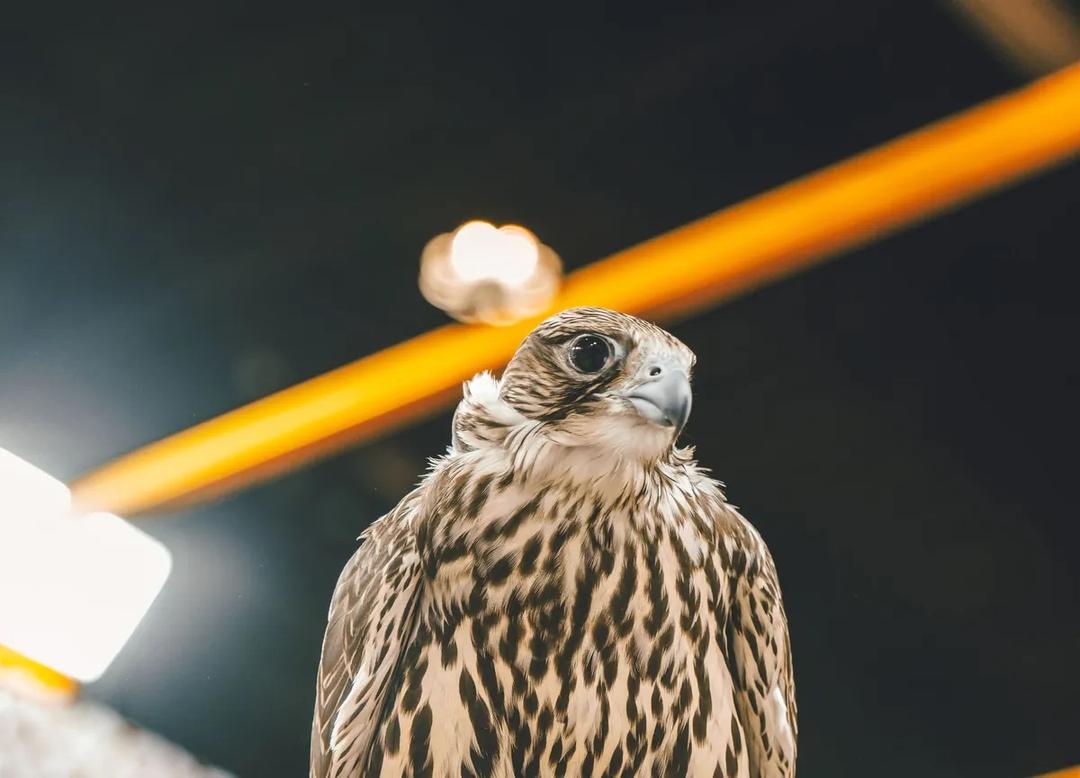
Bird or Animals class, continuous AF and a zone while the bird is small. Photo: Wzm Pictures / Pexels.
- Sony menu: Select Bird (or Animal/Bird depending on the model) in
AF-C. Start with a medium Flexible Spot or Zone while the falcon is small against the desert horizon, letting Real-time Eye AF snap to the eye as it closes in. - Canon menu: Select Animals (which encompasses birds on Dual Pixel CMOS AF II bodies like the R6 Mark II and R5 Mark II) in
Servo AF, using a Zone AF area rather than a single pinpoint spot during flight. - Field tip: Neither brand has a dedicated "Falcon" preset—practise tracking gulls or pigeons along the Creek or Corniche before your first desert falconry shoot.
Yas Marina: vehicle class, then pan technique
- Core setup (both brands): Continuous focus (
AF-C/Servo), high-speed continuous drive, and a deliberate panning motion that matches the car's angular speed. - Sony menu (AI-unit bodies like α7R V): Select Car/Train (or Airplane for airshows) with Tracking active. Note that the older α7 IV does not have a dedicated Vehicle recognition mode—on that body, turn Subject Recognition off or use standard Zone/Tracking AF so the camera does not hunt for human faces in the grandstands.
- Canon menu: Select Vehicles and enable Spot detection so the system locks onto the driver's helmet or cockpit rather than the front wing.
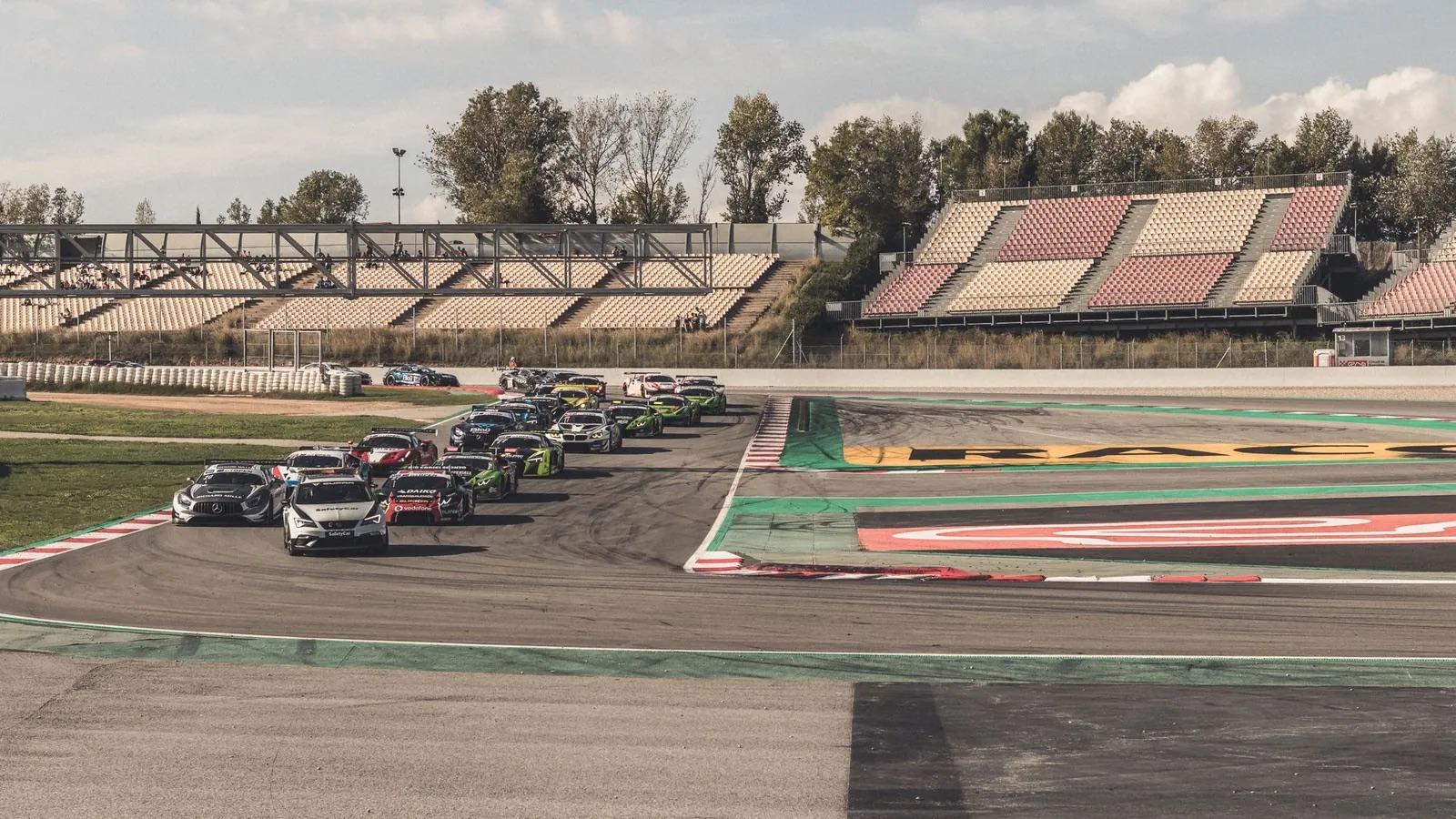
- Field tip: When a tight pack of GT cars rounds a corner behind catch fencing, pre-focus on the apex kerb and use a tighter AF zone so foreground barriers do not hijack your focus plane.
Crowded events: eye AF meets consent
- Core setup (both brands): Continuous focus with People / Human and Eye AF active. During busy winter activations—such as those covered in our Dubai Shopping Festival photography guide—use Register People Priority (on supported Canon bodies) or Face Memory (on Sony bodies like the α7 IV and α7R V) so the camera stays locked onto the bride, keynote speaker or VIP guest rather than jumping to passing waiters.
- Low-light ballrooms: Canon's EV −6.5 sensitivity rating helps in dim hotel venues, while Sony's pose estimation excels when a speaker turns away from the podium in profile.
- Legal and permit awareness: In the UAE, technical autofocus speed never overrides personal privacy. Always respect UAE photography and privacy laws before photographing identifiable individuals, and ensure your production holds the required filming permits in Dubai and Abu Dhabi for commercial event coverage.
Sources
- X — @ty_ock93 (29 Oct 2026): α7R V framed as AF bar for a wished-for Canon body — opinion
- X — @techcraftedx (15 Sep 2026): mixed flagship take; Canon R5 Mark II credited for eye-tracking AF / skin tones — opinion
- Sony Electronics mediaroom — α7R V launch: AI processing unit, Real-time Recognition AF, subject list, 10 fps AF/AE
- Sony Asia Pacific — α7R V AF features: AI unit, pose estimation, 693 points / ~79% coverage, EV −4.0, subject types
- Alpha Universe — α7R V announcement mirror (Real-time Recognition AF)
- Alpha Universe — deep dive: pose estimation / human body points description
- Sony UK — α7 IV AF: Real-time Tracking, Real-time Eye AF (human / animal / bird)
- Sony Europe press — α7 IV: 759 phase-detection points, ~94% coverage, Real-time Tracking / Eye AF
- Sony Help Guide — α7 IV Tracking / Touch Tracking behaviour
- Canon Europe Infobank — Dual Pixel CMOS AF / AF II / Dual Pixel Intelligent AF, Eye Control AF, iTR AFX, subject tracking
- Canon Europe — EOS R6 Mark II specifications: Dual Pixel CMOS AF II, coverage, EV −6.5, humans/animals/vehicles
- Canon USA support — EOS R6 Mark II subject to detect and eye detection options
- DPReview — Canon EOS R5 Mark II in-depth review (AF system context vs peers)
- DPReview — EOS R5 II autofocus field notes (Servo layers, subject recognition, Eye Control)
- PetaPixel — How the Canon EOS R5 II compares to peers (AF coverage / Eye Control notes)
- PetaPixel — Sony a7R V three years later (class leader for general stills; peers stronger for action speed)
Frequently asked questions
Is Sony autofocus better than Canon?
Neither brand holds an undisputed monopoly. Canon's Dual Pixel CMOS AF II and Dual Pixel Intelligent AF excel at seamless whole-frame tracking, low-light lock and video focus pulls, bolstered by Eye Control AF on flagship bodies. Sony's Real-time Recognition AF (with human pose estimation and seven subject classes on AI-unit bodies) and Real-time Eye AF are equally formidable. Social media posts crowning one system are personal opinions; test the specific bodies within your budget at a Dubai or Abu Dhabi showroom.
Real-time Eye AF vs Real-time Recognition AF?
Real-time Eye AF (found on cameras such as the Sony α7 IV) locks onto human, animal or bird eyes once a face or eye is detected. Real-time Recognition AF (introduced on the Sony α7R V) adds a dedicated AI processing unit that uses skeletal pose estimation to recognise human bodies even when faces are turned away, alongside expanded subject classes including Insects, Cars/Trains and Airplanes.
Does Dual Pixel CMOS AF II work for video?
Yes. Because every pixel on the imaging sensor performs phase detection, Canon's Movie Servo AF delivers smooth, configurable focus transitions and natural touch-screen focus pulls across all supported subject classes.
Which cameras have Eye Control AF?
Canon documents viewfinder Eye Control AF—which tracks where the photographer's pupil looks inside the electronic viewfinder—on the EOS R3, EOS R1 and EOS R5 Mark II. Other Canon RF cameras (such as the EOS R6 Mark II and EOS R8) detect the subject's eyes in the scene without tracking the user's eye in the finder.
Sony or Canon for Yas Marina AF?
Choose whichever body gives you a dedicated Vehicle recognition mode paired with a telephoto lens you can comfortably rent or buy in the UAE. Both Canon (on the R6 Mark II, R5 Mark II and peers) and Sony (on AI-unit bodies like the α7R V) track race cars and motorbikes, including helmet/cockpit prioritisation. Smooth panning technique and shooting through clear gaps in trackside fencing matter just as much as the camera brand.
Will autofocus replace learning modes?
No. Leaving either camera in single-shot (AF-S / One-Shot) for a diving falcon, or trying to track a sprinting child with a tiny pinpoint spot, will produce out-of-focus frames on the most expensive flagship body. Mastering continuous AF, zone sizing and subject preset selection remains essential.

About the editor
Nicole spent five years working in the Middle East, so the region is familiar ground. Producing is what she loves most: bringing the plan, the people and the shoot together.
Related stories
Compact camera sales 2026: CIPA shipments up 15%, full-frame down 20%
CIPA data to September 2026: built-in-lens camera shipments up 15.4%, full-frame and larger down 19.9%. Canon's Q3 view, and what it means in the UAE.
RED Komodo-X price: US$4,995 at B&H, US$6,995 at RED. Is a RED now realistic for UAE filmmakers?
RED Komodo-X price: US$4,995 at B&H, US$6,995 on RED's store. Official specs, the UAE dealer price on 13 Nov 2026, warranty and buy vs rent.

Best compact full-frame camera: glare, grams or cabin depth
Compare the smallest full-frame cameras for Dubai souks, desert trips and carry-on travel. Real manufacturer sizes, weights, EVF and IBIS.