
Why some sports and event shooters switch Canon to Sony (and what it means in the UAE)
Why some sports and event shooters switch Canon to Sony: stacked-body specs, AF, low light, and what you give up, with a UAE framing.
Key takeaways
- Among the bodies compared, only Sony's A9 III pairs a full-frame global shutter with a 120 fps stills ceiling; the A1 II pairs about 50.1 MP with 30 fps.
- Canon's answers aren't slow: the R1 shoots up to 40 fps electronic with Dual Pixel Intelligent AF and Action Priority, and the R3 and R5 Mark II reach 30 fps.
- Price the lens path, not only the body: adapted EF glass is a bridge (Metabones documents about 10 fps AF-C on the original A9), not a substitute for native FE teles.
- X posts about switching are opinion, not proof of a UAE trend; demo both systems in your real light before selling a paid-off RF kit.
An independent field guide for UAE sports and event photographers. Specifications and firmware evolve; verify current details on manufacturer pages before purchasing. This is not a sponsored review.
Your Canon RF lenses are paid off, your muscle memory is automatic, and your agency clients love the skin tones coming straight out of your bodies. Then an indoor tournament under flickering arena LEDs—or a fast-moving concert stage in Dubai—starts eating into your keeper rate. That is the inflection point where some working action photographers decide to switch Canon to Sony: not because social media declared a winner, but because specific sensor architectures change what a camera can hold at extreme shutter speeds and high ISO. Separating online conversion chatter from laboratory measurements and real-world Gulf shooting conditions is the only way to tell whether a system migration actually pays for itself.
Social chatter says switch; specifications say measure
Spend ten minutes browsing gear threads on X and you will find plenty of anecdotal testimony pointing indoor-sports photographers toward Sony’s stacked-sensor lineup. In October 2026, one action shooter noted that Sony’s stacked A1, A7, and A9 series are purpose-built for low-light arenas and fast motion, adding that after researching the options they switched from Canon to Sony and couldn't be happier with the results (@steve__pants, 8 Oct 2026). A couple of months earlier, another photographer documented making the same leap from Canon to Sony after completing their first full year of sports photography (@NickStuppVisual, 16 Aug 2026).
Those first-hand accounts reflect genuine enthusiasm in the field, yet individual testimonials require context. Another widely shared post praised the move to a Sony A7R V after shooting on a Canon EOS 90D (@whobedannyd, 2 Nov 2026)—a jump from an older APS-C DSLR to a modern high-resolution full-frame body rather than a peer-to-peer flagship sports conversion. Similarly, when a Dubai commercial filmmaker shares a behind-the-scenes reel shot on a Sony FX3 for a fitness brand (@Aminlalanifilms, 1 Oct 2026), that reflects Cinema Line video adoption on local sets rather than a stills-agency migration. Before pricing out a system swap, you have to look past the timeline and examine the sensors themselves.
The arena problem: high shutter, high ISO, subjects that cut
Court sports under LED arena roofs, floodlit night racing at Yas Marina, and festival stages share the same optical headache: you need a fast shutter to freeze erratic movement, high ISO to survive dim or cycling fixtures, and continuous autofocus that never drops a player cutting across the frame. Stacked CMOS sensors read out vastly faster than conventional front- or back-illuminated chips, suppressing rolling-shutter skew while feeding uninterrupted data to the autofocus and auto-exposure engines.
Sony’s Alpha 9 III represents the most radical engineering bet in this category. Sony markets it as the world’s first interchangeable-lens camera equipped with a full-frame global shutter sensor, delivering blackout-free bursts at up to 120 fps with full AF/AE tracking and a maximum still shutter speed of 1/80,000 second (subject to stated wide-aperture limits, and applicable to stills rather than movie recording). DPReview’s in-depth review confirms that exposing every pixel simultaneously eliminates classic rolling-shutter distortion—no bent golf clubs, warped stadium signage, or flash-sync banding—while maintaining formidable sports AF tracking.
However, a global shutter carries a measurable physics trade-off. DPReview’s image-quality and dynamic-range analysis (4 January 2024) notes that the A9 III starts at a base ISO of 250, and its high-ISO files can run roughly a stop noisier than conventional full-frame peers near the top of the sensitivity range, alongside lower maximum dynamic range because rival sensors can drop down to ISO 100. DPReview specifically cautions against double-counting that penalty as an extra stop of dynamic-range loss on top of the higher base ISO. For arena and stadium photographers who already live at ISO 3200 to 12,800, trading a fraction of base-ISO latitude for zero distortion and 120 fps is often a winning bargain; for studio commercial photographers, it may not be.
For shooters who need cropping headroom and flagship hybrid video alongside speed, Sony’s Alpha 1 II (Sony UAE) pairs an approximately 50.1 MP stacked sensor with blackout-free shooting at up to 30 fps with full AF/AE, up to 120 AF/AE calculations per second, and 759 phase-detection points. It trades the A9 III’s 120 fps global-shutter ceiling for 50-megapixel detail.
Canon’s stacked-sensor lineup is no slouch, and anyone claiming Canon lacks speed hasn't read a spec sheet since 2020. The flagship EOS R1 features a 24.2 MP back-illuminated stacked sensor capable of up to 40 fps electronic shutter shooting with full AF/AE (and roughly 12 fps mechanical or electronic first-curtain), paired with Dual Pixel Intelligent AF, Action Priority modes tailored for football, basketball, and volleyball, and pre-continuous capture of up to 20 frames. Alongside it, the EOS R3 remains a proven 30 fps stacked sports workhorse with Dual Pixel CMOS AF II, while the EOS R5 Mark II marries a 45 MP stacked sensor with up to 30 fps electronic bursts and Action Priority AF. Across this entire tier, only the Sony A9 III combines a full-frame global shutter with a 120 fps stills ceiling—and whether you actually need that specific margin is the core question.
| Camera Body | Sensor Architecture & Resolution | Peak Electronic Burst (with AF/AE) | Autofocus System Highlights |
|---|---|---|---|
| Sony Alpha 9 III | 24.6 MP full-frame global shutter CMOS | Up to 120 fps blackout-free (up to 1/80,000 s stills) | 759 phase-detect points; AI processing unit; Real-time Recognition AF |
| Sony Alpha 1 II | ~50.1 MP full-frame stacked Exmor RS CMOS | Up to 30 fps blackout-free (120 AF/AE calc/s) | 759 phase-detect points; AI subject recognition |
| Canon EOS R1 | 24.2 MP full-frame BSI stacked CMOS | Up to 40 fps electronic (~12 fps mechanical/EFCS) | Dual Pixel Intelligent AF; Action Priority; Eye Control AF; 20-frame pre-capture |
| Canon EOS R3 | 24.1 MP full-frame BSI stacked CMOS | Up to 30 fps electronic | Dual Pixel CMOS AF II; Eye Control AF |
| Canon EOS R5 Mark II | 45 MP full-frame BSI stacked CMOS | Up to 30 fps electronic | Dual Pixel Intelligent AF; Action Priority; Eye Control AF |
Top stills burst rates, frames per second
The autofocus debate—and why you cannot prove it on a social feed
On paper, neither manufacturer holds a monopoly on subject tracking in 2026. Sony equips the A9 III and A1 II with dedicated AI subject recognition covering humans, animals, birds, insects, cars, trains, and aircraft across 759 phase-detection points. Canon counters on the R1 and R5 Mark II with Dual Pixel Intelligent AF, optical Eye Control AF inside the viewfinder, and sport-specific Action Priority algorithms that track ball movement and player kinematics (for a complete breakdown of how both systems lock focus in desert glare and low-light halls, read our technical guide to Sony vs Canon autofocus). Which system holds focus better on a congested basketball key or a dimly lit gala ballroom can only be settled by renting both for a weekend.
On UAE corporate and event floors, reliable eye tracking, silent electronic shutters that avoid LED banding, and seamless video handoffs often matter more than raw frame rates. Hybrid shooters who have to deliver vertical social reels alongside press stills frequently point to Sony’s video ecosystem as the tie-breaker—a sentiment captured bluntly by one hybrid user in August 2026 (@RageApplee, 12 Aug 2026): "I prefer Canon but Sony is far better for video quality." Because that observation says nothing about still photography or colour grading—and represents a single creator's verdict—treat it as a prompt to test your own video codecs and thermal requirements rather than gospel (see our companion comparison of Sony vs Canon video in the UAE).
What you give up when you leave Canon
Every system migration carries friction costs that rarely make it into celebratory unboxing posts. Weighing a switch from Canon to Sony means accounting honestly for four trade-offs:
What you give up when you leave Canon
Colour and out-of-camera look
Many veteran Canon shooters remain deeply attached to how Canon renders skin tones and stadium lighting in straight-out-of-camera JPEGs and ungraded video. As one cinematographer noted on X in September 2026, Canon’s video colour science still delivers what they consider the best out-of-camera look available, even when weighing other system downsides (@LelandDutcher, 23 Sep 2026). That aesthetic preference has a long pedigree—stretching back to classic blind comparisons like PetaPixel’s 2018 colour test between the Sony a7R III and Canon 5DS R—and while modern Sony Creative Looks and S-Cinetone have closed the gap considerably, agencies accustomed to Canon JPEGs on tight turnaround wires will notice a shift unless you dial in custom profiles or RAW presets before match day.
Glass investment and third-party options
The RF and EF L-series telephotos sitting in your Pelican case represent substantial capital. Moving to Sony does unlock a far deeper catalogue of native full-frame third-party autofocus lenses from Sigma, Tamron, and Samyang (see our complete breakdown of Sony E-mount lenses and UAE kit costs). While Canon has opened the RF mount to licensed APS-C third-party autofocus lenses—specifically Sigma DC and Tamron Di III-A designs intended for APS-C RF bodies—both manufacturers’ official RF lineups remain APS-C only, leaving native full-frame RF third-party autofocus options noticeably sparser than on E-mount. In September 2026, Camera Decision reported that Sony E-mount accounted for 58% of third-party lens page views on its platform compared with 28% for Canon RF (@CameraDec, 26 Sep 2026; Camera Decision blog, 26 Sep 2026). Even allowing that traffic on a single comparison site is an interest sample rather than a retail census, the underlying catalogue gap is real. Still, if you already own a paid-off Canon RF 70–200mm f/2.8L and RF 100–500mm L, trading them in will cost far more than swapping camera bodies.
Ergonomics and menu muscle memory
Canon’s deep grip contour, rear control wheel, and menu hierarchy feel like home to long-time EOS users. When a VIP walks onto a stage in DIFC or a striker breaks toward goal, fumbling for an AF-On override costs frames. Always rent a body for two full assignments before selling your primary kit.
Adapting EF glass: a bridge, not a permanent solution
If you still shoot on classic Canon EF super-telephotos, smart mount adapters such as the Metabones Canon EF to Sony E Smart Adapter can keep those lenses functional on E-mount bodies. However, Metabones’ own technical documentation notes critical ceilings: continuous autofocus (AF-C) is rated up to roughly 10 fps on the original Sony A9—nowhere near the native 120 fps pipeline of the A9 III—alongside autofocus limitations at f/8 maximum aperture with teleconverters, potential initial AF calibration misses, and heavy dependence on the mechanical health of the individual EF lens. For paid sports coverage on Sony, you must budget for native G Master glass—such as the FE 70-200mm F2.8 GM OSS II, FE 100-400mm F4.5-5.6 GM OSS, FE 300mm F2.8 GM OSS, or FE 400mm F2.8 GM OSS.
A UAE decision framework that ignores the timeline
- Test both systems under your actual venue lights. Rent a Sony A9 III or A1 II alongside a Canon EOS R1 or R5 Mark II for a single indoor league fixture or night event in Dubai or Abu Dhabi. Compare your actual in-focus keeper rate and skin-tone turnaround at your working shutter speeds.
- Price the glass migration, not just the body. Weigh the cost of moving into native Sony FE 70–200mm F2.8 GM OSS II or FE 300mm F2.8 GM OSS glass against keeping your existing RF lenses or simply adding a stacked Canon body.
- Factor in Gulf heat, dust, and airspace rules. Long summer bursts punish every weather-sealed flagship; follow our field protocol on how to protect your camera from heat, sand, and humidity in the UAE. If your event coverage includes aerial B-roll, note that the General Civil Aviation Authority’s Safety Decision 2026-03 (Issue 03, 27 April 2026) suspends drone operations across the UAE unless you hold an explicit written GCAA exemption. As of early November 2026, no public cancellation notice has been issued, even though general government guidance on u.ae still outlines standard recreational rules. Always verify live airspace status and permit workflows via the official UAE Drones platform, and consult our full guide to flying a drone in the UAE.
- Remember that privacy and venue rules are brand-blind. UAE consent laws and sensitive-location restrictions apply identically whether your strap says Canon or Sony; review UAE photography laws and event-specific access rules in our Dubai Shopping Festival and event photography guide.
- Run a dual system if the numbers make sense. Many pragmatic Gulf freelancers keep their paid-off Canon bodies for portrait and corporate stills while adding a Sony FX3 or A9 III specifically for hybrid video or 120 fps specialist assignments.
Should you switch Canon to Sony?
Is your keeper rate failing at your shutter speeds, in your real light?
Ultimately, the hardware choice comes down to verifiable physics: among current flagships, only the Sony A9 III pairs a full-frame global shutter with 120 fps blackout-free bursts, while the A1 II delivers 50.1 megapixels at 30 fps. Canon’s EOS R1, R3, and R5 Mark II counter with 30 to 40 fps stacked sensors, Action Priority Dual Pixel AF, prized out-of-camera colour, and seamless compatibility with existing RF glass. Switch systems only when a measurable gain in keeper rate or hybrid video workflow outweighs the cost of replacing your lenses.
Sources
- Sony Electronics – Alpha 9 III product page (global shutter, 120 fps, 1/80,000 s)
- Sony Support – ILCE-9M3 full specifications
- Sony UAE – Alpha 1 II product page (50.1 MP, 30 fps, 759-point AF)
- Sony Support – ILCE-1M2 full specifications
- Canon Europe – EOS R1 specifications (24.2 MP stacked, 40 fps electronic)
- Canon Europe – EOS R3 specifications (30 fps stacked)
- Canon Europe – EOS R5 Mark II specifications (45 MP stacked, 30 fps)
- DPReview – Sony a9 III in-depth review
- DPReview – Sony a9 III image quality & dynamic range analysis (4 January 2024)
- Metabones – Canon EF Lens to Sony E Mount Smart Adapter (AF-C on original A9 & operational limits)
- PetaPixel – Is Sony's Color Science Really That Bad? (9 October 2018; a7R III vs 5DS R)
- Camera Decision – Third-party lens page-view analysis (26 September 2026; 58% Sony E vs 28% Canon RF)
- Sigma Global – Canon RF-mount lenses (licensed APS-C DC lineup)
- Tamron – Canon RF-mount lenses (Di III-A APS-C lineup)
- GCAA – Safety Decision 2026-03 Issue 03 (27 April 2026)
- UAE Government Portal (u.ae) – Aviation safety guidelines
- UAE Drones – Official GCAA UAS registration platform
- Shooter commentary (X) – @steve__pants on switching Canon to Sony for indoor sports (8 October 2026)
- Shooter commentary (X) – @NickStuppVisual on moving from Canon to Sony for sports (16 August 2026)
- Shooter commentary (X) – @whobedannyd on Sony A7R V after Canon 90D (2 November 2026)
- Creator commentary (X) – @Aminlalanifilms Dubai FX3 commercial reel (1 October 2026)
- Creator commentary (X) – @RageApplee on Canon vs Sony video quality (12 August 2026)
- Creator commentary (X) – @LelandDutcher on Canon video colour science (23 September 2026)
- Industry commentary (X) – @CameraDec third-party lens page-view sample (26 September 2026)
- Sony Electronics – FE 70-200mm F2.8 GM OSS II (SEL70200GM2)
- Sony Electronics – FE 100-400mm F4.5-5.6 GM OSS (SEL100400GM)
- Sony Asia – FE 300mm F2.8 GM OSS (SEL300F28GM) specifications
- Sony Electronics – FE 400mm F2.8 GM OSS (SEL400F28GM)
Frequently asked questions
Is it worth it to switch Canon to Sony for indoor sports?
It can be if your assignments specifically benefit from the Sony A9 III’s 120 fps burst and distortion-free global shutter—and if your business can absorb the cost of native Sony FE telephoto glass. Always rent and test under your actual arena lighting first; your keeper rate matters far more than social media opinions.
How does the Sony A9 III compare to the Canon EOS R1 for sports?
Sony rates the A9 III at up to 120 fps blackout-free shooting using a 24.6 MP full-frame global shutter sensor, eliminating rolling shutter and flash banding. Canon rates the EOS R1 at up to 40 fps electronic shutter on a 24.2 MP back-illuminated stacked sensor with Dual Pixel Intelligent AF, Eye Control AF, and sport-specific Action Priority modes. Each excels at a different peak: raw frame rate and zero rolling shutter on the A9 III versus slightly cleaner high-ISO latitude, Action Priority AF, and Canon colour workflow on the R1.
Can I adapt my Canon EF lenses to Sony for sports?
You can mount them using a smart EF-to-E adapter, but continuous autofocus performance drops sharply. Metabones documents AF-C speeds of roughly 10 fps on the original Sony A9—not the native 120 fps pipeline of the A9 III—alongside f/8 teleconverter limits and calibration caveats. For paid sports work on Sony, budget for native FE G Master telephotos.
Do I lose Canon colour if I switch?
Out-of-camera JPEG skin tones and video colour remain among the strongest reasons photographers stay with Canon. While Sony’s current Creative Looks, S-Cinetone, and custom RAW profiles can match looks closely in post-production, you should test your editing turnaround time before selling your RF bodies.
What about Sony for UAE event video as well as stills?
Hybrid event shooters in Dubai and Abu Dhabi frequently point to Sony’s video ecosystem—particularly the seamless colour matching between Alpha stills bodies and fan-cooled FX3 or FX30 cinema cameras—as a major advantage. Still, verify your required codecs, audio inputs, and thermal endurance against your own client deliverables.
Should every UAE sports shooter switch brands?
No. If your Canon RF lenses are paid off and your clients are happy with your files, staying with Canon—or upgrading to an EOS R5 Mark II or R1—is often the smartest financial move. You can always rent a Sony A9 III for the specific weekend assignments that demand a global shutter.

About the editor
André has shot weddings for almost ten years, where every moment happens once and the story has to be caught as it unfolds. He brings that eye for real moments to everything he reviews.
Related stories
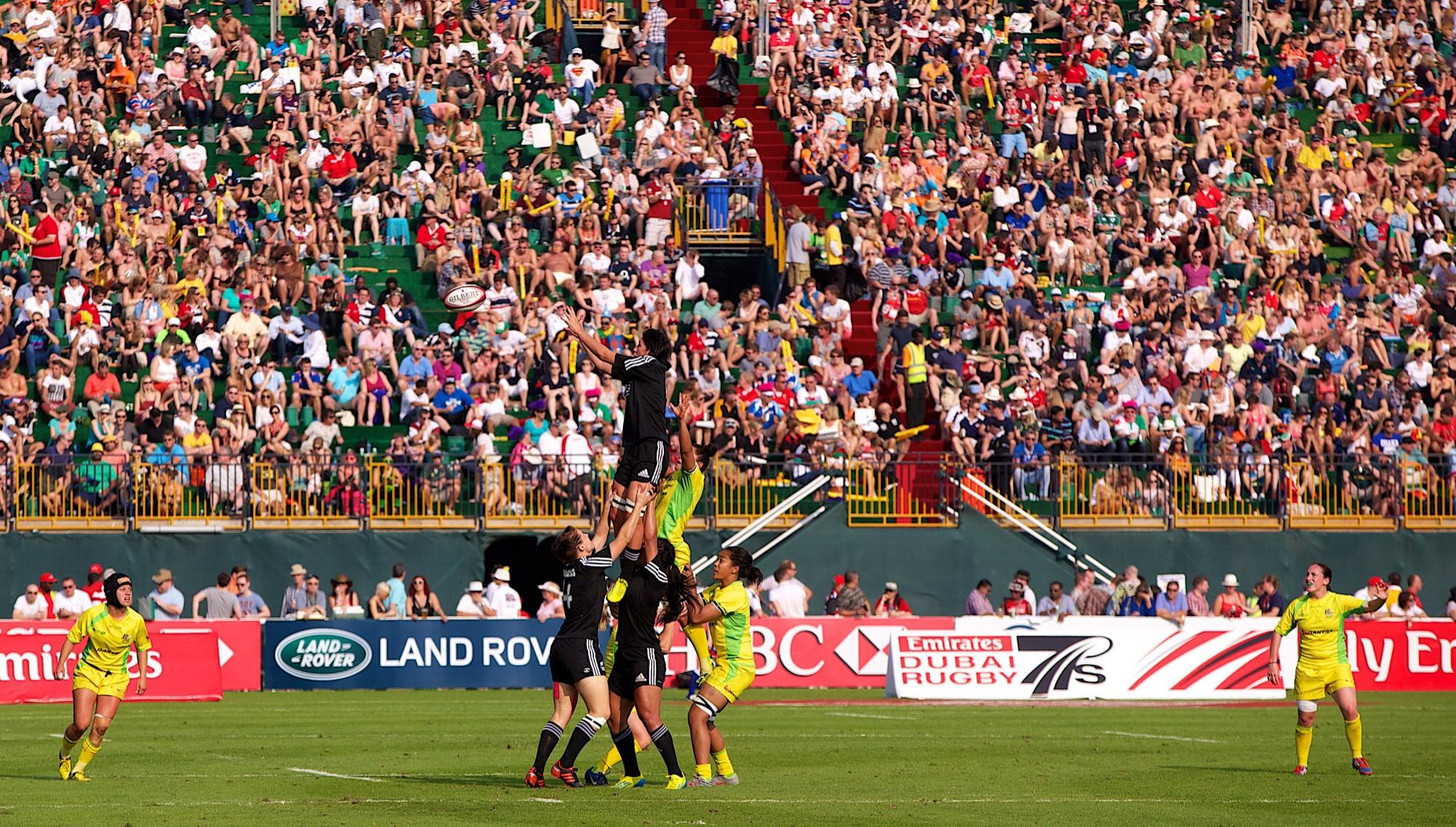
How to photograph sports at the Emirates Dubai 7s, from afternoon sun to floodlights
Learn how to photograph sports at the Emirates Dubai 7s, 27 to 29 Nov 2026: shutter speeds, AF tracking, panning, and sun to floodlights.
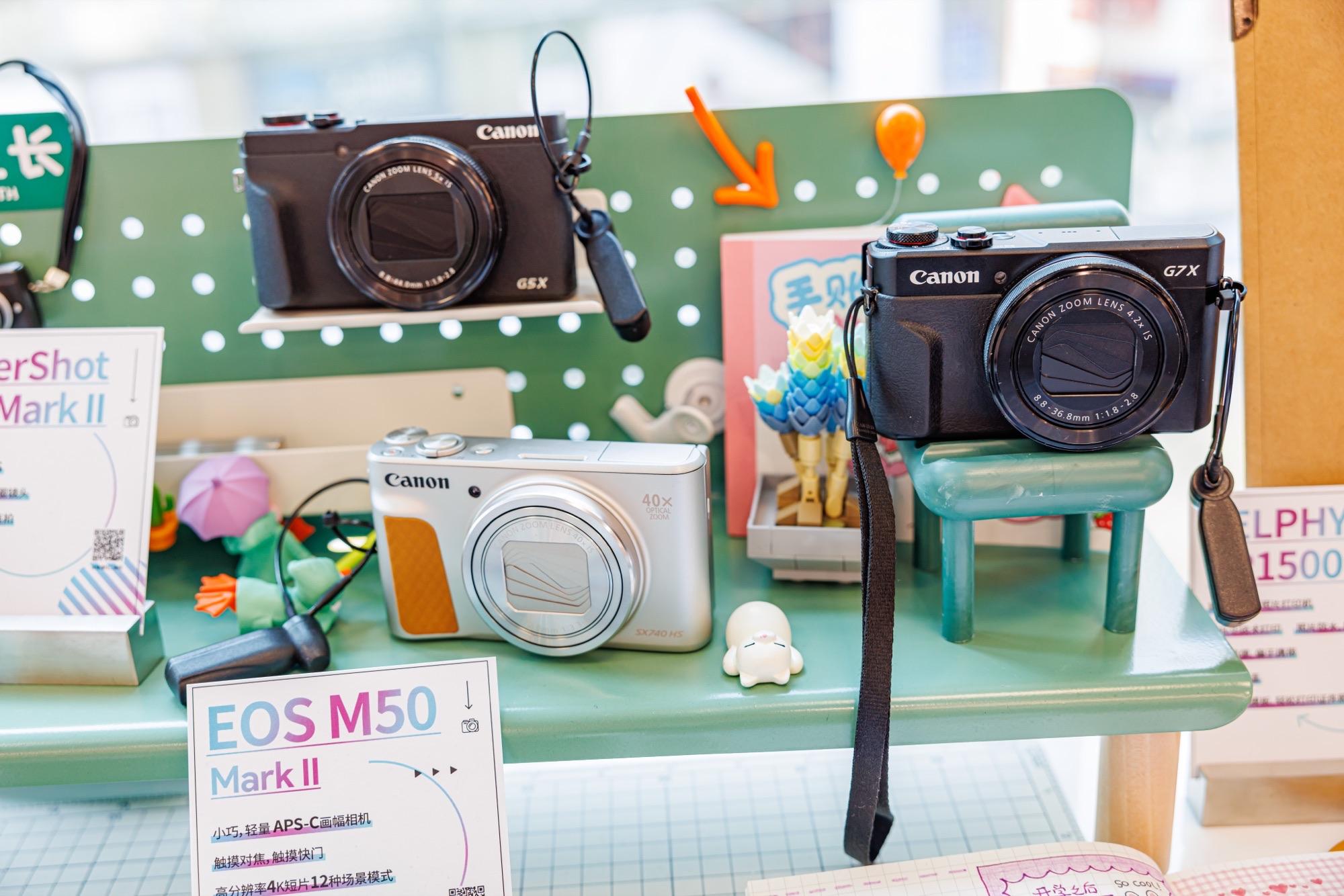
Compact camera sales 2026: CIPA shipments up 15%, full-frame down 20%
CIPA data to September 2026: built-in-lens camera shipments up 15.4%, full-frame and larger down 19.9%. Canon's Q3 view, and what it means in the UAE.
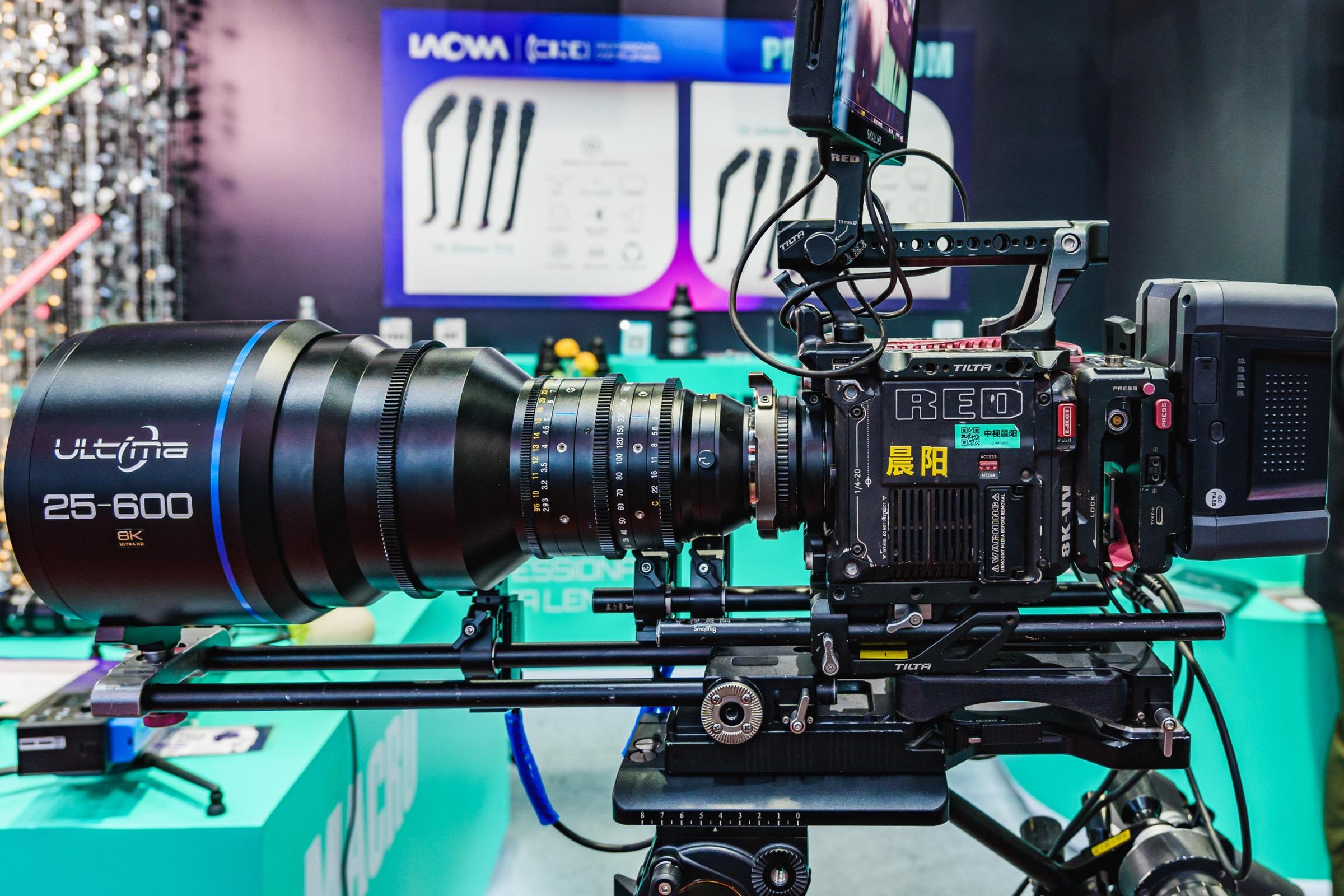
RED Komodo-X price: US$4,995 at B&H, US$6,995 at RED. Is a RED now realistic for UAE filmmakers?
RED Komodo-X price: US$4,995 at B&H, US$6,995 on RED's store. Official specs, the UAE dealer price on 13 Nov 2026, warranty and buy vs rent.