
Shure MV360 spatial-audio mic: out now, but should you wait for the MV360+ in early 2027?
Shure MV360: a spatial-audio USB-C mic at US$349 (Shure US price), out now, and the MV360+ at US$449 in early 2027. Official specs; no UAE price yet.
Key takeaways
- Shure announced the MV360 USB-C spatial-audio microphone on 17 November 2026 at US$349, Shure's US price, and said the kit is available now.
- The MV360+ is listed by Shure at US$449, also a Shure US price, arriving early 2027, with onboard 32-bit float microSD recording, a battery and phone control.
- The MV360 records 360° spatial audio in Ambisonic B-format (AmbiX), plus ready-to-use mono, stereo, immersive binaural and auto-tracking modes.
- As of 18 November 2026, UAE stock, a UAE distributor and a UAE price were not confirmed, so this article gives no AED figure.
- This is a launch explainer, not a hands-on test: every figure here is Shure's own.
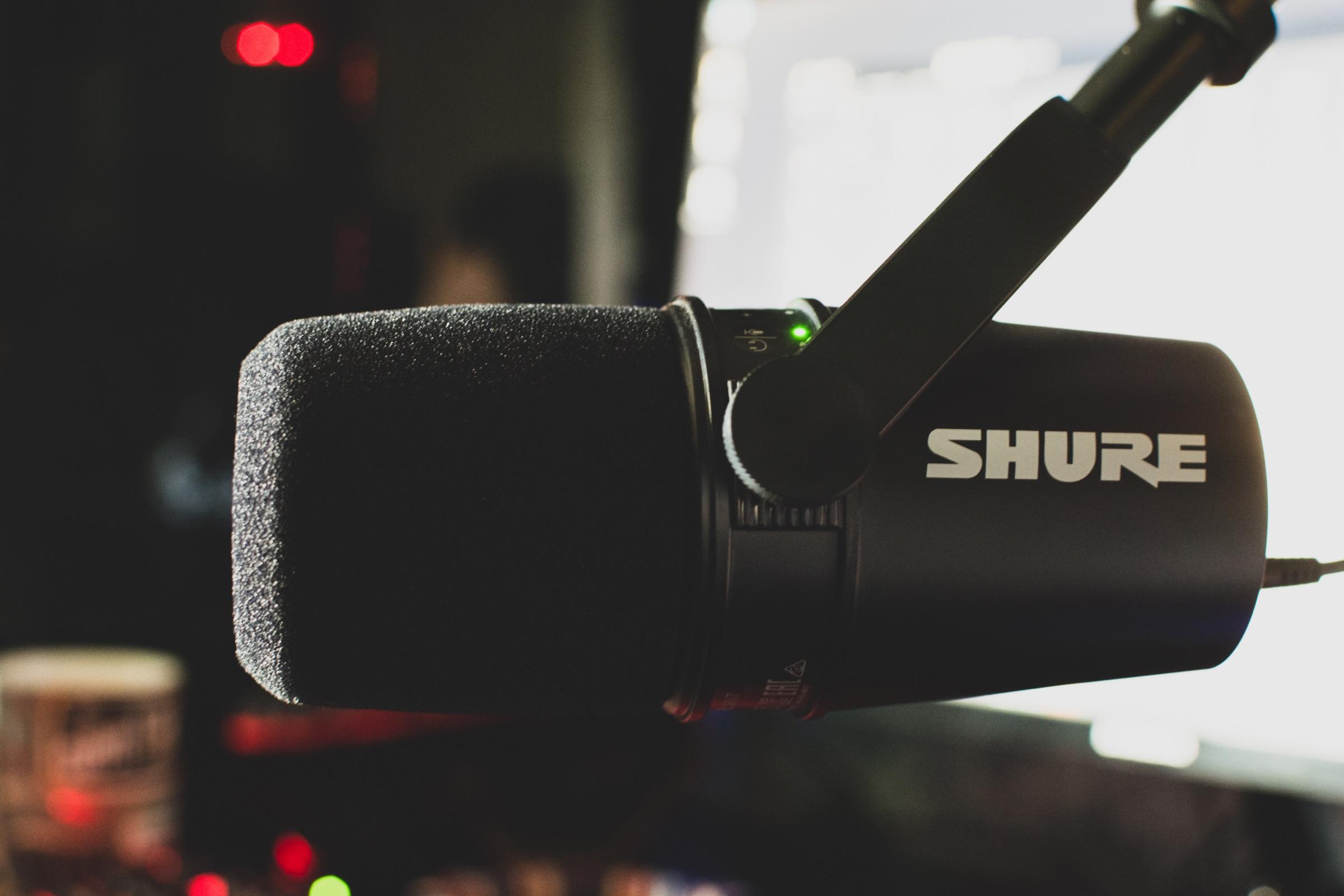
Shure's new spatial-audio microphone arrives with a decision: the MV360 now, or the MV360+ in early 2027. The Shure MV360 is a USB-C spatial-audio microphone that Shure announced on 17 November 2026, at US$349, which Shure labels as a US dollar figure [1]. Shure said the MV360 Spatial Audio Microphone Kit is available now [1]. It records 360° spatial audio plus ready-to-use modes for immersive binaural, stereo, mono and auto-tracking, and it connects to USB-C phones, tablets and computers [1]. Settings sit in the free Shure MOTIV apps [1]. This is a launch explainer, not a hands-on test. We have not used the microphone, and we offer no sound-quality verdicts. As of 18 November 2026, UAE stock, a UAE distributor and a UAE price were not confirmed. There is no AED figure in this article.
A second model, the MV360+, is listed by Shure at US$449, also a Shure US price, "arriving early 2027" [1]. It adds onboard 32-bit float recording to a microSD card, an internal rechargeable battery, and wireless control from a phone at up to approximately 100 ft, Shure's figure [1]. Audio records on the microphone, not over that wireless link [1]. If you need those extras, Shure's own positioning is that the MV360+ is the one to wait for [1][3].
MV360 now, or MV360+ later
- 17 Nov 2026Shure announces the MV360Shure said the MV360 Spatial Audio Microphone Kit is available now, at US$349 (Shure US price).
- 18 Nov 2026UAE checkUAE stock, a UAE distributor and a UAE price were not confirmed. No official UAE seller listing was found.
- Early 2027MV360+ arrives, per ShureUS$449 (Shure US price), adding onboard microSD recording, a rechargeable battery and phone control from up to approximately 100 ft.
What Shure announced
Shure presented the MV360 as a compact, all-metal USB-C microphone meant to make immersive capture simpler for creators [1]. In the launch text, Eduardo Valdes, Associate Vice President of Global Marketing and Product Management at Shure, said: "Sound can make the difference between watching a moment and feeling part of it." He added that, until now, "capturing that sense of presence has required expensive equipment, technical expertise and time that many creators simply don't have" [1]. Those are Shure's words, not a finding of ours.
You can set preferences in the free MOTIV apps, then record the capture modes directly to USB-C mobile devices, computers and compatible third-party apps without reopening MOTIV [1]. For full 360° spatial-audio capture, Shure says users record in MOTIV or a DAW [1][2]. The official product page is more specific: the microphone works with most Windows and Mac computers and Android and iOS mobile devices; mono, stereo, binaural and auto-tracking can go to most third-party mobile apps that support stereo USB audio; ambisonic 360° spatial audio should be captured in the MOTIV apps or a DAW [2]. Shure's product FAQ also says the MV360 will function as a standard USB audio microphone on a compatible device without MOTIV, while MOTIV is recommended for capture modes, configuration and the spatial-audio workflows [2].
Capture modes, and what 360° recording is for
Shure lists four ready-to-use capture modes, plus a separate full 360° spatial path [1][2].
- Mono: directional mono audio. Shure's newsroom lists three selectable polar patterns as cardioid, supercardioid and bi-directional [1]. Shure's product page and user guide instead name those mono patterns as cardioid, hypercardioid and bidirectional, and the user guide calls hypercardioid the default mono pattern [2][3]. We are not choosing between those wordings.
- Stereo: Shure describes this as control of natural width and separation for music, environments and everyday recording [1]. The user guide lists the stereo principle as XY stereo [3].
- Immersive binaural: Shure says this offers "true-to-life immersive sound instantly with more spatial cues than stereo," and that it is "perfectly suited for playback on headphones" [1]. That is a maker claim, not a listening test of ours.
- Auto-tracking: Shure says a virtual microphone steers toward the loudest sound source, to keep podcasts, interviews and moving subjects in focus [1].
Each of those modes, Shure says, records a ready-to-use two-channel file to compatible apps and devices, with no post-production required [1]. Behind that, Shure says its acoustic array captures audio in every direction at up to 32-bit float/96 kHz [1]. Users can fine-tune gain, EQ, compression, limiting and denoising in the MOTIV apps, and monitor through the microphone's 3.5 mm output [1][2].
For full 360° spatial audio, Shure says the MV360 captures the complete sound field in Ambisonic B-format (AmbiX) [1][3]. In MOTIV Mix, MOTIV Audio or the Virtual Mic Editor plugin, users can position, steer and mix virtual microphones, then configure the same recording for mono, stereo, binaural, 5.1, or up to 7.1.4 [1]. The product page adds that the plugin can steer up to four virtual microphones on a visual audio heatmap, and also lists 7.1.2 among the surround options [2]. Shure says this supports work for Atmos, surround mixing, virtual reality, game development and 360° video [1]. Both models can, in MOTIV Audio or MOTIV Mix, create a standard two-channel recording and a separate four-channel ambisonic recording at the same time: the two-channel file is ready to use at once, and the four-channel file keeps the full 360° information for later editing [2]. The user guide describes the USB output as six-channel, with channels 1-2 for the capture-mode file and channels 3-6 for the AmbiX stream [3].
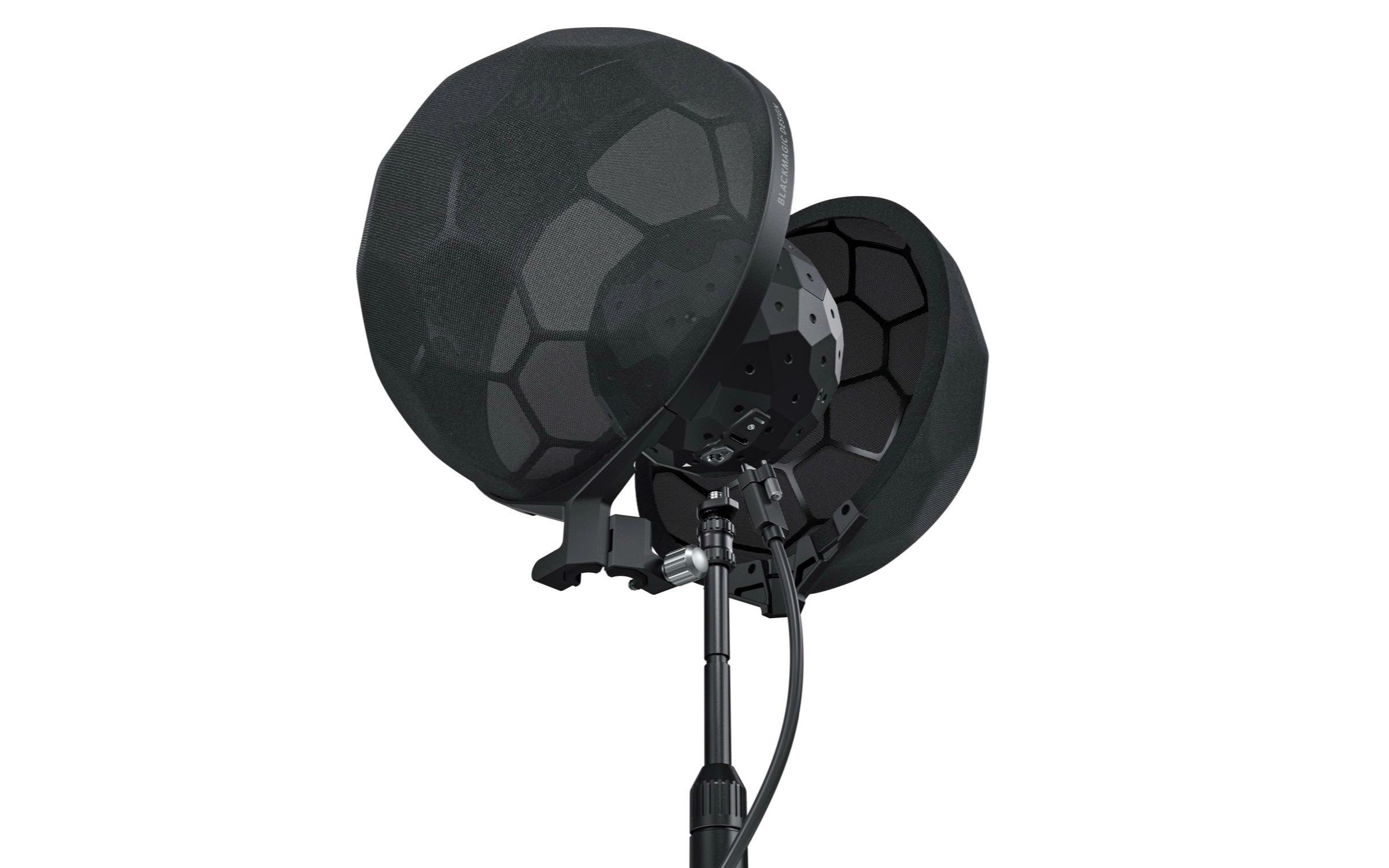
If you already need a higher-end ambisonic microphone, rather than this USB-C kit, see our Blackmagic Ambisonic Microphone guide. That is a different product, with a different job.
Official specifications
These figures come from Shure's official product page and user-guide specification table. We have not measured them.
- Size, as stated on Shure's product page: 11.2cm x 3.4cm [2]
- Net weight: 141.8g [3]
- Housing: all-metal construction [1][3]
- Connection: USB-C, powered through the USB-C connector; Shure also lists a 3.5 mm TRS output [2][3]
- Frequency response: 20 Hz to 20,000 Hz [3]
- Bit depth: PCM 24-bit, and 32-bit floating point. Shure's user guide notes that 32-bit floating point is supported on Windows if the ASIO driver is used [3]. Shure's product FAQ says both the MV360 and the MV360+ include 32-bit capture capabilities [2].
- Sampling rate: 48 kHz / 96 kHz [3]
- Adjustable gain range: 0 to +36 dB [3]
- Maximum SPL: 134.5 dB SPL, with the -10 dB pad on, at minimum gain, in Flat mode [3]
- Spatial-audio format: AmbiX B-format (WYZX) [3]
- Onboard DSP listed in the user guide: auto level, EQ (5-band), compression, limiting, high-pass filter and noise reduction [3]
The Shure MV360 in Shure's own numbers
- net weight
- 141.8 g
- top sampling rate (48 kHz also listed)
- 96 kHz
- floating point capture (PCM 24-bit also listed)
- 32-bit
- top of the adjustable gain range (from 0 dB)
- +36 dB
- maximum SPL, with the -10 dB pad on, at minimum gain, in Flat mode
- 134.5 dB SPL
What is in the kit
Shure's newsroom and the official "in the box" list agree on the MV360 kit. It includes the USB-C microphone, a tripod, a cold-shoe mic clip, a 5/8" mic clip, a phone clamp, two USB-C cables, a carrying case and a foam windscreen [1][2]. The kit includes that foam windscreen. We make no claim about how well it performs in wind.
The MV360+ kit, as listed by Shure for early 2027, includes the MV360+ microphone, a tripod, a 5/8" mic clip, a cold-shoe mic clip, a carrying case, a USB-C cable, a foam windscreen and a 3.5 mm audio cable [1]. The 3.5 mm cable is the item Shure names for use with cameras [1].
The MV360+, and who may want to wait
Shure aims the MV360+ at field recordists, videographers and VR storytellers who want to pair immersive audio with mirrorless cameras, DSLRs, action cameras or 360 camera systems, or who want to use the microphone as a standalone field recorder [1]. It adds onboard 32-bit float recording to a microSD card, an internal rechargeable battery, and wireless control from a mobile phone [1]. From up to approximately 100 ft away, Shure's figure, creators can start and stop onboard recording and configure the microphone from a phone [1]. Shure is explicit that the wireless link controls the microphone, while audio records on the microphone rather than being transmitted wirelessly [1]. Recorded spatial audio can be synchronised with video in post-production, and the MV360+ can also be placed near a sound source and operated from a distance as a standalone plant microphone [1].
The official user-guide FAQ draws the same line: both models use the same four-capsule ambisonic array; the MV360 records through a connected USB-C device; the MV360+ still allows that USB-C recording, and adds a built-in recorder, a rechargeable battery, wireless control and microSD recording, so it can work as a standalone field recorder alongside cameras and other devices that cannot power a USB microphone [3]. If you only need a USB-C mic that records to a phone or computer, Shure's current model is the MV360, and Shure said it's available now [1]. If you need onboard storage, a battery, wireless control or a 3.5 mm cable for a camera, Shure's own description points you to the MV360+ in early 2027 [1][3].
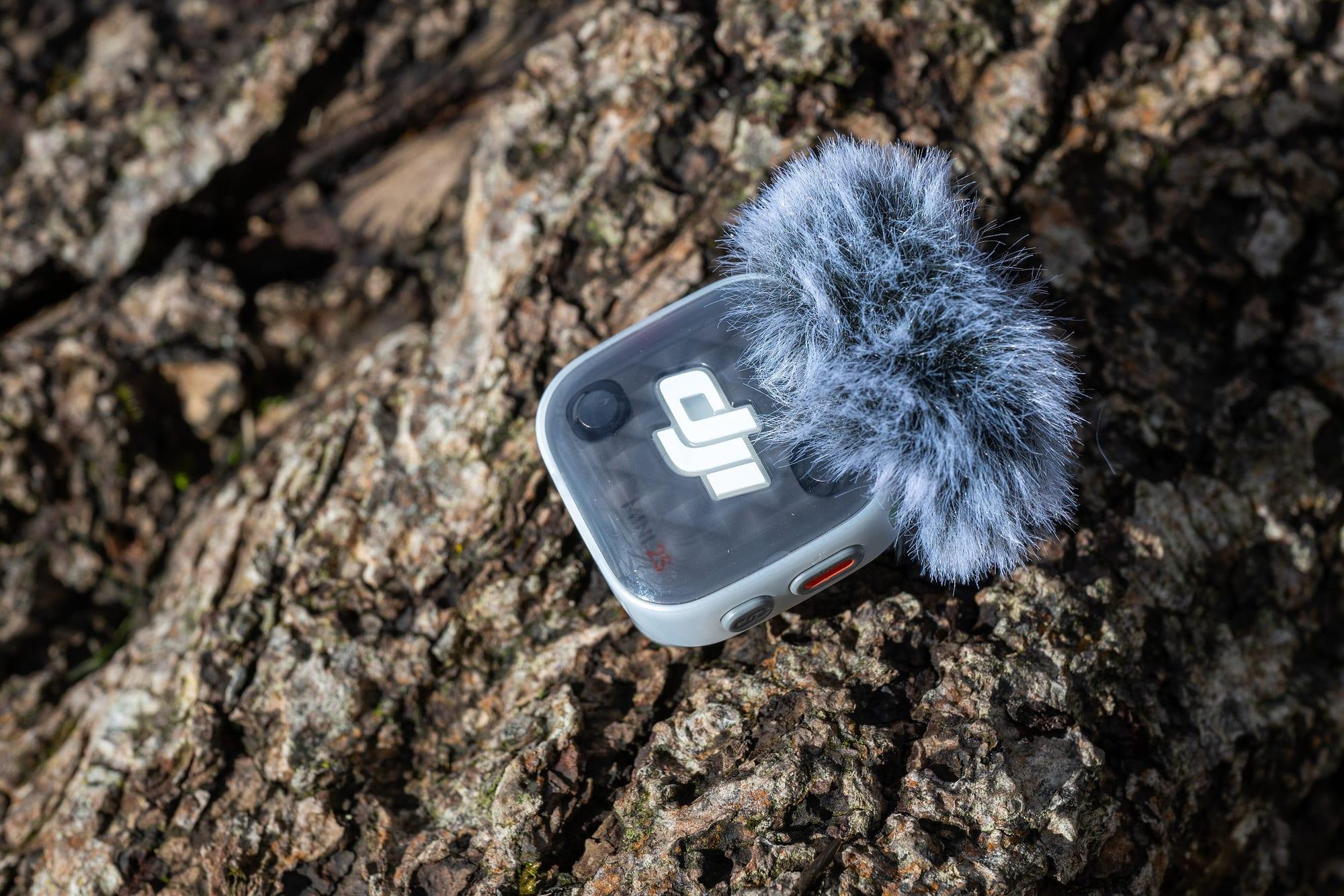
A wireless lavalier is a different tool, and choosing between microphone types comes down to whether you want one clean voice or the whole scene around you. For that comparison, see our DJI Mic Mini guide.
For creators in the UAE
Shure says the MV360 is meant to capture a sense of place, and gives examples such as a podcast conversation, an ASMR scene, "a bustling market" or a quiet forest [1]. In the UAE, that kind of spatial or binaural capture is a natural fit for souks, Global Village and desert vlogs. Those are editorial suggestions for where a creator might use the microphone, not a report from a shoot of ours, and not a claim about how the recordings will sound.
Wind on beaches and dunes is part of that work. The kit includes a foam windscreen [1][2]. We are not claiming how well it holds up in Gulf wind.
Shure's published MV360 specifications, opened on 18 November 2026, do not list an operating temperature [3]. We are not adding a temperature figure of our own. In the UAE, treat the microphone as you would any compact electronic kit in heat, sand and humidity, and follow our guide to protecting a camera from heat, sand and humidity. That guide is about kit care, not a review of this microphone.
Price and UAE availability (checked 18 November 2026)
Official maker figures are below. UAE stock, a UAE distributor and a UAE price were not confirmed as of 18 November 2026. There is no AED figure in this article, and no currency conversion. We did not find the MV360 listed by an official UAE seller when we checked on 18 November 2026.
| Source | Item | Official figure (18 Nov 2026) | UAE shop price | Notes |
|---|---|---|---|---|
| Shure newsroom, 17 November 2026, opened 18 November 2026 [1] | Shure MV360 Spatial Audio Microphone Kit | US$349 (Shure US price) | not announced | Shure said the kit is available now, from 17 November 2026 [1]. This is not a UAE price, and it is not converted here. |
| Shure newsroom, 17 November 2026, opened 18 November 2026 [1] | Shure MV360+ Spatial Audio Microphone | US$449 (Shure US price) | not announced | Shure lists the MV360+ as arriving early 2027 [1]. This is not a UAE price, and it is not converted here. |
Shure US prices, MV360 and MV360+
Recheck Shure and any official UAE listing before you order. Treat posts about prices or shipping dates on X as chatter only.
TWICE, writing about the same launch, also names Sony's ECM-AX10 as another spatial-audio microphone aimed at creators [4]. Sony Middle East's own product page lists the Sony ECM-AX10 as a spatial audio microphone for smartphones that plugs in over USB-C, with four omnidirectional capsules that record Ambisonics for YouTube with Eclipsa Audio, binaural audio and conventional stereo, and says its companion app lets you edit video and audio and export with video in various audio formats [5]. On 18 November 2026 that Sony page showed no price. If you shoot mostly on a phone, compare the Sony and Shure makers' own lists of capture modes and apps before you choose.
Sources
All opened on 18 November 2026.
- Shure, official newsroom: "Immersive Sound for Everyone: Shure Launches MV360 and Previews MV360+ Spatial Audio Microphones", NILES, IL, 17 November 2026. US$349 for the MV360 Spatial Audio Microphone Kit, available now; capture modes; kit contents; US$449 for the MV360+, arriving early 2027; onboard microSD recording, internal battery and approximately 100 ft wireless control; audio records on the microphone.
- Shure, official US product page: "MV360 - Spatial Audio Microphone Kit". 11.2cm x 3.4cm; in-the-box list; compatibility; mono patterns named as cardioid, hypercardioid or bi-directional; Virtual Mic Editor; product FAQ on MOTIV, simultaneous two-channel and four-channel recording, and 32-bit capture.
- Shure, official MV360 User Guide, specifications and FAQ. Net weight 141.8g; all-metal construction; frequency response, bit depth, sample rates, gain, maximum SPL, AmbiX format and DSP; mono patterns listed as cardioid, hypercardioid and bidirectional; no operating temperature listed; difference between the MV360 and the MV360+.
- TWICE: "Shure, Sony Bring Immersive Audio Mics To Mainstream Retail". Names Sony's ECM-AX10 as another immersive, ambisonic microphone in the same launch coverage.
- Sony Middle East: ECM-AX10 spatial audio microphone for smartphones, official product page. USB Type-C connection to smartphones; four omnidirectional capsules; Ambisonics for YouTube with Eclipsa Audio, binaural and stereo; companion app for editing and export; no price shown.
Frequently asked questions
What is the Shure MV360?
The Shure MV360 is a USB-C spatial-audio microphone that records 360° spatial audio, plus ready-to-use modes for immersive binaural, stereo, mono and auto-tracking. Shure announced it on 17 November 2026 and said the kit is available now. Settings are in the free Shure MOTIV apps, and 360° capture goes to MOTIV or a DAW.
How much does the Shure MV360 cost, and is it on sale in the UAE?
Shure lists the MV360 Spatial Audio Microphone Kit at US$349, which is Shure's US price, and lists the MV360+ at US$449, also Shure's US price, arriving early 2027. As of 18 November 2026, UAE stock, a UAE distributor and a UAE price were not confirmed. This article gives no AED figure and no conversion.
What capture modes does the Shure MV360 have?
Shure lists mono, stereo, immersive binaural and auto-tracking as ready-to-use capture modes, each recording a two-channel file to compatible apps and devices. Full 360° spatial audio is recorded as Ambisonic B-format (AmbiX), then shaped later in MOTIV or a DAW. Shure's newsroom and Shure's user guide use different words for one of the mono polar patterns (supercardioid in the newsroom, hypercardioid in the user guide and product page).
What comes in the Shure MV360 kit?
The kit includes the USB-C microphone, a tripod, a cold-shoe mic clip, a 5/8" mic clip, a phone clamp, two USB-C cables, a carrying case and a foam windscreen.
What does the MV360+ add over the Shure MV360, and when does it arrive?
Shure says the MV360+ arrives early 2027, at a Shure US price of US$449. It adds onboard 32-bit float recording to microSD, an internal rechargeable battery, and phone control from up to approximately 100 ft, Shure's figure. Audio records on the microphone, not over the wireless link. The kit includes a 3.5 mm cable for cameras.
Do I need the MOTIV app to use the Shure MV360?
Shure's product FAQ says no: the MV360 will function as a standard USB audio microphone on a compatible device. Shure recommends MOTIV for capture modes, configuration and the spatial-audio workflows, and says ambisonic 360° recording should be captured in MOTIV or a DAW.
Will the Shure MV360 cope with wind and heat in the UAE?
The kit includes a foam windscreen. We make no claim about how well it performs in wind. Shure's published MV360 specifications do not list an operating temperature. For heat, sand and humidity, follow our guide to protecting a camera from heat, sand and humidity. That is general kit-care advice, not a test of this microphone.
Sources
- Shure newsroom: Immersive Sound for Everyone: Shure Launches MV360 and Previews MV360+ Spatial Audio Microphones (17 November 2026)
- Shure: MV360, Spatial Audio Microphone Kit (official US product page)
- Shure: MV360 User Guide
- TWICE: Shure, Sony Bring Immersive Audio Mics To Mainstream Retail
- Sony Middle East: ECM-AX10 spatial audio microphone for smartphones

About the editor
Nicole spent five years working in the Middle East, so the region is familiar ground. Producing is what she loves most: bringing the plan, the people and the shoot together.
Related stories
Blackmagic Ambisonic Microphone: who in the UAE needs it?
Blackmagic Ambisonic Microphone, due December 2026: official specs, US dollar prices, the UAE reseller check, and when a normal wireless mic is enough.
DJI Mic Mini in the UAE: the budget mic, and when to step up
DJI Mic Mini 2 prices and stock in the UAE, checked 5 November 2026, against the Mic Mini 2S, Mic 3, RODE and Hollyland. See which wireless mic fits your shoot.
TTArtisan 12mm f2.8: a US$489 autofocus 122° ultra-wide for Sony E and Nikon Z, sold with a filter holder
TTArtisan AF 12mm f/2.8 for Sony E and Nikon Z: official specs, US$489 on the official store, a bundled 82 mm filter holder, and no confirmed UAE listing.