
You Can See Everything UAE: Holmes documentary opens 19 Nov
You Can See Everything opens in UAE cinemas on 19 November. Where to watch, the 18TC rating, and what UAE documentary makers can take from it.
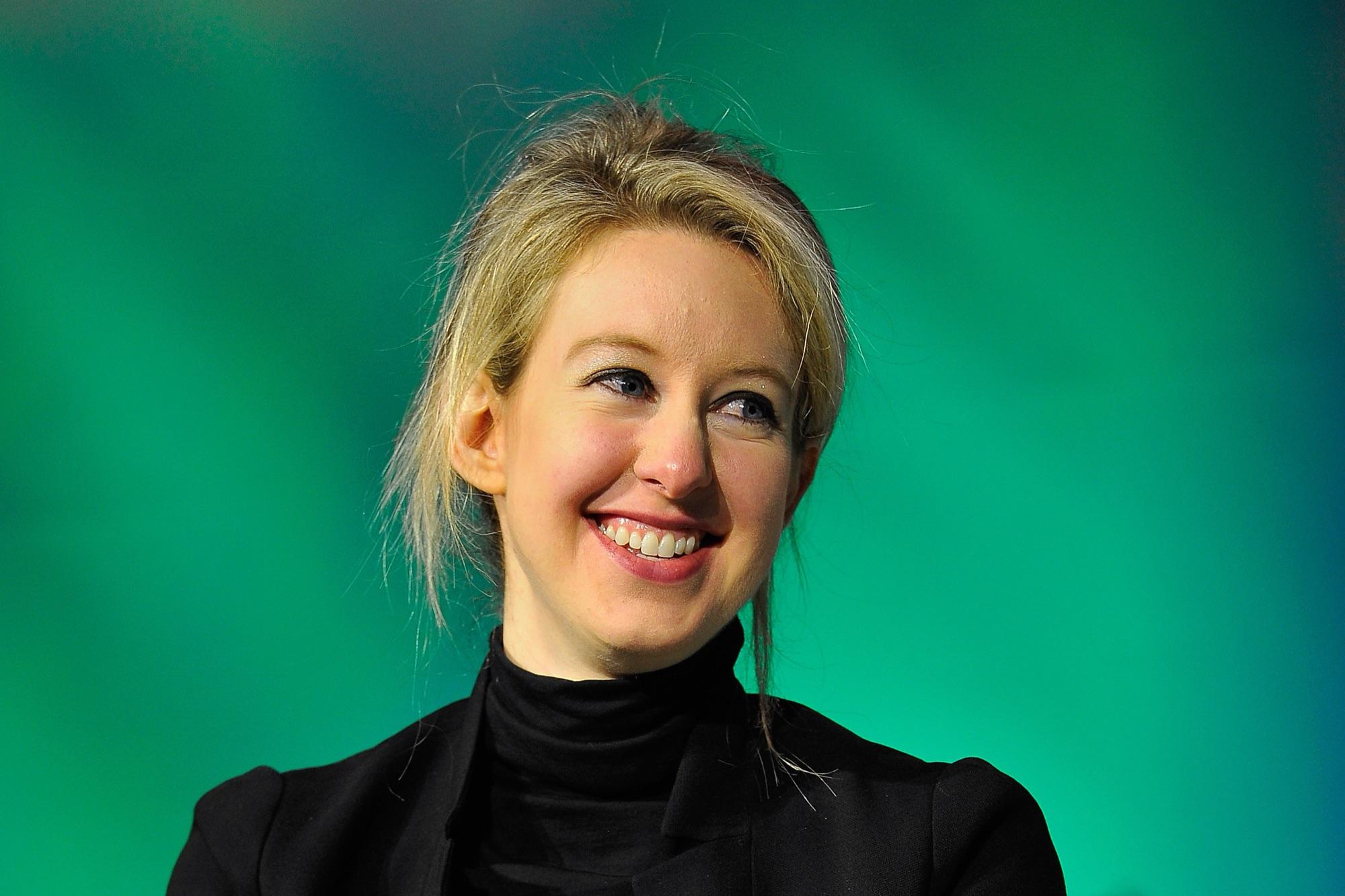
Key takeaways
- You Can See Everything opens in UAE cinemas on Thursday 19 November 2026, per VOX's coming-soon listing; The National and WIRED Middle East give the same date.
- VOX Cinemas rates the film 18TC, the confirmed UAE cinema rating, and lists the language as English.
- Reel Cinemas lists it at 175 minutes with Arabic subtitles; on 16 November 2026 its showtimes were still "coming soon".
- It's an A24 documentary by Nathan Fielder and Lance Oppenheim: 34 days before Elizabeth Holmes is due in prison, she invites a sceptical film crew into her life, and the work continues for three years.
- Deadline reports the directors moved from one camera to three, with two small crews and no more than four people in the house at any one time.
Thirty-four days before Elizabeth Holmes is due in prison, she invites a film crew into her life, and the directors have asked fans not to discuss what happens in the film's second half. That documentary, You Can See Everything, arrives in UAE cinemas on Thursday 19 November 2026. VOX Cinemas UAE rates the film 18TC, and its coming-soon listing dates the release to 19 November 2026 and gives the language as English. Reel Cinemas lists it at 175 minutes, with Arabic subtitles.
It's an A24 documentary directed by Nathan Fielder and Lance Oppenheim, about the founder of the blood-testing company Theranos. For a UAE audience, the useful questions are where to see it, what the set-up is, and what documentary makers here can take from a film that WIRED Middle East describes as one that "blurs the line between performance and reality," and that the directors discussed as a problem of performance versus authentic observation.
Where to watch You Can See Everything in the UAE
VOX is confirmed on its own site. Its film page is live, with the 18TC rating and a short synopsis, and its coming-soon listing adds the 19 November date and English language. Reel Cinemas now also has a film page (see below). This article did not find official ticket prices on that page, and no other official UAE seller was read live for a price. Check VOX closer to the day for showtimes and ticket prices.
The National, on 5 November 2026, also dated the UAE release to 19 November and named both Vox Cinemas and Reel Cinemas as venues. WIRED Middle East, on 11 November, likewise said that from Thursday 19 November the film will show at Reel Cinemas and Vox, while noting then that exact schedules were still to be released.
Reel Cinemas has its own film page for the title. It lists You Can See Everything as a 175-minute English-language documentary with Arabic subtitles. On 16 November 2026 it said "Showtimes coming soon" and that the title was not yet scheduled at Reel Cinemas, so check back closer to Thursday. VOX's 18TC remains the confirmed UAE cinema rating here, since Reel's page showed a placeholder rating.
How the UAE release date firmed up
- 5 Nov 2026The National dates the releaseLists You Can See Everything for 19 November, at Vox Cinemas and Reel Cinemas.
- 11 Nov 2026WIRED Middle East confirms the chainsFrom Thursday 19 November at Reel Cinemas and Vox, with exact schedules still to be released.
- 16 Nov 2026Both cinema pages are liveVOX shows the 18TC rating. Reel lists 175 minutes and Arabic subtitles, with showtimes "coming soon".
- 19 Nov 2026Opens in UAE cinemasThursday, per VOX's coming-soon listing. Language English.
The Gulf release, WIRED Middle East reports, is licensed by Sony and Empire Movies, and Sony Pictures Worldwide Acquisitions bought the Middle East rights in October. That's a distribution fact, not a claim about cameras or kit.
What the film is about (no spoilers)
The set-up is unusually clear, and the directors have asked audiences to leave the rest alone. WIRED says Fielder and Oppenheim asked fans not to discuss the film's second half in detail. This article follows that request.
VOX's synopsis says that 34 days before she is sent to prison, Holmes invites a sceptical film crew to document her every move, and that what begins as an intimate portrait becomes a three-year journey. The National tells the same opening: the film begins 34 days before Holmes enters prison for defrauding investors, follows her decision to invite a camera crew into her life, and develops into a three-year investigation "into truth, deception and the nature of documentary filmmaking." WIRED places the same start in spring 2023, 34 days before Holmes was due to serve a prison sentence, and describes a small, sceptical crew, led by Fielder, being let into her home. The film, it says, turned into a three-year operation "documenting a disorienting journey that ultimately blurs the line between performance and reality."
You Can See Everything: the set-up in numbers
- before Holmes is due in prison when she invites the crew in
- 34 days
- how long the work continues
- 3 years
- runtime listed by Reel Cinemas (VOX states none)
- 175 min
That's as far as the synopsis needs to go. Holmes's Theranos story has already been widely told. The interest here is how two filmmakers tried to watch a person who is already famous for performance, and what they did when they couldn't agree on what they were seeing.
Observation versus performance
Fielder and Oppenheim have been unusually direct about the method, and unusually modest about what they thought it proved.
At a New York Film Festival Q&A reported by Deadline, Fielder said they made no promises to A24 about what the story would be: "We don't know what the story is. But we want to see what happens." The studio, he said, replied that this was fine, and that they could pull the plug at any time. Oppenheim, speaking to IndieWire, described the same arrangement as a "kill switch": if they didn't find something, they could throw the material away. That freedom, he said, "changed everything," because they could work "purely out of curiosity."
Once they were in the house, curiosity turned into disagreement. After filming, Fielder told the Deadline audience, "Lance and I would talk about what we thought happened there, and we'd completely disagree on... what we thought was happening." As Fielder put it, "if we can't agree on what's happening, there's something here." Oppenheim told IndieWire the same thing in more everyday terms. They would wrap a day of 14-to-16-hour filming, Fielder would say "That's not what happened," and Oppenheim would answer that it was, because he had been watching on monitors, at a distance, rather than sitting in the conversation. The questions they were left with, he said, were the film: "Is this a performance? Is it not a performance? Is this a real thing that's happening? Is it possible to observe an authentic moment with someone who is known for being a master deceiver?"
The coverage followed from that doubt. Deadline reports that the filmmakers moved from one camera to three, shooting 16 hours a day with two small crews, and that no more than four people were in the house at any one time. Oppenheim said a wide lens covered the whole house "so if something happened, we wouldn't miss it," with the other two able to stay wide or zoom. Fielder added that a single panning camera was a problem in a film about whether someone is being honest, because "the moment you say something to someone, you want to see their face the moment they hear it," and a pan misses a few seconds. No source cited here names the camera bodies, and this article doesn't invent them.
Inside the method, as the directors described it
- up from one, including a wide that covered the whole house
- 3 cameras
- small crews sharing the shoot
- 2 crews
- people in the house at most, at any one time
- 4
- a shooting day, per Deadline (IndieWire says 14 to 16)
- 16 hours
What UAE documentary makers can take from it
The transferable lesson isn't a style to copy shot for shot. It's a way of working when the subject may be performing, and when two people on the same crew can watch the same hour and come away with different accounts.
First, a story that has already been told can still be worth starting, if the access is new and the filmmakers are allowed to stop. Fielder, Deadline reports, wasn't sure there was a documentary in it, "because it felt like the story was very told," but he was curious to meet Holmes. The kill switch gave them permission not to force a film if that curiosity led nowhere.
Second, disagreement can be the observation. If your director and your second filmmaker, or your director and your cinematographer, can't agree on a plain domestic moment, that disagreement may be the thing to keep, not a problem to smooth over in the edit.
Third, coverage is a craft choice, not a flourish. A second or third body, a wide that never leaves the room, and a small crew that can stay all day are practical answers to a single question: can you still see someone's face in the second after they hear the question? Those are general documentary habits. They aren't a claim about how any one UAE shoot should be staffed.
If you shoot that kind of observational, fly-on-the-wall coverage yourself, one way to keep a wide in the room without a person behind it is a remotely operated camera. Sony's ILME-FR7, for example, takes E-mount lenses and can be mounted on a ceiling. Sony's Help Guide says it can be run from its infrared remote or from a tablet or computer in a web browser, with pan, tilt and zoom, Face/Eye Detection AF and a variable ND filter. None of this describes how You Can See Everything was shot: no source cited here names that production's cameras.
If you're making that kind of work in the UAE, the official path still matters. Commercial filming in Dubai and Abu Dhabi has its own permit process, which is covered in the guide to filming permits in Dubai and Abu Dhabi. This film wasn't a UAE shoot, and that guide isn't a description of this production.
For more film in the UAE this month, Golden Dunes is a separately run festival, dated 28 to 30 November 2026 in Downtown Dubai. It is not connected to this release.
Sources
- VOX Cinemas UAE - You Can See Everything (film page and coming-soon listing; 19 November 2026, 18TC, English), accessed 16 November 2026
- The National - New movies in UAE cinemas in November 2026: Release dates and where to watch, by Faisal Al Zaabi (5 November 2026)
- WIRED Middle East - Where To Watch Nathan Fielder's You Can See Everything in the Gulf, by Megan Tomos (11 November 2026)
- Deadline - You Can See Everything directors on filming the Holmes documentary, New York Film Festival Q&A, by Jill Goldsmith (1 October 2026)
- IndieWire - You Can See Everything: Nathan Fielder negotiated a kill switch with A24, by Chris O'Falt (19 October 2026)
- Reel Cinemas UAE - You Can See Everything film page (175 min, English, Arabic subtitles, showtimes coming soon), accessed 16 November 2026
- Sony Help Guide - ILME-FR7 / ILME-FR7K Interchangeable Lens Digital Camera, accessed 16 November 2026
Frequently asked questions
When does You Can See Everything open in UAE cinemas?
VOX Cinemas lists the release date as 19 November 2026. The National and WIRED Middle East give the same date.
Which UAE cinemas are showing You Can See Everything?
VOX has a live film page. Reel Cinemas has a film page too, with showtimes still unscheduled on 16 November 2026, so confirm times closer to Thursday. The National and WIRED Middle East name both chains.
What is the UAE rating for You Can See Everything, and does it have Arabic subtitles?
VOX rates the film 18TC, and its coming-soon listing names the language as English. Reel Cinemas lists English audio with Arabic subtitles.
What is You Can See Everything about, without spoilers?
It's an A24 documentary, directed by Nathan Fielder and Lance Oppenheim, about Elizabeth Holmes. The set-up, as VOX, The National and WIRED tell it, is that 34 days before Holmes is due in prison she invites a sceptical film crew into her life, and the work continues for three years. The directors have asked fans not to discuss the second half in detail, and this article doesn't.
Is there an official runtime for You Can See Everything yet?
VOX's film page, as read on 16 November 2026, doesn't state a runtime. Reel Cinemas lists 175 minutes.

About the editor
Nicole spent five years working in the Middle East, so the region is familiar ground. Producing is what she loves most: bringing the plan, the people and the shoot together.
Related stories
Namoos Nada Jahed: the Emirati camel racing film screening in Doha
Namoos Nada Jahed, the UAE short about Emirati camel racer Noora Al Zaabi, screens at Doha Film Festival on Friday 20 November 2026 at Katara, Doha.

CineTwin 1.0: plan a UAE shoot's light and sun position on a Mac, before the permit
CineTwin 1.0, a Mac digital-twin app priced at USD $89 by the maker, lets a crew set location, date and time for a UAE shoot before applying for a permit.

Love is Blind, Habibi Season 2: Where It Was Filmed and How the Pods Are Shot
Season 2 of Love is Blind, Habibi was released on 12 November 2026. Where it was filmed, how the US show shoots the pods, and tips for UAE videographers.