
Hans Zimmer Abu Dhabi: film scores and the Dune link to Liwa
Hans Zimmer played Etihad Arena on 13 November 2026. How his film scores are made, what he wrote for Dune, and the music's link to Abu Dhabi's Liwa.
Key takeaways
- Hans Zimmer played Etihad Arena, Yas Island, on Friday 13 November 2026, in what was billed as a new live show with his 19-piece band.
- The organisers did not publish a setlist; the venue page named Dune: Part One only as part of a career list of his scores.
- Villeneuve told Variety that Zimmer was the first person he talked to about Dune, and Zimmer said there is no orchestra anywhere in that score.
- Zimmer won the Original Score Oscar for Dune on 27 March 2022, and official sources credit him on Dune: Part Two and Dune: Part Three.
- Villeneuve's Dune films used Abu Dhabi's Liwa desert, so the scores sit on images partly photographed in the emirate.
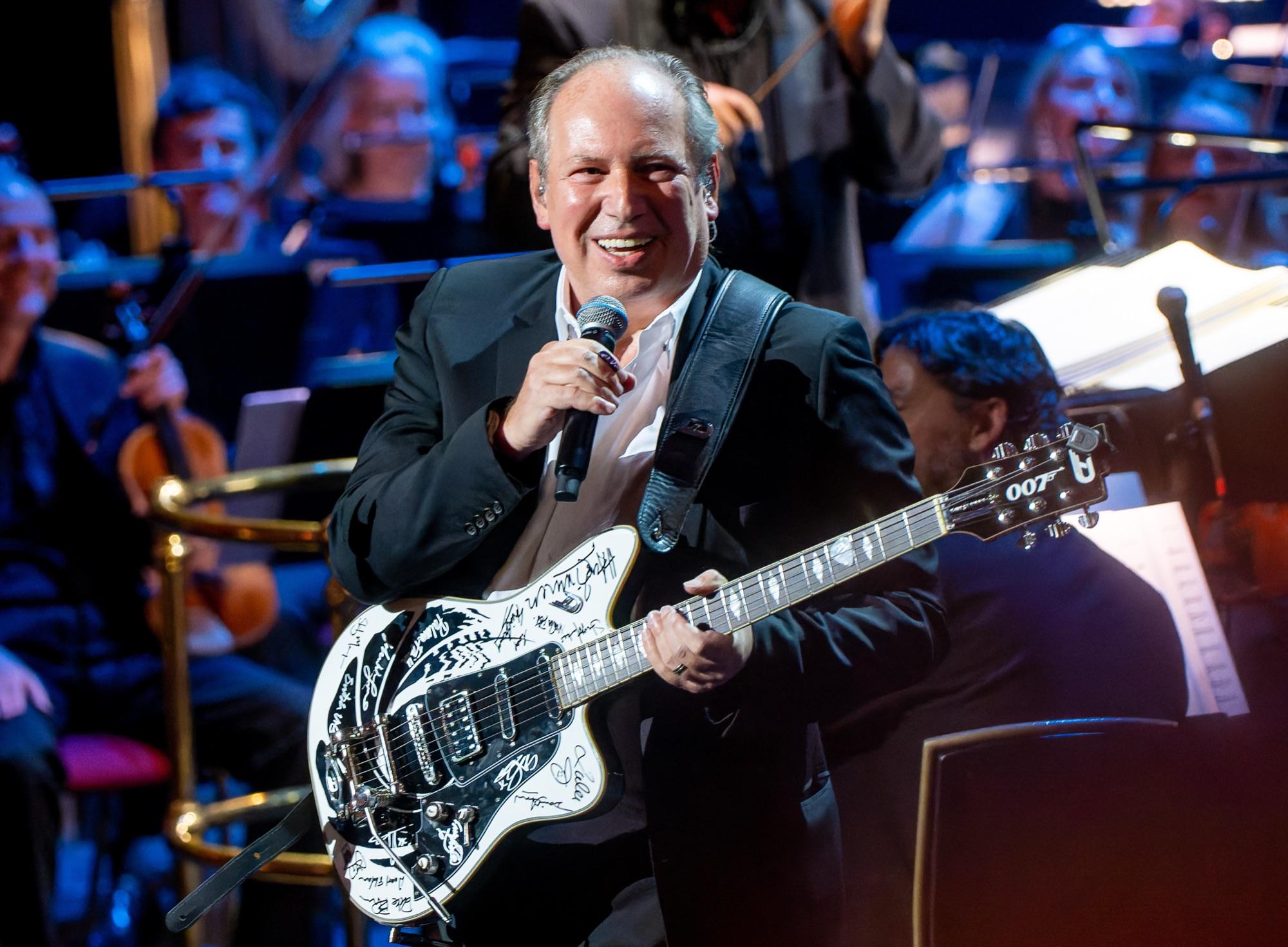
The Hans Zimmer Abu Dhabi concert took place at Etihad Arena, Yas Island, on Friday 13 November 2026. The official venue page billed it as a new live show with his 19-piece band, and named celebrated scores including The Lion King, Gladiator, The Dark Knight Trilogy, The Last Samurai, Interstellar, Inception, Dune: Part One and F1: The Movie. Those titles were a career list; the organisers did not publish a setlist. [1]
For UAE filmmakers, the useful question is how those film scores are made: how a score is built with picture, how Zimmer blends orchestral and electronic sound, and what the Dune soundtrack is made from. Villeneuve's Dune films used Liwa for desert work, which is covered in Dune: Part Three and Liwa. This piece doesn't retell that shoot. It looks at the music those pictures carry.
The concert, in brief
The rest of this article is about scoring craft, not a concert review.
- Date: Friday 13 November 2026. [1]
- Venue: Etihad Arena, Yas Island, Abu Dhabi. [1]
- Billing: a new live show with his 19-piece band. The venue page named career scores, but the organisers did not publish a setlist. [1]
- Festival: Abu Dhabi Festival presented the date as part of its programme and listed the concert from 8:30 PM to 12:00 AM. Gulf News placed the Abu Dhabi date in the 23rd edition of the festival. [2][3]
Before the show, Etihad Arena's event page, read on 12 November 2026, listed tickets "from AED 245" including VAT. [1]
How film scores are made, in Zimmer's case
The Dune work is a clear case of a composer being brought in early, and of a score being written as a world rather than as a cue stacked onto each cut.
Denis Villeneuve told Variety, in Jon Burlingame's 21 October 2021 interview, that Zimmer was "the first person I talked to," while the two were finishing Blade Runner 2049. The composer, Variety reported, became "obsessed with the idea of trying to create music from another world, from another time." Villeneuve wanted the score "to be a spiritual one" and to "be as feminine as possible," reflecting the influence of the Bene Gesserit in Frank Herbert's book. [8]
Zimmer didn't treat the film as a sequence of isolated scenes. "As I worked, it became more and more abstract," he told Variety. "I never saw it as scenes. I saw everything as a totality." He also went into real desert landscapes to test the ideas: "I disappeared into Monument Valley and the desert in Utah and Arizona to check the veracity of my ideas. How does the wind howl through the rocks? How does the sand grit in your teeth?" [8]
That's a different method from writing a theme, then spotting it to picture at the end. Villeneuve told Variety that he "didn't hear from Hans for a long time. He took a long time to experiment." During editing, "we started receiving tons of music for weeks. It was like a big creative rush. It became a storm. When the movie was totally finished, Hans was still sending me music." [8]
For UAE directors and producers, what you can take from this is timing and trust. The composer was in the conversation before cameras rolled, was given time to invent a language for the world, and was still sending music after the film was finished. None of that needs an invented local studio rate or a template cue sheet.
The Dune sound: invented instruments and voices
The official Etihad Arena concert page put the career claim in one sentence: his "groundbreaking approach to film composition has reshaped modern cinematic sound, blending orchestral depth with contemporary production techniques." The Dune: Part One score is the extreme case of that blend, and Zimmer has described it in published interviews. [1]
"If this is a movie about a planet 10,000 years from now, and it was a desert planet, [I thought] I should go and invent instruments and sounds you've never heard of," he told The Hollywood Reporter in March 2022. He didn't want a "romantic, European orchestral score." The one consistent, recognisable element, he said, should be the female voice, because he and Villeneuve "always felt very strongly that the female characters are the driving force of the story." [9]
Variety recorded a stronger technical claim still: unlike most Zimmer scores, "there is no orchestra anywhere," he insisted. Sounds that appear to be brass may be an electric guitar or an electric cello, processed electronically. Unusual woodwinds, including the Armenian duduk and Scottish bagpipes, "occasionally peek through," but many sounds come from commissioned instruments and new synthesizer modules. "It's an electronic score, not an orchestral one, but in a peculiar way it's one of the more organic scores I've done." [8]
The bagpipes, which many viewers notice in the Atreides arrival, weren't a gag. "When you're the Royal House and you're being heralded on a new planet, it's either the fanfares or it's something that is ancient and timeless at the same time," Zimmer told The Hollywood Reporter. "Wherever you find a goat and some wood, you can build bagpipes." Pairing that ancient instrumentation with "the most out-there electronics," he said, "seemed like an appropriate choice." [9]
On voices, he told Variety: "I was trying to do the inner voices of the characters, without using words." The chants, he said, are "a made-up language, but it feels very legitimate." Primary soloists named in that piece include Loire Cotler and Lisa Gerrard, with an L.A.-based quartet led by Edie Lehmann Boddicker. [8]
That approach held invented texture together with a human voice. This article doesn't claim it changed other films or invent a list of later imitators, and it doesn't claim that every Zimmer score abandoned the orchestra. The Dune: Part One case is the one he and Villeneuve documented in those interviews.
The music of Dune
Zimmer's Dune credits should be taken from official or otherwise primary sources, not inferred from the concert billing. The venue page named only Dune: Part One among the Dune films. [1]
Dune: Part One. The Academy's official acceptance-speech database records Hans Zimmer as the winner of Music (Original Score) for Dune at the 94th Academy Awards, held on 27 March 2022. That is the first film in Villeneuve's series. [4]
Dune: Part Two. Zimmer's official site lists the 2024 film, directed by Denis Villeneuve, with the credit "Music by Hans Zimmer." Additional music is credited there to David Fleming, Steve Mazzaro, Omer Benyamin, Steven Doar and Andrew Kawczynski. That is an official composer credit, not a fan inference. [6]
Dune: Part Three. The official film site, dunemovie.com, names "Oscar-winning composer Hans Zimmer" among the department heads joining Villeneuve. Zimmer's official site also lists him as composer on "DUNE - PART THREE, 2026, Directed by Denis Villeneuve." On 20 October 2026, WaterTower Music released "Desert Chant (from 'Dune: Part Three')" as a single. Variety reported that day that the track "is written by composer Hans Zimmer, who also scored the previous films." Part Three's composer credit is therefore confirmed by the official movie site, by Zimmer's own project page, and by the soundtrack single coverage. It's not left unverified. [5][7][10][11]
In the same Variety piece, Zimmer tied the third film back to the book he and Villeneuve had both read as teenagers: "For me, the beauty of working on 'Dune' was that it would take me back into a time of being full of youthful imagination, where everything was true and the impossible was possible." [10]
Hans Zimmer and Dune: the dates in this article
- 21 October 2021Variety interviewZimmer on Dune: "there is no orchestra anywhere," and a made-up language for the voices.
- 12 March 2022The Hollywood Reporter interviewZimmer on inventing "instruments and sounds you've never heard of."
- 27 March 2022Oscar for DuneMusic (Original Score), 94th Academy Awards.
- 2024Dune: Part Two"Music by Hans Zimmer," on his official site.
- 20 October 2026"Desert Chant" singleFirst single from the Dune: Part Three soundtrack, released by WaterTower Music.
- 13 November 2026Etihad Arena, Yas IslandBilled as a new live show with his 19-piece band. The organisers did not publish a setlist.
None of this says which Dune cues, if any, were played at Etihad Arena. The official concert page named Dune: Part One among the scores he is known for, and the organisers did not publish a setlist. [1]
The UAE link: Dune and Liwa
The Hans Zimmer Etihad Arena concert connects to this story because the Dune scores are attached to a production that used Abu Dhabi's Liwa desert. The filming, the official stills, and the release-date picture for Dune: Part Three are set out in the Dune: Part Three and Liwa article, and are not repeated here.
What belongs here is the scoring lesson. Zimmer built a desert vocabulary, tested ideas against real wind and sand (in the American Southwest, as he told Variety), and then wrote music meant to sit on images of Arrakis. Some of those images were photographed in Liwa. For a UAE crew, that is the local connection: a score invented for another world, married to a landscape that is actually here. [8]
What UAE filmmakers can take from the method
These points stay inside the published interviews and the official credits. No local music budget, session fee or studio rate is invented.
- Bring the composer in early. Villeneuve said Zimmer was the first person he talked to, while they were still finishing a previous film. [8]
- Score the world, not a stock orchestra. Zimmer rejected a conventional romantic European score for Dune, invented new instruments and textures, and treated the work as a totality rather than a pile of scene cues. [8][9]
- Leave time to experiment. Villeneuve didn't hear from Zimmer for a long stretch, then received a rush of music during the edit, and still more after the film was finished. [8]
- Hold invented sound with one human element. In the Dune: Part One interviews, that element is the female voice, used for inner life rather than for lyrics the audience is meant to parse. [8][9]
- Don't assume the concert billing is the full credit list. The venue page named Dune: Part One. Official film and music sources also credit him on Part Two and Part Three. Check those sources, not the poster, before you write a credit. [1][5][6][7]
Sources
- Etihad Arena, Hans Zimmer Live (Friday 13 November 2026, Etihad Arena, Yas Island; new live show with a 19-piece band; career scores named, including The Lion King, Gladiator, The Dark Knight Trilogy, The Last Samurai, Interstellar, Inception, Dune: Part One and F1: The Movie; "Venue doors open 2 hours before the show"; no start time printed on this page; "Prices from AED 245"; category table labelled "Categories inc. VAT"; accessed 12 November 2026, UAE morning)
- Abu Dhabi Festival, Hans Zimmer - The Next Level (13 November 2026, Etihad Arena; listed 8:30 PM to 12:00 AM, doors 7:00 PM; 19-piece band and career scores including Dune: Part One and F1: The Movie)
- Gulf News, "Hans Zimmer to perform live in Abu Dhabi: Dates, tickets and all you need to know" (13 November 2026, Etihad Arena, Yas Island; 19-piece band; placed in the 23rd edition of the Abu Dhabi Festival; ticket figures from this article are not used; last updated 23 July 2026)
- Academy of Motion Picture Arts and Sciences, Margaret Herrick Library, Academy Awards Acceptance Speech Database (94th Academy Awards, Music (Original Score), Dune, winner Hans Zimmer; 27 March 2022)
- Official Dune: Part Three site (credits "Oscar-winning composer Hans Zimmer" among the department heads)
- Hans Zimmer official site, Dune: Part Two ("DUNE - PART TWO, 2024, Directed by Denis Villeneuve"; film credit "Music by Hans Zimmer")
- Hans Zimmer official site, Dune: Part Three ("Hans Zimmer Composer"; "DUNE - PART THREE, 2026, Directed by Denis Villeneuve")
- Variety, "Hans Zimmer on 'Dune' Score's Electronic Textures and Made-Up Choral Language … and His Head Start on Part 2", by Jon Burlingame (Villeneuve on approaching Zimmer first; Zimmer on the film as a totality, desert research in Monument Valley, Utah and Arizona, "there is no orchestra anywhere," inner voices and a made-up language; published 21 October 2021)
- The Hollywood Reporter, "How 'Dune' Composer Hans Zimmer Invented 'Instruments and Sounds You Never Heard of' for Denis Villeneuve's Epic", by Beatrice Verhoeven (inventing instruments and sounds; rejecting a romantic European orchestral score; the female voice; the bagpipes; published 12 March 2022)
- Variety, "Timothée Chalamet and Hans Zimmer's 'Desert Chant' From 'Dune: Part Three' Soundtrack Released", by Jazz Tangcay (first single from the Part Three soundtrack; "the track is written by composer Hans Zimmer, who also scored the previous films"; published 20 October 2026)
- WaterTower Music, Desert Chant (from "Dune: Part Three") (official label release page; release date 20 October 2026)
- Related: Dune: Part Three and Liwa
All sources accessed 12 November 2026.
Frequently asked questions
When did Hans Zimmer play Abu Dhabi?
On Friday 13 November 2026, at Etihad Arena on Yas Island. The official Etihad Arena event page gave that date and venue, and billed the concert as a new live show with his 19-piece band.
Was an official setlist published for the concert?
No. The organisers did not publish a setlist. The Etihad Arena event page named scores Zimmer is known for, including Dune: Part One, but that was a career list, not a running order for the night. This article doesn't invent one.
Did Hans Zimmer score Dune: Part Two and Dune: Part Three?
Yes. His official site credits "Music by Hans Zimmer" on Dune: Part Two (2024). The official Dune: Part Three site lists "Oscar-winning composer Hans Zimmer," his official site lists him as composer on the 2026 film, and Variety reported that the 20 October 2026 single "Desert Chant" from that soundtrack "is written by composer Hans Zimmer, who also scored the previous films." He also won the Academy Award for Original Score for the first film, Dune, at the 94th Academy Awards on 27 March 2022.
What is the link between the Hans Zimmer Abu Dhabi concert and Liwa?
Villeneuve's Dune films used Liwa for desert work. Zimmer scored those films. The concert was in Abu Dhabi; the production link is the score sitting on images shot in the emirate. The Liwa shoot itself is covered in the linked Dune: Part Three article and is not retold here.

About the editor
Nicole spent five years working in the Middle East, so the region is familiar ground. Producing is what she loves most: bringing the plan, the people and the shoot together.
Related stories
Pattinson is Bond, and Villeneuve is directing: what the Dune director's Abu Dhabi shoots tell UAE crews
Amazon MGM named Robert Pattinson as James Bond on 16 November 2026, Denis Villeneuve directing. What his past Abu Dhabi Dune shoots mean for UAE crews.
Dune Part Three Abu Dhabi: Liwa shoot, IMAX and UAE dates
Where Dune: Part Three filmed in Abu Dhabi's Liwa desert, how it was shot for IMAX, and the UAE release dates on VOX and Reel, checked 10 November 2026.
Hoba film opens in US cinemas as The Vile, a year after its UAE release
Majid Al Ansari's Hoba, from Image Nation, was reported to open in US cinemas as The Vile on 20 November 2026, after its Fantastic Fest horror award.